If you’ve ever watched a sand mining operation, a dredging project on a riverbank, or a construction site clearing sediment from a basin, you’ve probably stood there wondering: which sand pump is right for the job? I’ve been selling sand pumps for 12 years now, and I can’t count how many times a contractor or mine operator has come to me confused between submersible sand pumps and surface-mounted sand pumps. They’re both designed for moving abrasive, thick sand slurry, but their differences go way beyond where you stick them in the water. Over the years, I’ve helped hundreds of clients pick the right one, and today I’m breaking down the real, practical science behind each type so you don’t waste time or money on equipment that doesn’t fit. Sand Pump
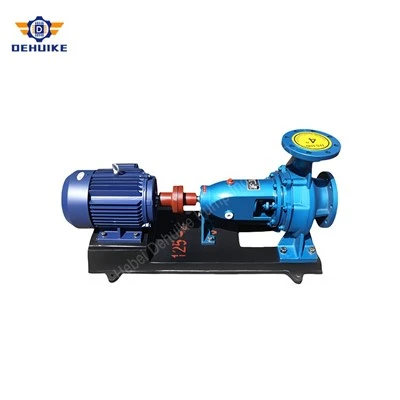
First, let’s cut through the marketing fluff. A submersible sand pump isn’t just a regular pump sealed tight and dropped into the water—it’s built specifically to survive being fully submerged in slurry, which is 50% sand, silt, and gravel and 50% water, sometimes even more solids. The whole unit, including the motor, is hermetically sealed with oil and water sensors to prevent leaks. On the other side, surface sand pumps mount on a deck, a barge, or a solid platform above the water, connected to the submerged part (called the impeller end) via long suction pipes. That’s the biggest, most obvious difference, but the trade-offs start right there.
Let’s start with submersible sand pumps because they’ve gotten really popular in the last 10 years, and not just for small jobs. I first started carrying them when a small dredging company in Florida came to me complaining that their old surface pumps kept getting damaged by sand in the suction line. Their old setup was a surface pump sitting on a barge, pulling sand from a canal near Tampa, and every two or three weeks they had to tear it down to replace the impeller and casing. The submersible pump we installed? That’s been running 18 hours a day, six days a week, for seven years. The key here is that the submersible pump’s impeller is submerged directly in the slurry, so the suction head loss is almost zero. Suction head is the amount of energy a pump loses pulling fluid from a distance; when the pump is already in the fluid, there’s no distance to pull, so you get more flow for less power. For that Florida client, that meant they used 25% less electricity, and their maintenance costs dropped by 70% almost immediately.
But submersible pumps aren’t perfect. Let’s talk about size and depth. Right now, the biggest submersible sand pump we sell is a 150 kW unit that can handle up to 20 meters of depth. If you need to go deeper than that—say, a 30-meter dredge on a large lake, or mining sand from a riverbed that’s 40 meters deep—submersible pumps stop being practical. The deeper you go, the more pressure you put on the seal of the pump. Even the best seals can fail over time, and pulling a 150 kW pump out of 40 meters of water is a two-person job that takes hours, not to mention the risk of damaging the unit during retrieval. Surface pumps don’t have that limit. Our largest surface sand pump can handle suction lines that go down to 80 meters, and the pump itself is on solid ground, so maintenance is way easier. If a surface pump’s impeller breaks, you can take it apart in an hour on land, no divers, no big cranes.
That maintenance point is another big one, and it’s where I’ve seen a lot of new operators make mistakes. A lot of people think submersible pumps are low-maintenance, and they are, but only if you don’t skimp on the right kind of pump. A few years back, a construction company in Texas bought a cheap submersible pump for clearing sediment from a new reservoir. They ran it for two weeks straight without checking the oil seal, and when they pulled it up, water had gotten into the motor. Replacing the motor cost more than the pump itself. With a surface pump, you can do routine checks—check the oil, inspect the impeller, tighten bolts—all from the deck of your barge or the ground, without even getting your boots wet. For remote locations, like a mining site out in the desert where you can’t get service easily, surface pumps are way more reliable for long stretches. I’ve had clients run surface pumps for six months straight with only monthly checks, while submersible pumps need a full inspection every 500 working hours, especially if you’re pumping coarse sand or gravel.
Then there’s flow rate and abrasion resistance. Let’s be real: sand is hard. It’s silica, basically, which is harder than most metal alloys, so your pump’s internal parts are going to wear down. Submersible pumps have an advantage here because the impeller is submerged in the slurry, so the flow velocity through the pump is slightly lower than a surface pump pulling the same amount of water. Wait, that sounds counterintuitive, right? Let me explain: a surface pump has to pull the slurry through a long suction pipe, which creates friction. To get the same amount of sand through that pipe, the surface pump has to push faster, which means the sand particles are moving at a higher speed when they hit the impeller and casing. That extra speed makes abrasion worse. Submersible pumps don’t have that suction friction, so the sand moves slower through the pump, which means less wear. That’s why my Florida client’s submersible pump ran so long. But here’s the catch: if you’re pumping really coarse material, like gravel larger than 50 mm, submersible pumps can’t handle that as well as surface pumps. The impeller has to be submerged, and to move large gravel, you need a wider impeller, which makes the pump bulkier and harder to seal. Most large submersible pumps have a maximum particle size of 40 mm, while surface pumps can handle up to 150 mm without any issues.
Cost is another factor that trips people up. A lot of new operators think submersible pumps are more expensive, and upfront, they kind of are. A 50 kW submersible sand pump costs about 20% more than a comparable surface pump. But when you factor in installation, power costs, and maintenance, submersible pumps often work out cheaper for jobs under 20 meters deep. For that Florida job, we calculated that the submersible pump paid for itself in 18 months, compared to the old surface pump they had that was breaking down every two months and using more electricity. But for jobs over 30 meters deep, surface pumps are way cheaper upfront, and there’s no risk of seal failure from deep water pressure. I recently worked with a dredging company in the Mississippi River that needed to pump sand from 45 meters deep. They tried a submersible pump first, but the seal failed after three months, and replacing it cost twice as much as buying a surface pump. Now they run a 200 kW surface pump with a 50-meter suction line, and they haven’t had a seal issue in four years.
There’s also something called cavitation to consider, which is a big deal for pumps. Cavitation happens when low pressure at the pump’s inlet causes bubbles to form in the slurry, and when those bubbles collapse, they send tiny shockwaves through the pump that erode the metal over time. Surface pumps are way more prone to cavitation than submersible pumps because of that suction head loss. If your suction line is too long, or if the water level drops, the pressure at the surface pump’s inlet drops, and you get cavitation. Submersible pumps are already in the water, so the inlet pressure is always higher, which almost eliminates cavitation. That’s another reason their wear is lower. But if you’re pumping very clean water with almost no solids, surface pumps are actually better—they’re cheaper, easier to maintain, and you don’t need the sealing that submersible pumps require.
I’ve seen so many jobs go wrong because the operator picked the wrong pump. Let me share a recent example: a sand mining company in Arizona came to me last year. They were mining sand from a lake that’s 15 meters deep, so they bought two large surface pumps because they thought they were cheaper. They installed them, and for the first month, they worked okay, but once the water level dropped by 3 meters in the dry season, the surface pumps started cavitating. The impellers wore out in three months, and they had to spend $10,000 replacing them. If they’d gone with submersible pumps, they would’ve had no cavitation, lower wear, and they would’ve saved money on repairs. They ended up buying two submersible pumps from me after that, and they’ve been running without issues for a year and a half now.
But submersible pumps aren’t the answer for every job. Last month, a construction company in Alaska contacted me. They needed to clear sediment from a basin that’s 60 meters deep, and they also had to pump some large rocks that fell into the basin after a storm. The submersible pumps I had in stock can’t handle 60 meters, and they can’t handle rocks larger than 40 mm, so we recommended a surface pump with a heavy-duty impeller and a long suction line. It’s a bit bulkier, but it’s cheaper to install, easy to repair on site, and it can handle the large rocks. That’s the key: matching the pump to the job, not the other way around.
So when do you pick a submersible sand pump vs a surface sand pump? Let me break it down by use case, based on what I’ve learned over 12 years. Go with a submersible if: your job is shallower than 20 meters, you’re pumping fine to medium sand or small gravel, you want lower power costs, maintenance is a top priority, and you don’t have easy access to cranes or heavy equipment for installing/retrieving large pumps. Go with a surface pump if: your job is deeper than 30 meters, you’re pumping coarse sand or large gravel, you have easy access to maintenance tools and crew, you’re working in a remote location where retrieval of a submerged pump would be difficult, and upfront cost is a big concern.
Wait, there’s one more thing I want to mention: portability. A lot of small contractors work on multiple jobs in different locations, and submersible pumps are way easier to move. You can drop a submersible pump into a lake, load it onto a truck at the end of the week, and move it to another site. Surface pumps are bulkier, they have big suction lines, they’re harder to disassemble and move. For contractors who do seasonal work, submersible pumps are a no-brainer. I had a client who runs a small dredging business in Minnesota; he uses a 15 kW submersible pump for his summer jobs on small lakes, and he stores it in his garage in the winter. If he had a surface pump, he’d have to store it in a big shed and haul the suction lines around, which would add thousands in storage and transport costs.
But let’s not ignore the downsides of submersible pumps that I haven’t already mentioned. They’re heavier. A 50 kW submersible pump weighs around 500 kg, while a comparable surface pump’s pump unit weighs 100 kg, with the rest of the weight in the suction lines. So if you’re in a location without good access to cranes, lifting a submersible pump into the water is a problem. Last year, a client in rural Louisiana tried to lift a 50 kW submersible pump with a pick-up truck winch, and the winch broke, dropping the pump into the water. They had to hire a diver to retrieve it, which cost them $2,000, more than the difference between the submersible and surface pump. That’s a mistake you don’t want to make.
Another common mistake: not choosing the right material for the impeller. Both submersible and surface pumps come with different impeller materials—high-chrome iron, rubber, urethane, even hard steel. For very abrasive sand, like silica sand which is super hard, rubber impellers wear out faster, but they’re cheaper. For coarse gravel, high-chrome impellers last 10 times longer. I always tell clients: match the impeller material to the slurry, not the pump type. A lot of people switch to submersible pumps and then buy cheap rubber impellers, which defeats the purpose of lower wear.
At the end of the day, there’s no “better” pump—there’s only the right pump for your specific job. Over the years, I’ve learned that the best approach is to ask three questions: how deep do you need to pump? what kind of material are you moving? and how much maintenance can you handle? If you can answer those, I can point you to the right pump. I’ve worked with small contractors with one-man operations, big mining companies with 24/7 dredges, construction companies clearing basins, farmers draining ponds—each has a different need, and there’s a submersible or surface sand pump to fit it.
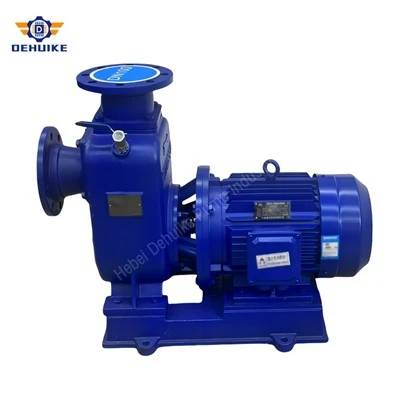
If you’re looking for a sand pump, whether it’s submersible or surface, to suit your project, don’t waste time guessing. Reach out to our team to discuss your specific requirements, and we’ll help you find the right equipment that fits your budget and needs.
Slurry Pump References
- Dredging Research Institute. (2021). Slurry Pump Abrasion and Cavitation in Dredging Operations. International Journal of Dredging Technology.
- Sand Pump Manufacturing Association. (2022). Comparative Analysis of Submersible vs Surface-Mounted Slurry Pumps for Sand Mining. Industrial Pump Industry Report.
- Occupational Safety and Health Administration (OSHA). (2020). Maintenance and Safety Guidelines for Submersible and Surface Pump Installation. Construction Equipment Safety Manual.
- American Society of Mechanical Engineers (ASME). (2019). Performance Metrics for Slurry Pumps in Shallow vs Deep Water Applications. Journal of Mechanical Engineering for Fluid Systems.
Hebei Dehuike Pump Industry Co., Ltd.
Hebei Dehuike Pump Industry Co., Ltd. is one of the most experienced sand pump manufacturers and suppliers in China, featured by quality products and good price. Please rest assured to wholesale durable sand pump made in China here and get quotation from our factory. Customized orders are welcome.
Address: Building A, Shanggu Daguan, Jingxi District, Baoding City, Room 1708
E-mail: postmaster@dhkpump.com
WebSite: https://www.dehuikechina.com/
