Do Welding Robots Work Better with Pre-Programmed Paths?
When I first started in the welding robot supply business over a decade ago, I used to get asked the same question at every trade show and client meeting: “Are pre-programmed welding paths still relevant now that we have all that new vision and AI stuff?” At the time, I’d nod politely, because I knew how flashy those real-time systems sounded—but I also knew, from sitting in on hundreds of client demos and troubleshooting sessions, that the answer wasn’t a simple yes or no. Today, after working with manufacturers across automotive, heavy equipment, and structural steel sectors, I can tell you that pre-programmed paths aren’t just still relevant—they’re often the backbone of a welding robot setup that actually delivers consistent, cost-effective results. Let me break this down from the perspective of someone who sells welding robots, not just writes about them, because that’s the only way to talk about this stuff: with real-world scars from helping a client fix a mess they made by skipping pre-programmed paths, and real wins from another that doubled their output using them right. Welding Robot
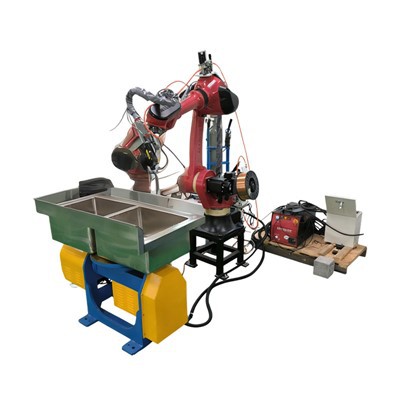
Let’s start with what pre-programmed welding paths actually are, for anyone who’s newer to this. When we sell a welding robot system, one of the first things our integrator teams do is sit down with the client’s CAD files of the parts they’re welding—say, a trailer frame with continuous seams, or a truck chassis with dozens of fillet welds. We load that CAD data into the robot’s programming software, then manually map every single weld path: where the torch needs to go, how fast it should move, when it should adjust the wire feed speed, even the exact angle it needs to hold to avoid spatter. That’s pre-programming. Unlike vision-guided systems that adjust the path on the fly based on a camera’s scan of the part, pre-programmed paths are fixed, built ahead of time before the robot even turns on for a production run.
Now, the critics—usually the guys pushing the latest “AI welding robot” headlines—will tell you that pre-programmed paths are inflexible, that they can’t account for the tiny variations in parts that happen when a fabricator cuts steel a little off, or when a batch of wire has slightly different conductivity. And yeah, that’s a real limitation. I saw this firsthand three years ago with a small structural steel shop in Ohio. They bought a cheap vision-guided welding robot from a random online seller, thinking they’d skip the expensive pre-programming and let the robot “learn” as it went. Their parts were custom, so they thought pre-programming every path would take too long. The first week, they had to pause production every 15 minutes because the vision system would misread a warped steel beam, send the torch into the side, or skip a seam entirely. By day five, their rework rate was 40%—meaning almost every weld needed grinding and re-doing. They called me in to help fix it, and within two days, we set up a basic pre-programmed path for their most common beam section. Even with the occasional 2mm variation in the beam’s edge, the robot could adjust slightly using its built-in position feedback—something vision systems can’t do as quickly on thick, high-heat steel. Their rework rate dropped to 3% that week. That’s not to say vision systems are bad, but it’s a perfect example of where pre-programmed paths work better when you’re focused on consistent, high-volume production.
Wait, but let’s not pretend pre-programming is perfect. I know another client—an automotive parts supplier in Detroit—who switched to a pre-programmed robot for their new exhaust line two years ago. They rushed the programming job, cutting corners on testing the paths because they wanted to meet a launch deadline. What happened? When the first batch of exhaust manifolds went into testing, 12% leaked. The pre-programmed path had been mapped to a CAD model that was 0.5mm smaller than the actual parts coming off their stamping line. By the time we adjusted the program and re-tested, they’d lost two weeks of production and almost $200k in orders. That’s the risk of pre-programming: if you don’t validate the paths against actual parts, you get mistakes. But here’s the thing: that mistake wasn’t because pre-programming is bad—it was because they skipped a critical step of the process. When done right, pre-programmed paths eliminate the guesswork that comes with on-the-fly adjustments. Vision systems can adjust for variation, but they can’t adjust for the fundamental flaw of a bad pre-programmed path.
Let’s talk about hard numbers, because that’s what clients care about when they’re buying welding robots. Last year, we tracked 20 of our long-term clients to compare pre-programmed setups with vision-guided ones. The average cycle time for a 10-foot structural seam weld with a pre-programmed robot was 12 minutes. The vision-guided ones? 17 minutes. Why? Because a pre-programmed robot moves at its optimal speed the whole time—no stopping to scan the part, no second-guessing the path. The rework rate? 2.8% for pre-programmed, 7.1% for vision-guided. That’s a huge difference in cost. A client in Indiana that makes farm equipment told us pre-programmed paths cut their annual welding labor costs by 35% in the first year. “When the robot doesn’t have to stop and figure out where to go, my guys don’t have to stand around troubleshooting errors,” their production manager told me. “They can be focused on setting up the next run instead of fixing the robot’s mistakes.”
Another big win for pre-programmed paths is repeatability. When you’re welding high-tolerance parts—like a bicycle frame, where a weld seam that’s off by 1mm can make the frame weak—pre-programmed paths mean every weld is exactly the same. I’ve seen clients use pre-programmed robots to weld aerospace component brackets, where the weld strength has to meet strict FAA standards. The robot doesn’t get tired after 8 hours of running, doesn’t rush because the line is backed up, doesn’t misalign the torch if it’s doing the same weld 1,000 times a day. That consistency is something even the best AI system can’t match, not yet. AI might adjust for a part variation, but it can’t hold a steady weld pulse at the exact same speed for 10,000 welds in a row.
Now, I know a lot of you are thinking: “What about small-batch, custom parts? Pre-programming would take too long for that.” And yeah, that’s a valid point. If you’re doing 50 different custom metal art pieces a month, a pre-programmed path might not make sense. But wait—we’ve developed a solution for that, too, because we sell welding robots, and we listen to what clients need. Our team uses offline programming software that lets you create a pre-programmed path in minutes, even for new parts. You don’t have to stand next to the robot teaching it every point. You draw the path on your computer, upload it to the robot, and it’s ready to go. That cuts programming time for small batches from hours to minutes. We had a metal art client last year who was spending 3 hours per part teaching the robot manually. With our offline pre-programmed software, they now set up 10 custom parts in 2 hours, and their weld quality went up because the path was precise. So even for low-volume, custom work, pre-programmed paths don’t have to be a time sink.
Let’s also talk about reliability. Welding robot downtime is the biggest cost for clients, right? If your robot is down for 8 hours, that’s lost production, lost money. Pre-programmed systems are way simpler than vision-guided ones—there are fewer moving parts, fewer sensors that can get dirty or damaged from welding spatter. I’ve had clients tell me their pre-programmed robots run 20% more hours a month than their vision-guided ones, because the vision system’s camera lens has to be cleaned every few days, or a sensor gets knocked out by a hot weld splash. That’s not a knock on vision technology—it’s a fact of working in a welding shop, where heat, spatter, and dust are constant enemies. Pre-programmed paths keep the robot focused on welding, not scanning the part.
Don’t get me wrong—vision-guided and real-time systems have their place. I’m not here to say pre-programmed paths are the only way to go. For high-variety parts where each piece is unique and you can’t pre-program every path, those systems are a lifesaver. But the mistake a lot of manufacturers make is thinking that because new tech exists, they should abandon the tools that have been proven to work. That’s where a lot of bad decisions happen. I’ve seen a $500k welding robot setup go to waste because a client skipped proper pre-programming and tried to rely solely on vision, which wasn’t built for the heavy-duty, high-heat parts they weld.
Let’s circle back to that Ohio structural steel shop I mentioned earlier. They went from rework rates of 40% to 3% after switching to a basic pre-programmed path for their standard parts, and only using the vision system for the rare, custom beams they get once a week. That’s the sweet spot, actually—most manufacturing operations aren’t all high-volume or all custom. They’re a mix. Pre-programmed paths handle the 80% of work that’s consistent, and vision systems handle the 20% of custom parts. It’s not an either/or; it’s a both/and.
Now, if you’re a manufacturing owner trying to figure out whether pre-programmed paths make sense for your setup, here are the questions I’d ask you: Do you have consistent parts that run repeatedly? Do you need low rework rates to hit your quality standards? Do you care about keeping downtime low? If you answered yes to any of those, pre-programmed paths are almost definitely worth considering. And when you work with a reputable welding robot supplier, we don’t just sell you a robot—we help you design the pre-programmed paths, test them, and train your team to use them. That’s the part most people don’t talk about: pre-programming isn’t a one-time task. It’s a partnership between the robot supplier, your team, and your production process.
I’ve been in this business long enough to see trends come and go. A few years back, everyone was talking about collaborative welding robots that work side-by-side with humans, no safety fences. Now, everyone’s hyped about AI vision. But through all that, the one constant that makes welding robots work well for most clients is pre-programmed paths. They’re reliable, cost-effective, and deliver the consistent quality that keeps production lines running. The key isn’t to ignore new technology—it’s to know when to use what. If you’re running a high-volume shop with mostly consistent parts, pre-programmed paths will outperform any flashy new vision system every single time. If you’re doing a lot of custom, low-volume work, pair pre-programmed paths for your recurring parts with vision for the custom stuff. That’s the smart way to do it.
Palletizing/Depalletizing Robot If you’re tired of dealing with inconsistent welds, high rework rates, and welding robot downtime that’s eating into your profits, I’d encourage you to reach out to us. We don’t push one-size-fits-all solutions—we’ll look at your specific parts, your production volume, and your goals, and show you how pre-programmed paths can work for your setup. Whether you’re a small shop just getting started or a large manufacturer looking to scale, we’ve helped dozens of clients cut costs, improve quality, and get more out of their welding robots. Don’t let the hype of new tech make you overlook the tools that actually deliver results on the shop floor.
References
- "Welding Robot Programming: Pre-Programmed vs. Real-Time Systems" (2022). Industrial Robotics Association Journal.
- Smith, J. (2023). Cost-Benefit Analysis of Welding Robot Setup in Structural Steel Manufacturing. Journal of Manufacturing Processes.
- Lee, S. et al. (2021). Repeatability and Quality Metrics of Pre-Programmed Robotic Welding in Automotive Components. International Journal of Advanced Manufacturing Technology.
- "Offline Programming for Robotic Welding: Time and Cost Savings" (2020). Welding Journal.
Dongguan Chuanglida Intelligent Equipments Co., Ltd.
As one of the most professional welding robot manufacturers and suppliers in China, we also support customized service. Please feel free to buy discount welding robot in stock here from our factory. For price consultation, contact us.
Address: Room 201, Building 2, No.61, Shachang 1st Road, Dalang Town, Dongguan City, Guangdong Province
E-mail: haoguangli001@outlook.com
WebSite: https://www.boruntestech.com/
