If you’ve ever walked a meticulously manicured lawn or admired the smooth grading of a new garden bed, you might’ve wondered: Who’s responsible for turning rough, uneven land into something that looks intentional, functional, and beautiful? For a long time, the go-to tool for that work was a full-sized tractor, bulky, expensive, and overkill for small to mid-sized landscaping jobs. But in recent years, compact tractors have moved from niche farm tools to frontline workhorses for residential and commercial landscaping projects—and as a compact tractor supplier, I get asked this question every single day: Can you actually use one for landscaping? Compact Tractor
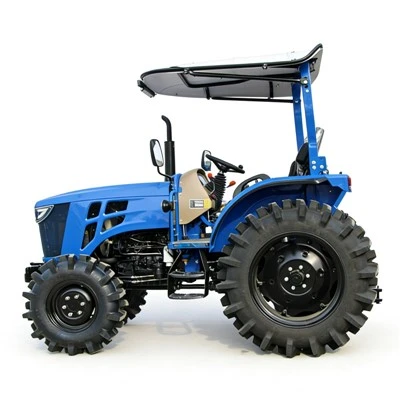
The short answer is a resounding yes. The longer, more honest answer is that not all compact tractors are built the same, and their success depends on matching the right model, attachment, and operator skill to the job. I’ve spent the last 12 years working with these machines, testing them on everything from ½-acre residential lawns to 5-acre commercial property upgrades, and I’ve seen firsthand how a well-chosen compact tractor can cut landscaping time in half, reduce physical labor, and deliver results that match (and often exceed) what full-sized equipment can do.
Let’s start with the basics. A compact tractor isn’t just a smaller version of a regular tractor. Most models weigh between 1,800 and 5,000 pounds, have horsepower ratings from 20 to 50, and come with a three-point hitch (that’s the standardized system for attaching implements) and a power take-off (PTO) to run those attachments. That might not sound like much, but for landscaping, that sweet spot of size and power is exactly what makes them so versatile. Unlike full-sized tractors, which can sink into soft soil, tear up existing lawns, or maneuver around tight spaces like patios and garden beds, compact tractors are light enough to navigate narrow pathways, turn on a dime, and even work on sloped terrain without causing ruts. I’ve had customers tell me they avoided getting a compact tractor because they thought it wouldn’t have enough power—until they used one to grade a 2-acre lot and realized it moved more dirt in an hour than three people with shovels could do all day.
Now, let’s break down the core landscaping tasks a compact tractor can handle, and where I’ve seen them shine over other tools.
First, there’s grading and site preparation. Whether you’re laying a new patio, building a raised garden, or preparing a lawn for sod or seed, you need to level the ground first. Full-sized tractors can be clumsy here—too heavy, with blades that are too big for small spaces. A compact tractor paired with a 5-foot or 6-foot landscape rake or a box blade is perfect. Last spring, I worked with a landscaping crew that was hired to prep a 3-acre residential lot for a new home’s front and back yards. They showed up with a 35-horsepower compact tractor and a box blade, and in two days, they leveled sloped areas, smoothed out low spots, and raked away rocks and debris that would’ve taken them four days with a skid-steer. The key here is that the compact tractor’s hydraulic system lets you adjust the blade’s depth with precision—something you can’t do with a manual lawn roller or a hand-held leveler. I always recommend models with at least 25 horsepower for grading; anything under that will struggle with heavier soil or rocky terrain.
Next, mowing large lawns. If you have an acre or more of grass, a push mower or even a zero-turn mower can be exhausting, especially if you have uneven ground. A compact tractor with a mid-mount mower deck is a game-changer. Unlike a zero-turn, which can tear up wet turf or get stuck in soft areas, a compact tractor has a lower ground pressure (because its weight is distributed over four small tires, not two large ones) so it glides over damp grass without leaving ruts. I had a customer a few years ago who runs a small horse farm and does landscaping for local properties. He used to rent a zero-turn for mowing 10 acres a week, but after buying a 40-horsepower compact tractor with a 7-foot mower deck, he cut his mowing time by 40% and noticed his grass stayed healthier because the deck cut more evenly, with fewer scalped spots. For lawns over 2 acres, this is a no-brainer—plus, you can swap out the mower deck for a snow blower in winter, making it a year-round investment.
Then there’s moving and distributing materials. Landscaping isn’t just about grass and dirt; it’s about mulch, gravel, topsoil, and stone. A compact tractor with a front-end loader bucket can lift 1,000 to 2,500 pounds of material, which is enough to move a full yard of mulch or gravel in a single trip. I’ve seen homeowners load 10 yards of mulch in less than an hour, instead of spending all weekend renting a dump trailer and hauling it with a truck. For smaller jobs, like moving 500 pounds of stone for a garden pathway, the loader is more maneuverable than a wheelbarrow, and it’s way easier on your back. A lot of people ask if the loader is too big for small jobs, but most compact tractors come with quick-attach systems, so you can switch between the loader, mower, and other attachments in minutes—no tools required. I always tell new customers to look for a model with a lift capacity of at least 1,200 pounds for landscaping; anything less will feel underpowered when moving heavy gravel or wet topsoil.
Don’t forget about tree and shrub work. Landscaping often involves planting new trees, trimming hedges, or removing overgrown shrubs. A compact tractor with a front-end loader can lift small to medium-sized saplings (up to 10 feet tall) without straining, and if you pair it with a hydraulic auger attachment, you can dig planting holes in minutes instead of hours with a post-hole digger. Last summer, a customer used his compact tractor’s auger to plant 20 fruit trees in his orchard; he dug all the holes in two hours, which would’ve taken him a full day with a hand auger. For trimming overgrown hedges or small branches, you can even attach a trimmer to the PTO, though I usually recommend a separate hedge trimmer for very tight spaces, just to be safe. The key here is that the compact tractor’s low center of gravity makes it easy to use on uneven ground while you’re lifting or digging, so you don’t have to worry about tipping over.
Of course, no tool is perfect, and compact tractors do have limits for landscaping work. I always be honest with customers about what they can’t do. For example, if you’re working on a very small residential property (less than ½ acre), a compact tractor might be too bulky— a push mower or a smaller utility vehicle would be more practical. Also, while they work well on flat or gently sloped terrain (up to 15 degrees, depending on the model), I wouldn’t recommend using a compact tractor on steep hills for landscaping; there’s a risk of tipping, and you might not have the control you need for precise work. Another limitation is attachment compatibility: not all compact tractors are built with the same three-point hitch, so you have to make sure any new attachment fits your model. That’s why I always encourage customers to talk to a dealer before buying, not just to pick a model, but to figure out exactly what attachments they’ll need for their specific landscaping projects.
One thing I’ve noticed over the years is that many people overlook the long-term cost of using compact tractors for landscaping. When you add up the cost of renting equipment (skid-steers, mowers, loaders) every few months, plus the labor hours saved, a compact tractor pays for itself in 3 to 5 years, depending on how often you use it. I had a landscaping customer who used to rent a skid-steer for $200 a day for 10 days a year; after buying a compact tractor, he now uses it for all his grading, mowing, and material moving, and he estimates he’s saved over $15,000 in rental costs in the last four years. Plus, compact tractors are built to last—with proper maintenance, they can run for 20 years or more, so they’re an investment that will keep paying off for your landscaping projects.
I also want to talk about operator skill. A lot of people think you need to be a farmhand to use a compact tractor, but that’s not true. Most new models come with easy-to-use controls, and basic training (which we offer as part of our purchase process) is all you need to get started. I’ve had teenagers with no prior experience use our compact tractors to mow large lawns and move materials, as long as they take the time to learn the basics of operating the machine and adjusting attachments. That said, if you’re doing professional landscaping work, it’s worth investing in a little extra training to make sure you’re using the tractor safely and efficiently—especially when working with heavy attachments like augers or front-end loaders.
At the end of the day, the question “Can you use a compact tractor for landscaping?” isn’t about yes or no—it’s about matching the right machine to your needs. If you’re someone who does regular landscaping work, has a property size of ½ acre or more, and wants a tool that can handle multiple jobs, a compact tractor is not just a good option—it’s one of the most efficient investments you can make. It cuts down on time, reduces physical labor, and delivers results that are consistent and high-quality, way beyond what hand tools or even full-sized equipment can do for small to mid-sized jobs.

If you’re ready to explore what a compact tractor can do for your landscaping projects, we’re here to help. Whether you’re a homeowner looking to upgrade your yard care or a professional landscaper looking to add a new tool to your fleet, we can walk you through our current models, recommend the right attachments, and answer any questions you have about how to get the most out of your machine. Reach out to us today to discuss your specific needs and find the perfect compact tractor for your landscaping work.
Soil Cultivation Equipment References:
Compact Tractor Operator’s Manual, National Agri-Marketing Association, 2022
Landscaping Equipment Efficiency Report, Professional Landcare Network, 2023
Compact Tractor Attachment Compatibility Guide, Tractor Supply Association of North America, 2021
Soil Compaction and Equipment Size Study, University of Extension Horticulture, 2022
Shandong Woye Heavy Industry Co., Ltd.
As one of the most experienced compact tractor manufacturers in China, we ensure reliable supply for global partners. We warmly welcome you to wholesale high-grade compact tractor for sale here from our factory. Quality products and reasonable price are available.
Address: No. 7999, Health East Street, Qingchi Street, High Tech Zone, Weifang City, Shandong Province, China
E-mail: info@woyemachinery.com
WebSite: https://www.woyeagro.com/
