If you’ve ever shopped for shaving dies—whether you’re a seasoned toolmaker, a die casting supervisor, or a manufacturing engineer just getting up to speed on metal stamping—you’ve probably run into this exact question: Do shaving dies require toolholders for installation? As someone who’s spent the last 12 years supplying precision shaving dies to stamping and automotive parts manufacturers across North America, I’ve answered this question at least a hundred times, and the short answer isn’t as simple as “yes” or “no.” It depends entirely on the type of shaving die you’re using, the press it’s being installed in, and the output quality your production line demands. Today, I’m breaking down the technical details I share with every customer, no fluff, just real-world experience that’s helped thousands of our clients cut down on downtime and reduce part defects. Shaving Dies
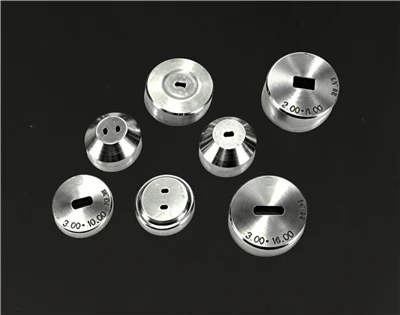
First, let’s start with what a shaving die actually does, because that context makes the toolholder question make sense. Shaving dies are precision stamping tools designed to trim excess material from the edges of a formed or stamped metal part. Think of it like a super precise pair of shears that removes tiny burrs, uneven flanges, or overhangs from parts like automotive door hinges, appliance brackets, or electrical connector housings—parts where even a 0.001-inch error can lead to fit issues, premature wear, or product failure. The cutting edge of a shaving die is honed to a mirror finish, with a tolerance of less than half a thousandth of an inch, so the tool that holds it in place has to be just as precise. That’s where toolholders come in, but not all shaving dies need the same kind.
Let’s split shaving dies into two broad categories first: standard shaving dies and custom precision shaving dies. Standard shaving dies are mass-produced for common part shapes, used for low-to-medium volume runs where cost is the primary driver. Custom precision shaving dies are engineered for unique parts, high-volume production, or tight tolerance applications like aerospace or medical components. The need for a toolholder shifts almost entirely along that line.
For our standard line of shaving dies, most of them are designed with integral mounting flanges and pilot holes that let them bolt directly to the ram of a mechanical or hydraulic press. In this case, a separate toolholder isn’t strictly required—bolt it straight to the ram, add a quick-setting alignment pin, and you’re good to go. I’ve had customers come to us in a pinch, with a broken standard shaving die and an immediate production run, who picked up an off-the-shelf mounting plate from their local metal supply store and had their line back up in an hour. But here’s the catch: even with standard dies, if your press has high ram vibration, or if you’re running a 24/7 production schedule, direct bolting leads to part wear and higher defect rates. Last year, a customer in Ohio who made lawn mower components told me they were skipping toolholders on their standard dies and seeing 12% edge defects in their first week of production. Once they switched to even a basic collet-style toolholder for their press, that defect rate dropped to 1.8%, and their die life extended by three runs before needing a re-hone. That’s the kind of real-world result that makes the toolholder conversation worth having, even for standard applications.
Now, the custom precision shaving dies we build for our high-volume and tight-tolerance customers—this is where toolholders aren’t just a nice-to-have, they’re non-negotiable. Let’s talk about why. A custom shaving die for a transmission gear part, for example, has to trim the gear’s edge to within 0.0005 inches of perfect roundness. If you bolt that die directly to the press ram, you’re introducing three potential sources of error: ram deflection under load, slight alignment shift between the die and the part blank, and vibration from the press that warps the die’s cutting edge over time. A quality toolholder eliminates all of those issues. Toolholders for shaving dies are machined to concentricity levels of 0.0001 inches or better, they clamp the die’s shank evenly around its entire circumference, and they isolate the die from press vibration. This means the cut is consistent, part after part, for millions of runs instead of thousands.
I remember a project we did two years ago with a Tier 1 automotive supplier that was having major issues with their transmission shift gate parts. Their custom shaving dies were mounted directly to the press ram, and every 50,000 parts, they were getting out of alignment, leading to $12,000 in scrap parts and 8 hours of downtime for die re-alignment each time. We worked with their engineering team to specify a precision hydraulic toolholder matched to their specific shaving die’s shank size. After the switch, their die alignment stayed consistent for over 300,000 parts, scrap dropped to less than 0.2%, and their monthly production output increased by 12%—all from adding a $1,800 toolholder to a $15,000 custom shaving die set. That’s a return on investment any manufacturer can get behind, and it’s the kind of result that makes us always recommend toolholders for custom shaving dies, no exceptions.
But here’s the part most die suppliers won’t tell you: it’s not just the type of shaving die that matters, it’s your specific press setup. A small, 10-ton benchtop press used for prototype parts is going to have much less ram vibration and deflection than a 2000-ton progressive stamping press running 24/7. For prototype runs, where you might only need 100-200 parts to test a design, direct mounting works perfectly, and a toolholder is an unnecessary expense. For high-volume production, where you’re making 100,000+ parts a month, the extra cost of a toolholder pays for itself in less scrap, less downtime, and longer die life.
Another factor that comes into play is the type of shaving operation you’re doing. There are two main shaving operations: outside shaving (trimming the outer edge of a part) and inside shaving (trimming the inner edge of a part, like a gear’s bore). Inside shaving dies exert much more radial force on the press ram than outside shaving dies, because they’re cutting into the center of a part. That extra force leads to more alignment shift and vibration, so toolholders are almost always recommended for inside shaving, even for medium-volume runs. We’ve had customers try to skip toolholders for inside shaving dies and end up with parts that wouldn’t fit their final assembly, leading to recalls down the line—something no manufacturer wants to deal with.
I also want to address a common myth I hear from newer customers: that toolholders add too much complexity to the installation process, and that direct mounting is faster. While it’s true that bolting a die directly to the ram takes less time upfront, the long-term time savings from using a toolholder are enormous. With a toolholder, you can pre-align and set up a spare shaving die off the press, swap it out in 5 minutes, instead of spending an hour realigning a die that was bolted directly to the ram. That quick changeover adds up when you’re doing multiple die changes a day.
Let’s circle back to the core question again, now that we’ve covered all the details: Do shaving dies require toolholders for installation? The short answer is: not always, but almost always when it matters most. If you’re making prototype parts, running low-volume production, or using standard shaving dies for simple, low-tolerance parts, direct mounting works fine, and a toolholder isn’t required. If you’re running high-volume production, making tight-tolerance parts, using custom shaving dies, or doing inside shaving, a toolholder is necessary to get consistent part quality, reduce downtime, and extend the life of your dies.

From my perspective as a shaving die supplier, the biggest mistake manufacturers make is treating shaving dies as a commodity part. A $500 shaving die that’s poorly installed can cost you thousands in scrap and downtime. A $5,000 shaving die paired with a properly matched toolholder can save you that same amount every month. That’s why we never sell a shaving die without asking a few key questions: what’s your production volume, what type of parts are you making, what press are you using, and what tolerance do you need? We’ll always recommend a toolholder if it makes sense, and we’ll work with you to source or specify the right one for your setup, not just sell you the most expensive option.
Carbide Nail Dies If you’re currently dealing with part defects from your shaving dies, frequent die realignment, or unexpected downtime on your production line, I’d encourage you to reach out. Every manufacturing operation is different, and we don’t use a one-size-fits-all approach. We can help you assess your current setup, recommend the right combination of shaving die and toolholder for your needs, and even provide on-site support to test the installation if you’re local. At the end of the day, our goal isn’t just to sell you a die—it’s to help you run a smoother, more efficient production line.
References
- Die Design Handbook. Society of Manufacturing Engineers, 2010.
- Stamping Tooling and Die Maintenance Manual. American Iron and Steel Institute, 2018.
- Precision Toolholding for High-Volume Manufacturing. Manufacturing Engineering Magazine, June 2021.
Hejian Strains Of Hard Alloy Mould Co., Ltd.
As one of the most professional shaving dies manufacturers and suppliers in China, we’re featured by quality products and good service. Please rest assured to wholesale durable shaving dies made in China here from our factory. Also, custom service is available.
Address: Tangzhuang Industrial Park, Hejian City, Hebei Province
E-mail: limei@mouldzy.com
WebSite: https://www.mouldzy.com/
