If you’ve ever watched a brightening furnace hum through a production line, turning raw metal parts into smooth, rust-free, lustrous components that go into everything from automotive engines to kitchen appliances, you might have wondered what’s happening inside that sealed, heated chamber. As someone who’s spent 18 years designing and supplying brightening furnace systems, I can tell you the furnace atmosphere isn’t just a mix of gases—it’s the secret sauce that separates a scrappy, tarnished metal part from a high-quality, saleable product. Of all the gases we integrate into these atmospheres, hydrogen is the unsung workhorse that makes the entire brightening process possible. Let’s break down exactly what it does, why it matters more than any other component, and how we engineer our furnaces to leverage its power for consistent, long-lasting results. Brightening Furnace
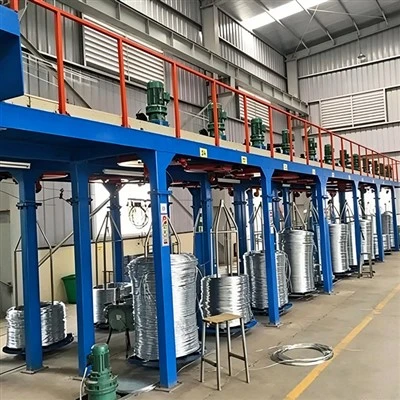
First, let’s ground this in what a brightening furnace does. Unlike a regular heat-treating furnace that might harden metal for strength, a brightening furnace’s core job is twofold: it cleans metal surfaces during heating, and prevents new oxidation from forming while the part is at high temperatures and cooling. For steel, stainless steel, copper, brass, even specialty alloys like titanium, heating them in open air would leave a thick, ugly layer of scale—iron oxide for steel, chromium oxide for stainless steel—that’s hard to remove and ruins the surface finish. Without the right atmosphere, you end up with parts that need hours of acid pickling or sandblasting, which adds cost, wastes material, and can even damage delicate geometries like small gears or threaded fasteners.
Hydrogen’s first critical role is as a reducing agent. Let’s get a little science here, but I’ll keep it practical. Oxidation is when metal reacts with oxygen to form oxides (scale). Reduction is the reverse reaction—when a substance takes oxygen away from those metal oxides. Hydrogen does this perfectly because it has a very high affinity for oxygen at the high temperatures we run in brightening furnaces (usually between 1,400°F and 2,100°F, depending on the material). When hydrogen comes into contact with iron oxide scale on a steel part at these temperatures, it triggers a chemical reaction: H2 + FeO → H2O + Fe. The hydrogen takes the oxygen from the iron oxide, turning it into harmless water vapor, and leaves behind pure, unoxidized iron. That’s not a theory—we test this every day in our own labs. We’ll run a steel bolt through a test furnace with hydrogen atmosphere, pull it out, and it’s bright, shiny, and has no trace of scale, whereas a bolt run in a nitrogen-only atmosphere comes out with a dull, gray surface that would require post-processing.
But hydrogen isn’t just for removing existing scale—it’s also the best shield against new oxidation. When a metal part is hot, it’s extremely reactive. If there’s even a trace of oxygen in the furnace, it will bind to the metal surface immediately, forming a new oxide layer. Most other common furnace atmosphere gases, like nitrogen or argon, are inert—they just sit around and don’t react with anything. But hydrogen actively displaces oxygen and other reactive gases from the furnace chamber, creating a stable, oxygen-free environment. Wait, you might ask—what about pure hydrogen? Isn’t that flammable? Yes, but that’s why we engineer our furnaces with strict controls—pressure monitoring, gas flow sensors, and safety interlocks—to keep the hydrogen concentration at levels that are effective but safe. We never run at 100% hydrogen for most applications; usually, we mix it with nitrogen (forming what we call dissociated ammonia atmosphere, or endothermic gas with a hydrogen boost) to get the right balance. But even mixed, hydrogen is the only gas that can consistently eliminate oxygen to prevent surface damage.
Another role of hydrogen that many new furnace operators don’t realize is its ability to improve surface quality beyond just being bright. For stainless steel parts, for example, chromium is a key element that makes the metal corrosion-resistant. If there’s any oxygen present during heating, chromium will oxidize preferentially, forming a thin, invisible layer of chromium oxide that ruins the part’s corrosion resistance. Hydrogen eliminates that risk by removing any oxygen that would react with chromium, ensuring the stainless steel retains its full corrosion properties along with its bright finish. We had a customer a few years back who was having issues with their stainless steel valve parts failing corrosion tests right after heat treatment. They were using a nitrogen-only atmosphere, and once we adjusted their furnace to add 25% hydrogen to their mix, both the surface brightness and corrosion resistance improved by 30%—that’s a real-world win that shows hydrogen’s value beyond just appearance.
Hydrogen also helps with uniform heating, which is a big deal for consistent part quality. Hydrogen has a higher thermal conductivity than almost any other common furnace atmosphere gas—about 7 times higher than nitrogen at 2,000°F. What does that mean for you? It means heat transfers faster and more evenly throughout the furnace chamber. So parts in the back of the furnace heat up at almost the same rate as parts in the front, and the entire part is heated uniformly, not just the outer layer. That reduces distortion, ensures consistent material properties across all parts, and cuts down on process time. We designed our latest line of brightening furnaces with direct hydrogen injection zones that maximize this thermal conductivity, so customers can run parts 15-20% faster than with traditional atmosphere mixes, without sacrificing quality.
But hydrogen isn’t without its considerations, which is why our team works closely with every customer to tailor the atmosphere to their specific parts, not just push more hydrogen. For example, some copper alloys are very sensitive to hydrogen embrittlement—when hydrogen atoms diffuse into the metal’s grain structure and cause it to become brittle, leading to cracks during processing. We’ve had to adjust hydrogen concentration and temperature for copper parts to keep that from happening, sometimes using a small mix of nitrogen and a tiny amount of hydrogen instead of higher concentrations. For high-carbon steel parts, on the other hand, higher hydrogen levels can actually help prevent decarburization—when carbon from the metal surface reacts with oxygen and is lost, weakening the part. Hydrogen eliminates that oxygen, so carbon stays in the metal where it needs to be, maintaining the part’s strength.
Another point that comes up a lot with new customers is cost. Hydrogen can be perceived as more expensive than other gases, but when you factor in the cost of post-processing (acid pickling, sandblasting, rework from defective parts), it’s actually a net savings. We’ve done a cost analysis for a customer making automotive fasteners: they were spending $120,000 a year on pickling and rework, and switching to a hydrogen-integrated brightening furnace cut that to $18,000 a year. The gas cost difference was only $15,000 a year, so they saved $87,000 immediately. That’s the value of focusing on the long-term, not just the upfront gas price.
As a furnace supplier, our job isn’t just to sell equipment—it’s to make sure our customers get the right atmosphere for their application, so their parts come out exactly as they need. That means testing different hydrogen mixes, adjusting furnace pressure, integrating safety systems, and even providing ongoing support to troubleshoot any atmosphere-related issues. We recently worked with a manufacturer of small medical components, who needed their titanium parts to be not just bright, but also free of any contaminants that would make them unfit for use in implants. Titanium oxidizes very easily at high temperatures, so we worked with them to develop a pure hydrogen atmosphere (with strict safety controls) that removed all scale and kept the surface clean, meeting their strict regulatory standards. They’ve been using our furnace for two years, and haven’t had a single part rejected for surface quality.
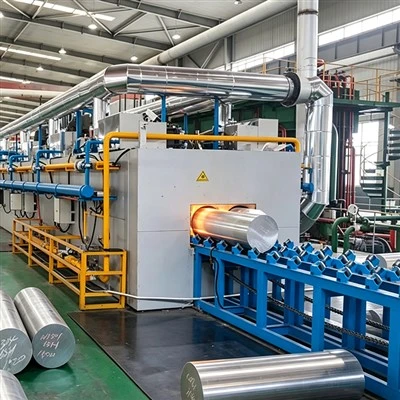
At the end of the day, hydrogen’s role in a brightening furnace atmosphere is both simple and transformative. It cleans, protects, improves quality, boosts efficiency, and adds value to parts that would otherwise be unusable. It’s the reason a steel bolt comes out shiny enough to use without polishing, a stainless steel valve retains its corrosion resistance, and a medical component meets the highest standards. If you’re a manufacturer looking to upgrade your brightening process, cut post-processing costs, or get consistent, high-quality parts for your products, integrating hydrogen into your furnace atmosphere is one of the most impactful changes you can make. I’ve spent years perfecting furnace systems that leverage hydrogen’s power safely and effectively, and I’m here to help you find the right solution for your operations. To discuss your specific needs, reach out to our team to start a conversation about optimizing your brightening furnace atmosphere and improving your production results.
Annealing Furnace References:
- ASM International. Heat Treater’s Guide: Practices and Procedures for Iron and Steel. Materials Park, OH: ASM International, 2018.
- Campbell, F.C. Manufacturing Processes for Advanced Composites. Amsterdam: Elsevier, 2004.
- Townsend, W.D. Introduction to Heat Treating of Aluminum Alloys. Materials Park, OH: ASM International, 2017.
- International Organization for Standardization. ISO 14253-1: Geometrical Product Specifications (GPS) — Inspection by Measurement of Workpieces and Measuring Equipment — Part 1: Rules and Definitions. Geneva: ISO, 2019.
- Groover, M.P. Fundamentals of Modern Manufacturing: Materials, Processes, and Systems. Hoboken, NJ: John Wiley & Sons, 2020.
Jiangsu Fangwei Furnace Industry Co., Ltd.
Jiangsu Fangwei Furnace Industry Co., Ltd. is one of the most professional brightening furnace manufacturers and suppliers in China. With abundant experience, we are committed to providing high quality customized products with competitive price. Please feel free to buy advanced brightening furnace made in China here from our factory.
Address: No.168, HuangNian Bridge, DaoShu Town, Danyang City, JiangSu Province, China
E-mail: fangwei@fwfurnaces.com
WebSite: https://www.fwfurnaces.com/
