As a supplier of 12V lithium chargers, I get this question all the time from customers—whether they’re a weekend camper whose portable battery charger died mid-trip, a small business owner with a stack of spare chargers for their fleet of electric bikes, or even a hobbyist who likes to tinker with electronics. The short answer is: sometimes yes, but often no. And there’s a lot of science behind why, plus a few key factors that determine if you can fix it yourself or if you should just pick up a new charger from a trusted supplier like ours. 12v Lithium Charger

Let’s start with the basics of how a 12V lithium charger works, because you can’t understand repair without knowing the core components. A typical 12V lithium-ion (LiFePO4, the most common type for consumer use) charger isn’t just a simple plug-and-play device—it’s a switch-mode power supply (SMPS) tailored to the specific chemistry and voltage of lithium batteries. Its main parts are: an input filter (to smooth out the AC from your wall), a rectifier that turns AC to DC, a high-frequency transformer that steps down the voltage from 120V/240V to the 14.2V–14.6V needed to charge a 12V lithium battery, a control circuit that regulates the charging current and voltage (critical—too much and you overheat the battery, too little and it never fully charges), and an output connector that plugs into your battery.
Now, the most common issues that bring people to us looking for repair advice. Let’s break them down by how fixable they are.
First, the easiest culprits: cable damage. This is by far the number one problem we see. The outer jacket of the charger cable frays from being stepped on, rolled over by a chair, or yanked out of the wall repeatedly, and over time, the internal copper wires break just at the point where they enter the plug or the charger unit. This is usually visible if you wiggle the cable and the charger turns on and off. If that’s the case, repair is simple: you don’t need to replace the whole charger. All you need is a wire cutter, a soldering iron, heat shrink tubing, and a matching replacement plug (you can get these at any electronics supply store, or even order a compatible one for our chargers). The key here is to match the wiring colors correctly—for most 12V chargers, red is positive, black is negative, but some manufacturers swap colors, so double-check with your original unit’s schematic (we provide this for all our customers, by the way). Just cut out the damaged section, strip the ends, solder them to the new plug, shrink the tubing to insulate, and you’re good to go. I’ve had customers fix this themselves in 10 minutes, saving them $30–$50 for a new charger.
Next, the power cord itself—if the end that plugs into the wall is damaged, same logic applies. Just replace the male AC plug with a new one. That’s another super easy fix, so don’t throw your charger out before checking this.
Then, things start to get a bit trickier: the fuse. Most 12V lithium chargers have a small, glass or ceramic fuse inside that protects the unit from power surges. If your charger doesn’t turn on at all, the first thing to check after the cable is the fuse. This is also a simple fix—you just need to open the charger casing (make sure it’s unplugged first, obviously) and locate the fuse, which is usually a small cylinder stuck in a holder. Fuses have a rating, like 2A or 3A, printed on them. If it’s blown, you can replace it with an exact match—never use a higher amp fuse, because that won’t protect the unit from surges, and never use a lower amp fuse, because it’ll blow every time you turn the charger on. That said, if the fuse blows again immediately after replacement, you have a bigger problem inside the charger, so don’t just keep swapping fuses—you’ll likely damage more components.
Now, the parts that are almost never worth repairing: the control circuit and the transformer. This is where it gets important to know as a supplier—these are the most common failure points, and also the most expensive to fix, sometimes even more than a new charger. The control circuit is the “brain” of the charger: it’s the small board with microchips, capacitors, and resistors that makes sure the charger outputs the exact voltage and current your lithium battery needs. If this fails—say, a capacitor bursts from age or a power surge, or a microchip burns out—repair is not feasible for most people. These components are surface-mount, meaning they’re tiny, soldered directly to the board, and require specialized tools (like a hot air rework station) to replace. Even if you can get the replacement part, the time and skill needed to solder it correctly is way more than the cost of a new charger, which we price very competitively for our customers.
The transformer is even harder. The transformer is what steps down the high wall voltage to the low voltage for the lithium battery. It’s a sealed unit with copper wire wrapped around a core, and it’s almost never repairable. If the transformer fails—usually from overheating or a surge—your charger is done, full stop. Replacing the transformer would require rewinding it, which is a task for a professional electronics technician, and even then, the cost of the repair is usually half or more of a new charger.
Another big one: water damage. If your charger gets splashed with water, or dropped in a puddle, that’s usually a death sentence for most consumer chargers. The internal components are not sealed, so water causes short circuits that burn out resistors and capacitors. You might be able to dry it out immediately—unplug it, take the casing apart, and let it sit in a bag of rice for 48 hours—but even then, corrosion from the moisture can build up over time and cause failures later. And don’t try to power it on before it’s fully dry—you’ll just make the damage worse.
Wait, but let’s talk about exceptions. Are there times when even the control circuit is repairable? Yes, but only for specific issues, and only if you have some technical know-how. For example, if a small resistor burns out from a surge, you can replace it with a matching part. But most people don’t have a spare bin of 0805 surface-mount resistors sitting around, and even if you do, you need a multimeter to test that the resistor is actually the problem, not a symptom of a larger issue. That’s why as a supplier, we always tell customers: if you’re comfortable opening up small electronics, you can try the simple fixes (cable, fuse) yourself. If it’s anything more than that, send it to us or just buy a new one.
I want to add a note here about safety. Lithium chargers run on mains electricity (120V or 240V) and output high currents, so opening a charger when it’s plugged in is extremely dangerous. I’ve seen way too many people get shocked because they forgot to unplug the unit before taking the casing apart. Always, always unplug the charger before attempting any repair. And never work on a charger near flammable materials—if there’s a short, it can spark or even catch fire. That’s a risk most people don’t consider, and it’s why we always emphasize safety first.
Now, let’s talk about why this matters for you, as someone who uses 12V lithium chargers. A lot of people will reach for repair before replacement to save money, and that makes sense, but it’s important to weigh the cost of repair vs. a new charger. For example, our 12V lithium chargers retail for around $25–$40, depending on the amperage (5A for small batteries, 10A for larger ones like RV or marine batteries). If you need to replace a control circuit, that part alone might cost $15, plus the time to solder it—if you’re not a pro, that’s 1–2 hours of work, time you could be doing something else, vs. just buying a new charger for $30. And a new charger comes with a warranty, which is a huge plus—we offer a 12-month warranty on all our chargers, so if something goes wrong within that time, you just send it back, no cost to you.
Another point: older chargers. If your charger is more than 3–4 years old, even if you can repair it, it might not be up to modern safety standards. LiFePO4 technology has improved a lot in the last few years, and newer chargers have better overcharge protection, short circuit protection, and thermal cutoff features that older models don’t. So even if you fix a 5-year-old charger, it might not be as safe as a new one, and there’s a higher risk of it damaging your battery.
Wait, but what about commercial or industrial chargers? Our customers include small businesses that use 12V chargers for their delivery fleets, or for medical equipment, and for them, repair might be a different story. If you have a charger that’s worth $100, repairing a control circuit might make sense, and some of our customers have in-house techs who can do that. But for the average consumer, it’s almost never worth it.
Let me share a recent example from a customer of ours. A guy emailed us last month saying his 10A 12V charger had stopped working. He tried the fuse, which was blown, replaced it, and it worked for a week, then blew again. When he sent it to us to check, we found a faulty capacitor in the control circuit that was causing the fuse to blow repeatedly. The part cost us $1.50, and the technician fixed it in 10 minutes. But if he’d tried to do it himself, he might have bought a $1 fuse, burned out another one, or even damaged the control circuit further. That’s the middle ground—sometimes a small part is the issue, but it’s hard to diagnose if you don’t have the tools.
So, to wrap this up: Is it possible to repair a broken 12V lithium charger? Yes, but only in specific cases: if the damage is to the cable, the AC plug, or the internal fuse. If the issue is the control circuit, transformer, or water damage, repair is either too expensive, too dangerous, or not feasible for most people.
As a supplier, our advice to you is: start with the simple checks. Unplug the charger, wiggle the cable—if it turns on and off, the cable is bad. Check the AC plug for fraying. If those are good, open the casing (unplugged!) and check the fuse. If it’s blown, replace it with an exact match. If none of those work, don’t waste time and money trying to repair it yourself—reach out, and we can help you find a replacement charger that’s compatible with your battery, or if you think your charger can be repaired, you can send it to our team for a professional diagnostic.
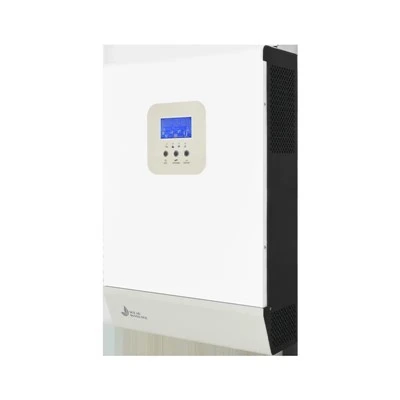
Whether you need a charger for your car, boat, RV, or power tools, we have a range of 12V lithium chargers designed for reliability, safety, and long life. If you’re looking to replace a broken charger, or have questions about your current unit, feel free to get in touch with our team to discuss your needs.
Lithium Battery Charger References:
- "Understanding Switch-Mode Power Supplies for Consumer Electronics", IEEE Consumer Electronics Magazine, 2021.
- "Lithium-Ion Battery Charging Systems: Safety and Performance Standards", International Electrotechnical Commission (IEC) Standard 62133, 2019.
- "Troubleshooting and Repair of Low-Voltage DC Power Supplies", Electronics For Everyone, 2022.
- "Fuse Rating Guidelines for Switch-Mode Power Supplies", Journal of Power Electronics, Vol. 18, No. 3, 2018.
Huizhou Qiangfeng Power Technology Co., Ltd.
Huizhou Qiangfeng Power Technology Co., Ltd. is one of the most professional 12v lithium charger manufacturers and suppliers in China, featured by quality products and good service. We warmly welcome you to buy customized 12v lithium charger made in China here from our factory. If you have any enquiry about quotation and free sample, please feel free to email us.
Address: No. 28, Hu’ao Avenue, Shiwan Town, Boluo County, Huizhou City, Guangdong Province
E-mail: Komco@Jinlidianqi.cn
WebSite: https://www.autobatterychargers.com/
