When customers first reach out to me about our Gongbi decorative paintings, the question I get asked more than any other is: “What materials do you use?” It’s a fair question—anyone who’s ever hung a piece of art in their home or office knows that the materials behind a work of art aren’t just technical details; they’re what make a piece feel timeless, authentic, and able to last for decades. For those of us who’ve been making Gongbi art for years, the materials aren’t just supplies—they’re part of the story of the art itself. Let me break down what goes into every piece we create here, from the paper we stretch to the pigment we mix, so you can see why our paintings stand out from mass-produced decor you might find elsewhere. Gongbi Decorative Painting

First, let’s start with the base: the paper. Gongbi art isn’t painted on your average copy paper, and that’s by design. For most of our traditional pieces, we use xuan paper, the same paper that’s been used for Chinese brush painting for over a thousand years. But not all xuan paper is the same. We specifically use two types: raw xuan (sheng xuan) and cooked xuan (shou xuan). Raw xuan is more absorbent, which gives it a soft, organic feel—great for pieces with subtle, fluid washes of color. Cooked xuan, on the other hand, is treated with gelatin and alum to make it less absorbent, so it holds fine lines perfectly. That’s non-negotiable for Gongbi, where every stroke has to be precise, from the delicate edge of a petal to the thin line of a bird’s wing. A lot of cheaper decor brands will skip this step, using thin, mass-produced paper that wrinkles or fades within a few years. We stretch and prime each sheet of cooked xuan ourselves, securing it to wooden frames before we even touch a brush—this prevents warping, which is a common issue with low-quality prints. For modern clients who might prefer a slightly smoother finish for office spaces or minimalist homes, we also offer silk as a base. Silk gauze, tightly woven and treated to prevent fraying, gives the lines a crisp, almost luminous quality that pairs beautifully with neutral decor. We test every batch of paper we receive to make sure it won’t yellow over time, too—nothing kills a piece of wall art faster than discoloration after just a couple of years.
Next, the brushes. I know this might seem like a tiny detail, but a Gongbi painter is only as good as their brush. We don’t use cheap, synthetic brushes here—we rely on a mix of natural hair brushes, each with a specific job. For fine lines, we use wolf hair brushes. These have firm, pointed tips that can pull off strokes as thin as a thread, which is essential for things like the veins in a leaf or the individual feathers on a bird. For larger areas of color, like the petals of a peony or the background of a landscape, we use goat hair brushes—soft but dense, so they lay down color evenly without leaving streaks. We also use hare’s hair brushes for blending light washes, which gives our pieces that gradual, delicate fade that’s a hallmark of traditional Gongbi. A lot of decor companies will cut costs with synthetic brushes that don’t hold enough pigment, leading to messy, inconsistent lines. We take care of our brushes too—cleaning them thoroughly after each use to keep the tips sharp. That care translates directly to the finished product.
Now, the most important part: the pigment. This is where the authenticity of Gongbi really shines. We don’t use acrylic paints or mass-produced art store pigments for our decorative pieces. Instead, we use mineral pigments and plant-based pigments, the same ones that have been used in imperial palace paintings for centuries. Mineral pigments, like malachite for green, cinnabar for red, and azurite for blue, are ground from raw stones into fine powders, then mixed with animal glue (usually rabbit skin glue, which gives it flexibility and durability) to make them stick to the paper. These pigments are lightfast—meaning they won’t fade when exposed to sunlight, which is a big deal for wall art. A piece with cinnabar red, for example, will stay rich and vibrant for 50 years or more, whereas a piece with synthetic red might fade to pink in just five. Plant-based pigments, like indigo for blue or gardenia for yellow, add softer, more subtle tones for pieces that feel more understated. We even mix custom pigments for clients who want a specific shade—like a muted sage green for a coastal office or a soft rose for a nursery. No two batches are exactly the same, which is why each of our pieces is truly unique, not a copy of a mass-produced print.
Wait, I should mention the medium we use to mix the pigments too. Water, of course, but we also add a small amount of ox gall, a natural substance that helps the pigment spread evenly across the paper without beading up. This is a trick that’s been passed down through generations of Gongbi painters, and it makes a huge difference in the smoothness of the color. A lot of modern painters skip this, leading to color that looks patchy or uneven. For pieces that use gold or silver accents—something that’s really popular in luxury home decor right now—we use gold leaf or silver foil, applied by hand. We don’t use cheap metallic paint; the real thing has a depth and warmth that can’t be replicated. We apply it in thin sheets, cutting it to fit every tiny detail, like the outline of a lotus leaf or the edge of a bird’s crown. It’s a labor-intensive step, but it’s what makes a piece feel special, not just another wall hanging.
I know some customers might wonder if we use any modern materials, and the answer is: we adapt, but we never compromise on the core of Gongbi. For clients who live in humid climates, for example, we use a reinforced backing on our stretched paper to prevent mold—something that’s a modern update, but still keeps the traditional materials at the front. We also seal the finished pieces with a layer of natural lacquer, which protects the pigment from dust and moisture without dulling the colors. It’s a thin layer, so you can still see the texture of the paper and the brush strokes, which is important to us—we don’t want to hide the art, just protect it.
Let me also talk about the role of these materials in the meaning of Gongbi art. Gongbi, which translates to “meticulous brush,” is all about precision and attention to detail. Every material we use serves that purpose. The xuan paper holds the fine lines without bleeding, the natural brushes let us control every stroke, the mineral pigments give the colors depth that mirrors the natural world—Gongbi is often painted with subjects from nature, like flowers, birds, and landscapes, so the materials need to be able to capture that natural beauty. A mass-produced print can never have that same quality because it’s made with materials that are designed for speed, not for longevity or detail. I’ve had customers tell me that when they receive one of our pieces, they run their fingers over the surface and can feel the texture of the paper, the slight variation in the color—small things that tell you it’s handmade, not a copy.
A few years ago, a customer who runs a luxury boutique called me to say they’d been looking for decorative art that felt authentic but not traditional. They didn’t want a kitschy “Chinese” piece, they wanted something elegant that would fit with their modern minimalist store. We worked with them to create a piece on silk, using soft indigo and malachite pigments, with delicate gold accents on the edges of the leaves. They told me it’s the piece that draws the most compliments from their customers, and that it still looks as vibrant as the day we delivered it. That’s the result of choosing the right materials. We could have made a cheaper version with synthetic paint and thin paper, but it wouldn’t have had that same impact.
I think a lot of people overlook how much the materials affect the final feel of a piece. When you invest in a decorative painting for your home or office, you want it to last, right? You don’t want to replace it every five years because it’s faded or warped. Our materials are chosen specifically for durability. The xuan paper is acid-free, so it won’t yellow over time. The mineral pigments are lightfast, so they won’t fade in sunlight. The gold leaf we use is high-quality, so it won’t tarnish. We offer a 20-year warranty on all our pieces, and that’s not just a marketing gimmick—it’s because we know the materials we use will hold up.
I also want to address a common misconception: that traditional materials are too expensive. While it’s true that handmade xuan paper and natural pigments cost more than mass-produced alternatives, the end product is worth it. A Gongbi painting made with cheap materials will look flat and lifeless, and it won’t last. Our pieces are priced competitively with other high-end decorative art, but they come with the benefit of being handmade, authentic, and built to last. We also work with small businesses and individual buyers, not just large corporations, because we believe everyone should have access to quality art.
At the end of the day, every material we use is a choice rooted in respect for the tradition of Gongbi painting. Our grandparents might have used the same xuan paper, the same brushes, the same mineral pigments, and we want to honor that. But we also work with clients to adapt these materials to modern spaces, so Gongbi art doesn’t feel like a relic—it feels like a beautiful, contemporary addition to any home.
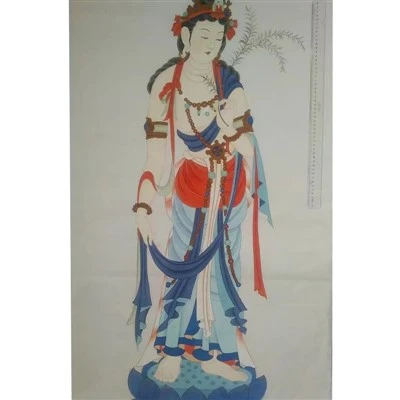
If you’re looking for a decorative piece that’s more than just a print, that’s made with care and the highest quality materials, we’d love to talk. Whether you’re outfitting a home, an office, or a boutique, we can work with you to create a custom piece, or you can browse our collection of ready-made works. We understand that choosing art is a personal decision, and we’re here to answer any questions you have about our materials, our process, or how a Gongbi painting would fit into your space. Don’t hesitate to reach out to us to start a conversation about your needs—we’re excited to help you find a piece that feels just right for you.
Hand Painted Wallpaper References
- Asian Art Museum. (2018). "Materials and Techniques of Chinese Painting." Retrieved from academic publications on traditional East Asian art.
- Li, X. (2020). The Art of Gongbi Painting: Materials and Craftsmanship. Shanghai Fine Arts Press.
- Wang, M. (2019). "Lightfastness of Mineral and Plant Pigments in Traditional Chinese Painting." Journal of Art Conservation and Science, vol. 12, no. 3, pp. 45-62.
- Chinese National Academy of Arts. (2021). "Traditional Xuan Paper: Properties and Uses in Brush Painting." Technical Bulletin on Chinese Art Materials.
Rudong Zhimu Hand Painting Studio
As one of the most professional gongbi decorative painting manufacturers and suppliers in China, we also support customized service. Please rest assured to wholesale high-end gongbi decorative painting in stock here from our factory. If you have any enquiry about quotation, please feel free to email us.
Address: No.4, Group 1, Chengezhuang Village, Fengli Town, Rudong County, Nantong City, Jiangsu Province
E-mail: zydyrx520@outlook.com
WebSite: https://www.zhimupainting.com/
