If you’ve spent any time in food, beverage, pharmaceutical, or personal care production, you know manual CIP (Clean-in-Place) systems are the unsung workhorses of your line. Unlike fully automated CIP skids that run on pre-programmed cycles, manual CIP relies on human operators to move hoses, connect valves, monitor chemistry, and track rinse times—making it more flexible for small-batch production, niche equipment, or facilities that can’t justify high-volume automated infrastructure. As a supplier that’s worked with production teams across 12+ industries over the past 7 years, I’ve seen firsthand that a manual CIP system’s uptime doesn’t just depend on how well you run cycles—it hinges on proactive replacement of its most worn parts. Wait, let’s make that real: last year, a craft brewery client of mine lost 8 hours of production when their CIP dip tube failed mid-cycle, spilling caustic cleaner all over their pump room. The worst part? They’d skipped replacing that dip tube because it “looked fine.” That’s exactly the kind of avoidable headache we’re going to walk through today. I’m not talking about generic advice pulled from a textbook—this is what I’ve learned sitting in plant control rooms at 2 a.m. with operators who’ve fixed these systems when the line was down, waiting for batches to move. Manual CIP System

Let’s start with the parts you’ll touch every single time you run a manual CIP cycle, because those take the most abuse. First up: CIP hoses. Not just any hoses—the ones used to connect the CIP skid to your processing tanks, pipes, or fillers. Manual CIP hoses are subject to daily flex, exposure to hot caustic and acid cleaners (often ranging from 140°F to 180°F), and occasional accidental scrapes against sharp tank edges or rough concrete floors. I’ve seen hoses last 2 years for some clients, and less than 6 months for others—all depending on how often they’re moved, what chemicals they’re exposed to, and whether they’re stored properly when not in use. The key failure signs you can’t ignore? Cracks or brittling on the outer cover, blisters on the inner liner (that’s where chemical seepage starts), or a sticky residue that won’t wipe off. Wait, here’s a pro tip I share with all my clients: don’t cut corners on hose material. For most food and beverage applications, use EPDM-lined hoses; for higher-grade industrial or pharmaceutical CIP, go with PTFE-lined. And always replace hoses before they show signs of wear, not after— that’s the difference between a quick 15-minute swap and 4 hours of downtime while you clean up a chemical spill or clear a blocked line.
Next on the list: CIP spray balls. If you’re using manual CIP (not recirculating, but still—spray balls are how you get consistent coverage inside tanks), these tiny, unassuming parts work overtime. Most manual CIP systems use static spray balls (not rotary ones, which are more common in automated setups) that sit at the bottom of tanks, spraying cleaner upward to coat all interior surfaces. Over time, the tiny nozzles on the spray ball get clogged with mineral deposits, food debris, or even dried protein—especially in dairy or sauce production. I had a yogurt plant client a couple of years back who complained that their CIP cycles were leaving a film on the tank walls, and they couldn’t figure out why. Turns out, their spray ball nozzles were 90% blocked with dried whey. They’d been running that same spray ball for 18 months without cleaning or replacing it. Even a partially clogged spray ball means inconsistent cleaning, which can lead to product contamination, failed swabs, or even regulatory issues for food and pharma facilities. How often to replace? If you’re doing daily CIP cycles, plan to swap spray balls every 12 to 18 months. And if you have a client that runs weekly cycles (like a small craft distillery), extend that to 24 months max. Pro tip: when you do replace a spray ball, make sure the fitting size matches your tank’s port—thread sizes can vary, and a wrong fit will leak, ruining your CIP cycle pressure.
Then there are manual valves and actuators—wait, not the fully automated ones, the manual ball valves and gate valves operators use to divert CIP flow between tanks. Manual CIP systems rely entirely on these valves to direct caustic, acid, and rinse water to the right location, so even a small leak here can throw off your entire cycle. The most common wear points on manual CIP valves are the valve stems, O-rings, and valve seats. I’ve seen clients reuse valve stems for years without checking, but constant twisting and exposure to chemicals cause the seals to degrade. A leaking valve can mean you’re losing CIP solution mid-cycle, leading to under-cleaning, or worse, mixing caustic and acid if the valve seals fail completely. For valve replacements, a good rule of thumb is to replace O-rings every time you do a full CIP system inspection (which should be quarterly, at minimum). Valve stems and seats? If you notice that the valve is getting hard to turn, or it’s leaking around the stem when you open it, that’s your sign—don’t wait for it to fail during a cycle. One of my earliest clients, a small sauce manufacturer, had a gate valve fail mid-cycle and spilled 50 gallons of caustic on their production floor, which forced a full line shutdown and a $1,200 cleanup bill. That’s a mistake they still talk about 5 years later.
Another often-overlooked part: CIP pump seals. The centrifugal pump is the heart of any CIP system, moving cleaner and rinse water through hoses and lines. Manual CIP pumps run the same load as automated ones, but since operators might leave them running a few seconds too long during cycles, or accidentally run them dry (a common mistake when switching hoses or valves), that puts extra stress on the pump seals. Pump seals are designed to prevent leaks between the pump’s shaft and housing, and when they wear, you’ll see drips or seepage around the pump. For most manual CIP systems, mechanical pump seals last between 1 and 3 years, depending on usage. If you run the pump dry even once, that seal’s life is cut in half— I can’t tell you how many times I’ve gotten a call at 3 p.m. on a Friday because an operator forgot to prime the pump, ran it for 10 seconds, and the seal burned out. Replace the seal before it starts leaking—leaks mean you’re losing pressure in your CIP lines, which means less effective cleaning.
Wait, let’s talk about pH and conductivity probes too—even in manual CIP systems, these are critical to verifying that your rinse water is neutral and your CIP solution is at the correct concentration. Manual CIP relies on operators to track these readings, but if the probes are dirty or worn, the readings will be wrong. A faulty pH probe might tell you the rinse water is neutral when it’s still acidic, leading to cross-contamination in your next product. Conductivity probes, which measure the concentration of chemical cleaners, get coated with mineral deposits over time, so they’ll give you inaccurate readings that lead to overusing chemicals (wasting money) or under-cleaning (risking contamination). How often to replace these probes? Most good quality pH and conductivity probes last 12 to 24 months, but if you’re using them in harsh environments (like high-temperature caustic), that timeline shrinks to 9 to 12 months. Calibrate them monthly, and if cleaning with a mild acid doesn’t bring readings back, replace them.
Let’s not forget the less obvious parts, either—like hose gaskets, drain plugs, and even the pressure gauges on your CIP skid. Pressure gauges, for example, show you that your CIP cycle is at the correct pressure (usually 15 to 30 psi for most manual systems). A faulty gauge can mean you’re running too low pressure (not cleaning well) or too high pressure (damaging hoses or tank liners). I had a craft soda client who had a pressure gauge that was stuck at 20 psi, but the actual line pressure was 40 psi—over 6 months, that extra pressure wore out two hoses and damaged a tank’s inner liner, leading to hundreds of dollars in repairs. Replace pressure gauges every 2 to 3 years, and if it’s hard to read or has a cracked face, swap it immediately.
Now, let’s get practical—how do you create a replacement schedule that works, not just for the parts, but for your production line? I recommend doing a monthly CIP system check: shut down the line, inspect all hoses for cracks, check spray ball nozzles for clogs, turn each valve to make sure it moves smoothly, and test pressure gauges and probes. Then, create a replacement timeline based on your usage: if you run CIP daily, hoses every 18 months, spray balls every 12, pump seals every 2 years, etc. If you run CIP weekly, you can stretch those timelines by 50%, but never skip the inspection.
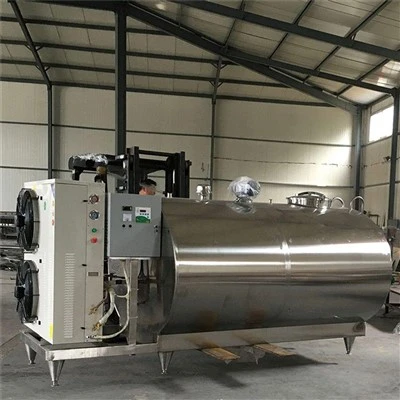
Wait, one thing I always tell clients: don’t wait for a part to fail mid-production. I’ve been in this long enough to know that downtime costs way more than the parts themselves. A $50 hose replacement is nothing compared to 8 hours of lost production for a craft brewery, or a failed batch of pharmaceutical that can set you back weeks. When you source replacement parts, make sure they’re compatible with your specific manual CIP system—generic parts might fit, but they won’t stand up to the chemicals and temperatures you’re dealing with. For example, a generic EPDM hose might work for cold water, but if you’re running 180°F caustic, you need a high-temperature EPDM or PTFE-lined hose.
CIP Cleaning System At the end of the day, manual CIP systems are only as good as the parts you keep in working order. Over the past 7 years, I’ve built my business on making sure my clients don’t have to face those 2 a.m. panic calls about a failed CIP part that’s bringing their entire line to a halt. If you’re not sure about the right replacement parts for your manual CIP system, or you want to build a custom maintenance schedule that fits your production needs, reach out to connect with our team to discuss your requirements. We work with facilities of all sizes, from small craft producers to mid-sized food and pharma operations, and we’ll help you avoid the avoidable downtime that’s eating into your profits.
References
- U.S. Food and Drug Administration. (2022). Sanitation Equipment and Utensils. FDA Food Safety Modernization Act (FSMA) Guidance.
- International Society of Beverage Technologists. (2021). CIP System Maintenance Best Practices for Craft Producers. ISBT Technical Bulletin Series.
- National Sanitation Foundation. (2020). Standard 61: Drinking Water System Components – Health Effects. NSF International.
- Food and Drug Administration. (2023). Pharmaceutical Clean-in-Place (CIP) Guidelines for Small Scale Manufacturing. FDA Drug Safety and Availability Guidance.
- Industrial Hose and Fitting Association. (2022). Manual CIP Hose Selection and Replacement Guidelines. IHFA Technical Report.
Shandong Chenma Machinery Co., Ltd.
Shandong Chenma Machinery Co., Ltd. is one of the most professional manual cip system manufacturers and suppliers in China. As we have world-leading production equipment and strong manufacturing capabilities, we warmly welcome you to buy high quality manual cip system made in China here from our factory. For price consultation, contact us.
Address: No.1666 Xinluo Street, Jinan City, Shandong
E-mail: admin@sdchenma.com
WebSite: https://www.chenmadairy.com/
