If you’ve ever bought a gas analyzer for your facility, lab, or industrial line, you’ve probably asked yourself at some point: “How long are these sensors actually gonna last?” It’s a totally fair question—after all, the sensor’s the part that’s doing all the heavy lifting, right? Your analyzer’s whole job is to give you accurate, reliable readings, and a dead or dying sensor is the last thing you wanna deal with when you’re mid-audit or fixing a process line. As a gas analyzer supplier who’s been in this game for years, I’ve fielded this question from hundreds of customers, so let’s break this down like we talk about it over a coffee at a trade show—no stuffy jargon, just real stuff you can act on. Gas Analyzers
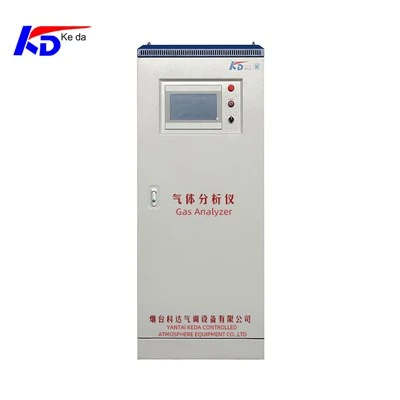
First, let’s get one thing straight: there’s no one-size-fits-all answer here. The lifespan of a gas analyzer sensor isn’t some fixed number that works for every situation. It’s dependent on way more than the sensor’s part number, and skipping these details is how you end up shelling out for a new sensor way sooner than you need to. Let’s start with the main types of sensors because that’s the first big variable. The three most common ones we sell are electrochemical, infrared (IR), and catalytic bead (pellistor) sensors, and each has its own typical lifespan, plus a bunch of factors that can make that number swing.
Electrochemical sensors are by far the most popular for low-to-medium concentration gases—think carbon monoxide, hydrogen sulfide, chlorine, sulfur dioxide, and ammonia. These work by having a gas react with a chemical electrolyte inside the sensor, producing an electrical signal that the analyzer turns into a reading. On average, a good quality electrochemical sensor will last 2 to 4 years. But wait—don’t take that as a hard rule. I’ve seen electrochemical sensors die in 6 months because someone exposed them to way higher gas concentrations than they’re rated for, and I’ve also seen some run strong for 5 years because they were maintained properly. What kills these guys most often is contamination. If your facility has high humidity, dust, oil mists, or other corrosive fumes, that stuff gets inside the sensor’s casing and clogs the electrodes or breaks down the electrolyte. For example, a chlorine sensor at a wastewater treatment plant where the air’s full of hydrogen sulfide will degrade way faster than the same sensor in a clean lab that only tests chlorine in controlled samples. Also, if you leave the analyzer powered on 24/7 when it’s not even in use, that wears the electrochemical reaction out over time—best practice is to turn it off or put it on sleep mode when you’re not using it, if your analyzer has that option.
Next up, infrared (IR) sensors, which we use for gases like methane, carbon dioxide, and volatile organic compounds (VOCs). These work by measuring the amount of IR light absorbed by the target gas—no chemical reaction needed, which makes them more resistant to some types of contamination. Typical lifespan for an IR sensor is 5 to 10 years. That’s way longer than electrochemical, right? But again, factors apply. The biggest one here is the IR source itself, which is the tiny bulb that emits the light the sensor uses. Those bulbs have a limited life, usually around 10,000 to 15,000 hours. If you run the analyzer nonstop, that bulb will burn out in a little over a year, but if you use it only 8 hours a day, that bulb will last almost 5 years. Another thing for IR sensors: don’t expose them to extreme temperature swings. If your analyzer is in an unheated warehouse that drops to 20°F (-7°C) at night and jumps to 90°F (32°C) during the day, that temperature stress breaks down the sensor’s optical components over time. I’ve also had customers accidentally point their IR sensor at something that produces too much IR radiation (like a hot steam pipe) instead of the target gas, which can damage the lens and throw readings off way faster than normal use.
Then there are catalytic bead sensors, used for flammable gases like methane, propane, and hydrogen. These work by heating a small bead coated with a catalyst—when flammable gas hits the bead, it ignites (at a low temperature, not dangerous) and the heat change gives a signal. Typical lifespan for a catalytic bead sensor is 2 to 5 years. The main killer here is exposure to “poisonous” gases that coat the catalyst and make it stop working. Things like silicones, lead, chlorine, and sulfur compounds are the worst for catalytic sensors. For example, a sensor used in a paint shop where there’s silicone spray will be done in less than a year, even if it’s never exposed to flammable concentrations. I once had a customer who ran a catalytic sensor in a printing plant, and the inks they used had small amounts of sulfur—within 8 months, the readings were garbage, and the sensor was dead. Also, if you let the sensor sit in a gas concentration that’s way above its upper limit (like running it on 100% methane when it’s only rated for up to 100% LEL, which is the lower explosive limit), that can destroy the catalyst instantly.
Wait, so those are the general numbers, but what about other factors that affect every sensor, no matter the type? Let’s talk about calibration. A lot of people mix up calibration with replacement—calibration is making sure the sensor reads correctly, while replacement is when the sensor can’t be fixed anymore. But if you skip calibration, you’re basically letting the sensor degrade without knowing it, which can make it seem like it’s dying way sooner than it should. For example, an electrochemical sensor that’s slowly losing its electrolyte might still pass a quick 6-month calibration check, but if you wait 2 years between calibrations, you’ll notice the readings are way off, and by the time you replace it, you’ve been getting bad data for months. We recommend calibrating all sensors every 6 to 12 months, depending on use. High-use industrial analyzers might need quarterly calibrations, while lab analyzers used only for occasional samples can go 12 months.
Another big one is how you store the analyzer when it’s not in use. If you have a spare sensor that you haven’t installed yet, or a portable analyzer you only use once a month, storing it wrong will kill the sensor. For electrochemical sensors, never store them with the sensor cap still on if the analyzer is powered on—wait, no, actually, a lot of people don’t know this: if you’re storing an electrochemical sensor unused, you should leave the cap loosely on, not tight, to let a small amount of air circulate so the electrolyte doesn’t dry out. If you seal it up tight for months, the electrolyte evaporates, and the sensor is dead before you even use it. For IR sensors, don’t store them in dusty places—if dust gets on the lens, it can block the IR light and throw readings off, even if the bulb is still good. And for catalytic sensors, don’t store them near any chemicals that might poison the catalyst, like silicone grease or spray cans.
Let’s also cover portable vs fixed analyzers, because that’s another factor I get asked about. Portable analyzers, which you carry around to test different areas of a facility, usually have shorter sensor lifespans than fixed ones. Why? Because portable ones get moved around, banged into things, exposed to way more temperature and humidity swings, and often used for quick tests instead of being kept in a controlled space. A portable electrochemical sensor might last 18 to 3 years, while a fixed one in a clean, controlled environment can last the full 4 years. I had a customer who used a portable CO sensor for leak checks at a steel plant—he dropped it once a month, left it in the back of his truck in the summer heat, and that sensor died in 9 months. The exact same sensor installed in a fixed analyzer in the plant’s control room is still going strong after 3 years. That just goes to show how rough treatment cuts lifespan short.
Now, how do you know when your sensor is actually dying, instead of just needing a calibration? There are a few telltale signs that don’t require a full lab test. First, if your analyzer’s warning light for low sensor life comes on. Most modern analyzers will track the sensor’s usage and give you a heads-up when it’s time to think about replacement, usually 3 to 6 months before it actually dies. Second, if calibration keeps failing. If you calibrate the sensor with a known gas standard and it won’t lock into the correct reading, even after multiple tries, that’s a sign the sensor’s degraded beyond repair. Third, if readings are inconsistent. For example, if you test a gas sample that you know is 50 ppm H2S, and one day the analyzer says 40, the next says 60, and the next says 55 with no changes to the sample or environment, that’s a dying sensor. Fourth, for catalytic sensors specifically, if it starts giving zero readings (it should read 0 when no flammable gas is present) even when you know there’s no gas around, that’s a catalyst poisoning or failure.
Wait, but what if you want to extend your sensor’s lifespan? There are a few simple things you can do that don’t cost a lot, and they add up to years of extra use. First, use a protective filter for your sensors. Almost all sensors can have a filter installed that blocks dust, oil mists, and large particulates from getting into the sensor. We sell these for every sensor type, and they’re super cheap—usually $10 to $30, compared to a sensor that’s hundreds of dollars. Changing the filter every 1 to 3 months, depending on your environment, is one of the biggest things you can do to keep your sensor alive. Second, don’t expose the sensor to higher gas concentrations than its rated limit. Every sensor has an upper measurement range—if your electrochemical CO sensor is rated for 0 to 100 ppm, don’t use it to test a 500 ppm CO leak, because that will overload and damage the electrodes. If you need to test high concentrations, get a sensor rated for that range, or use a dilution system to lower the gas concentration before it hits the sensor. Third, keep the sensor at the right temperature and humidity. Most sensors work best between 0°C and 40°C (32°F to 104°F) and 0 to 90% relative humidity (non-condensing). If your environment is outside that, use a sensor with a wider temperature range, or install a small temperature regulator for the analyzer. Fourth, turn off or put on sleep mode for unused analyzers. If you’re not using your portable analyzer for a day, don’t just leave it on—put it on sleep mode, which reduces power usage and slows down the sensor’s degradation.
Now, let’s get back to the original question: “How long do gas analyzer sensors last?” The short answer is, it depends, but if you’re buying a quality sensor from a reputable supplier, doing regular calibration, maintaining your filters, and using it within its rated limits, you can expect 2 to 10 years depending on the sensor type. But if you cut corners on maintenance, expose it to contaminants, or rough it up, you could be replacing sensors every 6 months.
If you’re dealing with inconsistent readings, a sensor that’s failing calibration, or you’re just planning to replace your sensors and aren’t sure which ones are right for your setup, feel free to reach out. We’ve worked with everyone from small labs to big industrial plants, and we can help you pick the right sensor for your needs, give you tips on extending its life, and answer any other questions you have. We don’t do one-size-fits-all, so whatever your setup is, we’ll make sure you get the sensor that lasts as long as it should.
Intelligent CA Integrated Machines References
- Industrial Scientific. (2022). Gas Sensor Lifespan: What You Need to Know. Retrieved from industrial scientific’s industry resources
- MSA Safety. (2021). Catalytic Bead Sensor Performance and Longevity Guidelines. MSA Technical Bulletin 10012345
- Detcon. (2020). Infrared Gas Sensor Operation and Maintenance Best Practices. Detcon Application Note AN-IR-007
- International Electrotechnical Commission (IEC). (2019). Standard for Electrochemical Gas Sensors for Industrial Use, IEC 61779-3
Yantai Keda Zhixian International Trade Co., Ltd.
As one of the leading manufacturers and suppliers of gas analyzers in China, we have world-leading production equipment and strong manufacturing capabilities. Please feel free to buy high-grade gas analyzers for sale here from our factory.
Address: No.18-2, Wuhan St, Yantai ETDZ, Yantai, Shandong, China
E-mail: ytkeda2026@163.com
WebSite: https://www.kedacastorage.com/
