Let’s cut to the chase—if you work in oil and gas, water transportation, or even offshore renewable energy infrastructure, you’ve probably run into pipeline systems that deal with repeated rotation: a drill string twisting in a well, an offshore riser shifting with tides, a loading arm swinging to connect to a tanker, or even a water pipeline that needs to pivot to accommodate soil movement across uneven terrain. For years, those systems relied on rigid connections that wore out fast, leaked, or failed entirely at the first sign of consistent rotation. That’s where a swivel point comes in—and let’s be clear, this isn’t some trivial accessory; it’s a critical component that keeps entire pipeline operations running safely and efficiently. Swivel Point
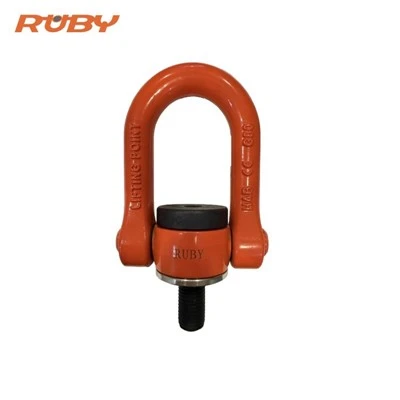
A swivel point is a mechanical coupling designed explicitly to allow two sections of a pipeline to rotate relative to one another while maintaining a leak-tight seal for fluids, gas, or even solid slurries. Unlike a standard pipe joint, which is meant only for assembly (not continuous rotation), a swivel point is engineered with precision bearings, reinforced seals, and load-bearing housings that can handle thousands—sometimes millions—of rotational cycles without degradation. But let’s dive deeper than the textbook definition, because anyone who’s ever managed a pipeline outage will tell you that a swivel point’s job is far more nuanced than “let things spin.”
Take offshore loading operations, for example. When an oil tanker pulls up to an offshore FPSO (Floating Production Storage and Offloading unit), the FPSO itself is constantly shifting: it rises and falls with waves, drifts with currents, and rotates around its own anchor points as wind patterns change. The pipeline that connects the FPSO’s processing facility to the tanker can’t twist and flex with those movements using a rigid joint—that would snap the line or split a seal within days. A swivel point installed at each end of that pipeline allows both sides to rotate independently, absorbing that dynamic movement without stress. That’s not a convenience; it’s a non-negotiable safety requirement. A leak in an offshore oil pipeline isn’t just an operational delay—it’s an environmental disaster, with costs reaching into the millions in cleanup and regulatory fines.
Another common use case is directional drilling. Drill strings are long, heavy pipelines that twist constantly as operators bore horizontal wells through rock and soil. Without a swivel point at the top of the drill string, the entire length of the pipe would have to twist in unison as the well turns, creating enormous torque that can snap the pipe, damage the drill head, or require costly, time-consuming pulls to fix. A swivel point at the surface decouples that rotation, letting the drill string turn freely while the stationary pipeline carrying drilling fluid remains connected to the mud pumps above ground. This single component cuts drilling time by an average of 15% in directional projects, according to industry data, and reduces the risk of catastrophic pipe failures that can halt operations for weeks.
I’ve been in the swivel point supply business for over 18 years, so I’ve seen just about every failure scenario there is. Early on, I worked with a small onshore drilling crew that tried to cut corners by using a generic pipe flange instead of a purpose-built swivel point. Within three days of drilling, the joint seized mid-bore, the drill string snapped, and the crew spent 12 days pulling the pipe out of the well at a cost of nearly $200,000—way more than the price of a high-quality swivel point would have been. That story is far from unique. Too many operators view swivel points as a “one-size-fits-all” part, but the truth is, they’re highly specialized, with design tailored to the specific demands of their application.
Let’s talk about the key engineering details that make a swivel point work, because that’s where most of the cheap, low-quality options fall short. First, there’s the bearing system: swivel points use either ball bearings, roller bearings, or tapered roller bearings, depending on the load they’ll carry. For heavy offshore risers, tapered roller bearings are ideal because they can handle both radial load (side-to-side movement) and axial load (up-and-down force from tides). For smaller, lower-pressure onshore loading arms, ball bearings are sufficient and more cost-effective. But here’s the catch: many budget swivel points use unlubricated bearings or cheap seals that wear out within a few hundred rotations. A good swivel point will have sealed, permanently lubricated bearings (or provision for periodic, easy lubrication) and resilient seals—usually PTFE, nitrile, or Viton—rated for the specific fluid and temperature of the pipeline. If you’re moving acidic crude at 180 degrees Fahrenheit, a nitrile seal won’t hold up, but a Viton seal will. That’s the difference between a component that lasts 6 months and one that lasts 10 years.
Then there’s the pressure rating. Swivel points aren’t one-size-fits-all when it comes to pressure. A pipeline carrying low-pressure water for irrigation doesn’t need the same pressure rating as a high-pressure natural gas transmission line. The best swivel points are custom-engineered to meet or exceed the maximum operating pressure of the pipeline they’ll be installed on, with safety factors built in to handle transient pressure spikes—like when a pump starts up after shutdown, which can create a sudden surge that would blow a substandard swivel point apart.
Another often-overlooked feature is alignment. Poorly aligned swivel points can create unnecessary stress on the pipeline, leading to early seal failure or bearing wear. That’s why leading swivel point manufacturers design their products with precise axial and angular alignment capabilities, so installers can get the connection perfect on the first try. Some even have integrated alignment markers that make installation faster, reducing downtime during field assembly.
Now, let’s address a common misconception: swivel points are only for large, high-stakes operations. That’s simply not true. Onshore water pipelines that cross areas with seasonal soil movement (like freeze-thaw cycles in cold climates) use swivel points to accommodate ground shifting, preventing stress cracks that would cause leaks. Even conveyor systems for bulk materials—like grain or ore—use swivel points to let the conveyor head rotate without twisting the supply line for water or compressed air used in conveying. Any system that needs rotational movement while maintaining a continuous, sealed fluid path can benefit from a swivel point.
Over the years, we’ve worked with operators in 20+ countries, from small onshore drilling companies to major offshore energy firms, and the feedback has been consistent: a quality swivel point isn’t a capital expense—it’s an investment in uptime, safety, and long-term cost savings. We’ve had a client in the North Sea switch from their old, budget swivel points to ours a few years ago. Before that, they were replacing their swivels every 12 to 18 months, with each replacement costing $50,000 in parts and downtime. Since switching to our engineered swivel points, they haven’t had to replace a single unit in 7 years. That’s the kind of return on investment that makes the cost difference worth every penny.
Of course, not all swivel points are created equal. When you’re evaluating a supplier, look for these key markers:
- Application-specific design: Avoid suppliers that offer a “generic” swivel for every use case. A swivel for a drill string isn’t the same as one for an offshore riser.
- Material quality: Ask about bearing materials, seal ratings, and housing construction. For harsh environments, look for corrosion-resistant steel (like 316 stainless steel) instead of carbon steel, which can rust and fail in saltwater or acidic fluids.
- Maintenance accessibility: The best swivel points are designed for easy, on-site maintenance—no need to send them back to the factory for seal replacement or bearing lubrication.
- Testing standards: A reputable supplier will subject their swivel points to rigorous pressure, rotation, and endurance testing before they leave the facility. Look for certifications that match industry standards like API 6A (for oil and gas) or ASME B31.3 (for process piping).
I’ve spent my career building swivel points that solve real, on-the-ground problems, not just checking boxes on a spec sheet. Whether you’re dealing with a directional drilling project, an offshore loading operation, or a water pipeline that needs to handle seasonal movement, a well-designed swivel point is the difference between running smoothly and dealing with a costly, preventable outage.
If you’re tired of swivel points that fail when you need them most, or you’re planning a project and want to make sure you specify the right component for your needs, we’re here to help. Our team works with you to understand your exact application, pressure rating, rotation requirements, and environment, so we can design or supply a swivel point that fits perfectly. We don’t do one-size-fits-all—and that’s why our customers keep coming back.

To learn more about how a swivel point can improve your pipeline system’s performance, or to discuss a custom solution for your project, feel free to reach out and connect with our team.
Lifting Point REFERENCES
- American Petroleum Institute. API Specification 6A: Wellhead and Tree Equipment. 2020.
- American Society of Mechanical Engineers. ASME B31.3: Process Piping. 2022.
- International Association of Oil & Gas Producers. Rotational Joints for Offshore Pipeline Operations. 2019.
- Directional Drilling Association. Drilling String Component Reliability and Failure Analysis. 2021.
- Water Environment Federation. Pipeline Design for Soil Movement in Municipal Water Systems. 2020.
Hangzhou Ruby Imp. & Exp. Co., Ltd.
As one of the most professional swivel point manufacturers and suppliers in China, our products have good reputation in the market. Please feel free to wholesale durable swivel point made in China here from our factory. Also, custom service is available.
Address: Taoyuan Industrial Park, Puyang Town, Xiaoshan, Hangzhou, Zhejiang, China.
E-mail: Sales5@z2lifting.com
WebSite: https://www.ruby-lifting.com/
