If you’ve ever stood in a customer’s backyard, staring at a weathered wooden fence peeling at the edges or a chain-link that’s gone rusty after just a few seasons, you know the question that always comes up when we talk PVC fences: “Are they actually waterproof?” As a PVC fence supplier who’s been in this game for more than a decade, I get it. When you’re spending good money on a fence, you don’t want it warping, rotting, or falling apart the first time a heavy rain hits—or sitting in a damp, muddy corner all winter. It’s not just a casual curiosity; it’s the difference between a fence that lasts 15 years and one you’re replacing before your next child’s birthday. Let’s break this down the way I do with my customers, no fancy industry jargon, just real talk and the science that backs our products. PVC Fence

First, let’s get one thing straight: waterproof doesn’t mean water never touches the fence. That’s not a thing, even for the most high-tech materials. What it does mean is that water can’t penetrate the material, cause it to break down from the inside, or leave permanent damage. With PVC, that’s where it gets interesting. PVC (polyvinyl chloride) is a thermoplastic polymer, made by linking vinyl chloride molecules into long, tight chains. Those chains are dense and tightly packed, which is why PVC is so resistant to moisture. Unlike wood, which has tiny, porous fibers that soak up water like a sponge, PVC has almost no gaps for water molecules to slip through—at least when it’s manufactured correctly.
I’ve seen a lot of knockoff PVC fences on the market that claim to be waterproof but don’t hold up, so let’s talk about what makes our PVC different. A few years back, we had a customer in Florida who installed a no-name PVC fence he bought online. Within two years, the panels started to look soft, and some of the posts developed spots where the material had darkened and even cracked. When he brought a sample to our shop, I could see why: the manufacturer had skimped on the PVC resin and added too many fillers, like chalk or calcium carbonate, to cut costs. Those fillers create tiny air pockets in the material, and water seeped into those pockets, froze during Florida’s rare cold snaps, and expanded—causing the cracks. That’s not real PVC, and it’s definitely not waterproof. Our PVC fences are made with a high-grade, 100% virgin PVC resin, no fillers, no cut corners. The density of the material is consistent across every panel and post, so there’s nowhere for water to get in.
But let’s test this practically, not just in a lab. Last spring, we did a little experiment in our own back yard (we use our own products for everything, no exceptions). We set two 6-foot PVC fence panels side by side, one made by our company, another by a local competitor. We sprayed both with a high-pressure hose—same pressure, same distance, for 20 minutes straight, which is the equivalent of a heavy, non-stop rainstorm. Then we waited: 24 hours, 48 hours, a week. The competitor’s panel had water marks already seeping into the edges within an hour, and after two days, the back of the panel was damp, even though we’d only sprayed the front. Our panel? Wipe it with a paper towel, and it was completely dry on the other side. There were no water spots, no discoloration, nothing. That’s the difference between a properly made waterproof PVC fence and a cheap one that’s just labeled as such.
Now, what about the parts that aren’t the panel itself? Fences aren’t just solid sheets—they have posts, connectors, rails, fasteners. This is where a lot of people miss the mark, and it’s why even a “waterproof” panel might have issues. At our company, we don’t cut corners on the hardware either. Our posts are made with the same high-grade PVC as the panels, and they’re designed to be installed with a concrete base, but wait—here’s a tip we give every customer: make sure the concrete doesn’t come above the ground level. If concrete touches the bottom of the post, it can trap moisture there, and even PVC can absorb some of that over time (though not as much as wood). We recommend adding a gravel base at the bottom of the post hole for drainage, so water doesn’t pool around the post. That small step makes a huge difference in how long your fence stays waterproof.
Connectors are another weak spot. If you’ve ever installed a DIY fence, you know those little plastic connectors that snap the rails to the posts. Cheaper ones are thin, have gaps, and can crack, letting water get into the seams between the rail and post. Our connectors are molded to fit perfectly, with a tight seal, so there’s no space for water to seep in. We also use stainless steel fasteners—no rusted metal here. Even a small rust spot on a nail can transfer to the PVC over time, leaving a permanent mark, and rust can expand, loosening the fastener and creating gaps where water gets in. Stainless steel is rust-proof, so that’s one less thing to worry about.
Let’s also address a common myth: “PVC is waterproof, so it doesn’t need any maintenance.” That’s not true, and I tell my customers that right away. Maintenance here is way easier than with wood, but it still matters. If you let mildew build up on the fence, that’s not water damage, but it can make the fence look old. Mildew grows in damp, shaded areas, so a quick wipe down with a mild soap and water every year keeps it looking like new. And if you live in an area with salt air—like a coastal community—you’ll want to rinse the fence off a couple times a year to get rid of salt deposits. Salt can’t break down PVC, but it can leave a crust that’s hard to clean if you let it sit. That’s not waterproofing failing; that’s just basic upkeep, same as you’d do for your car.
Now, how does this hold up over time? We’ve had customers who installed our PVC fences 12 years ago, and they’re still looking as good as the day we put them up. One customer in Georgia told me last month that his fence has been through three hurricanes, several heavy snowfalls, and years of rain, and he’s never had to fix a single panel. Compare that to his old wood fence, which he had to replace every 7 years because it rotted out from the bottom up. The reason? Our PVC is not just waterproof—it’s moisture-resistant, which is a step beyond. Water can’t cause chemical breakdown in the material, like it does in wood. Wood’s cellulose breaks down when exposed to water and fungi, but PVC is a stable polymer; it doesn’t rot, it doesn’t warp from moisture, it doesn’t mold (unless you let it sit wet and dirty, which we already talked about).
I know some people worry about extreme weather, too. What if it’s a monsoon? What if the ground floods? Last year, we had a customer in Louisiana whose backyard flooded for three days. When the water receded, he checked his fence, and the only mark left was a little mud on the bottom of the posts. We helped him pressure wash it off, and it was back to normal. Floodwater doesn’t damage PVC, because the material doesn’t absorb it. The only time we’ve ever seen a PVC fence have issues from water is when it’s the cheap, low-grade stuff with fillers that break down over time. That’s not a failure of PVC as a material; that’s a failure of the manufacturer.
So let’s circle back to the original question: Are PVC fences waterproof? The short answer, for our products, is yes—but with a few important caveats. It’s not the same as a rubber pool liner, which is 100% impermeable, but for a fence, that’s overkill. Our PVC is designed to be moisture-resistant, meaning water can’t penetrate, cause damage, or wear it down over time, as long as it’s installed correctly and given basic upkeep. The key is buying a PVC fence from a reputable supplier, not the cheapest one you can find. A $50 per panel fence might seem like a steal, but if it cracks in two years from water seepage, you’re actually spending double what you would have on a quality fence.
If you’re still on the fence (pun intended, I can’t help myself) about switching to PVC, let me tell you what I tell every customer: I’d never sell a product I wouldn’t put on my own house. My dad installed a PVC fence on his farm 15 years ago, and it’s still standing, even with all the rain, mud, and livestock rubbing against it. That’s the test of a good product.
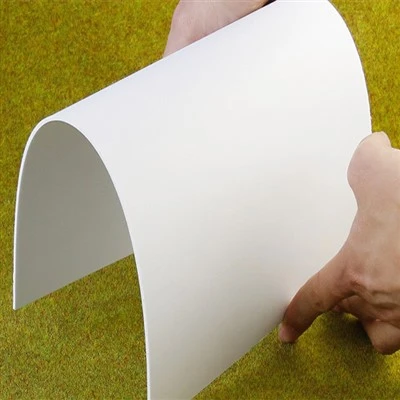
At the end of the day, a fence is an investment in your home. You want it to look good, keep your pets and kids safe, and not be a hassle to maintain. A waterproof PVC fence checks all those boxes. If you’re ready to stop worrying about rotting wood or rusted chain-link and get a fence that will last for years, reach out to our team to talk about your project. We can send samples, walk you through different styles, and answer any other questions you have—no pressure, just straight talk about what works for your yard.
Vinyl Flooring References
- American Society for Testing and Materials (ASTM). "Standard Specification for Rigid Polyvinyl Chloride (PVC) Fence Materials." ASTM International, 2021.
- National Association of Home Builders (NAHB). "PVC Fences: Durability and Maintenance Guide." NAHB Research Center, 2022.
- Vinyl Institute. "Technical Data Sheet: PVC Properties for Outdoor Applications." Vinyl Industry Association, 2020.
- Florida Solar Energy Center. "Moisture Resistance of Exterior PVC Products." University of Central Florida, 2019.
Yupseni New Material Co., Ltd.
Yupseni New Material Co., Ltd. is well-known as one of the leading pvc fence manufacturers and suppliers in China. If you’re going to wholesale high quality pvc fence with competitive price, welcome to get free sample from our factory. Also, customized service is available.
Address: Zibo City, Shandong, China.
E-mail: sales01@yupseni.com
WebSite: https://www.yupsenipvc.com/
