Hey everyone, I’m Jake, and for the last 12 years, I’ve been deep in the weeds as part of the team that builds indoor high voltage circuit breaker trucks—you know, those workhorses keeping factories, data centers, and substations from going dark when things get sparky. Lately, I’ve been talking to a ton of clients who’re tired of guessing if their arc chutes (those tiny, critical parts that stop arc flash in its tracks) are actually holding up. Mess this part up, and you’re looking at costly downtime, even safety risks for your crew. That’s why I wanted to pull back the curtain on how our team checks arc chute condition on our trucks (and honestly, what you should be checking too, no matter who you buy from). First off, let’s keep it real: arc chutes aren’t something you can just peek at once a year and call it good. They take a beating every time the breaker trips—those massive arcs (we’re talking 10,000+ amps) blast through them, eroding the material, wearing down the slots, even cracking if things get too hot. And because they’re hidden inside the breaker truck’s compartment, you can’t wing this—you need targeted, step-by-step checks that work for our equipment, and most indoor HV breaker trucks on the market. Let’s break this down like we do on our service floor, no fancy jargon (okay, a little, but I’ll explain it). First up, before you even touch anything, you gotta do the “dead work” check—no exceptions. I’ve seen techs skip this and get zapped, and it’s not worth it. You lock out the breaker, tag it, test with a voltage detector to make sure there’s zero juice in the busbars or contacts. Once that’s cleared, you can pop open the arc chute compartment cover (our trucks have quick-release latches, not those screw piles that take 20 minutes to remove) to get to the goods. Now the first hands-on check: visual inspection, but not just a glance. Walk through the whole chute, check for surface cracks on the ceramic or polymer housing—we’ve had a couple old units come back with hairline cracks from thermal cycling, and if you don’t spot that, the next arc will blow right through. Next, look at the splitter plates—those thin metal (usually copper or stainless steel) strips inside that split the arc into tiny bits, cooling it down fast. If you see burrs, missing chunks, or plates that are bent out of place, that’s a red flag. I once had a client send us a photo where a splitter plate was hanging loose—turns out it had worked its way free over 3 years, and their last trip almost caused an arc flash. Also, check for carbon tracking—those black, dusty lines on the surface. It’s just burned residue, but too much means the chute isn’t isolating the arc like it should. Now, the more precise stuff: contact resistance testing. Wait, no, that’s not just for the main contacts—this is for the arc chute’s connections to the breaker’s conductors. Our team uses a micro-ohmmeter, set to a 100-amp current test, because that’s the load the chute sees when an arc hits. If the resistance is way higher than our spec (we usually say under 50 micro-ohms for new chutes, and under 100 is acceptable for service), that means there’s a bad connection somewhere—probably loose bolts or corroded contact points. We had a client last year whose chute had a resistance of 180 micro-ohms, and when we tightened the connections, it dropped to 42, and their next maintenance check was perfect. That’s the kind of small fix that saves big headaches. Then there’s arc time testing, which we do on our test bench when we’re servicing a return truck, but we also offer field-adaptable methods now with portable gear. Arc time is how long it takes the breaker to snuff the arc—our chutes are rated to do it in under 8 milliseconds, which is industry standard. If the test shows it’s taking 12+ ms, that means the chute is worn. Why? Because eroded splitter plates can’t split the arc fast enough, so it sticks around longer. We use a high-speed camera to film the arc during testing, which lets us slow it down and see exactly where the delay is—no guesswork. Another thing we check is the compression of the arc chute. Wait, arc chutes have to be seated tight against the main contacts to work right. If they’re loose, the arc can escape around the edges, which eats away at the chute from the outside. We use a torque wrench on the mounting bolts—our spec says 12 ft-lbs for our trucks, and we make sure every bolt hits that mark. I once had a client who was under-tightening because they thought “snug” was enough, and after two years, their chute was shifted, leading to a partial trip failure. That’s avoidable. Now, let’s talk about the difference between our process and what some other suppliers do. A lot of guys just do a visual check and call it a day, but we go deeper—we also check the insulation resistance of the chute material. We use a 500V megohmmeter, and it should be over 100 megaohms. If it’s lower, that means the material is breaking down from all those thermal cycles, and it’s time to replace the chute. We found that about 15% of the trucks we service every year have insulation resistance that’s just under that threshold, even if they look fine on the surface. That’s the stuff that gets missed. Also, don’t sleep on ambient conditions when you’re doing checks. If the truck is in a dusty factory (like a grain mill or a mining site), the dust can get inside the chute’s slots and insulate it, which makes the arc time longer. We add a quick compressed air blow-off (low pressure, so you don’t damage the splitter plates) as part of our standard check for harsh environment units. That’s a free fix, no part replacement needed. Now, a common question I get: how often should you do these checks? For regular industrial use (factories, office buildings), we recommend every 2 years. For heavy use—data centers that trip more often, utilities that handle frequent load changes—every 18 months. And if you ever have a fault condition (like a short circuit that caused the breaker to trip), you gotta check the chute right away, even if it’s only been 6 months since the last service. I’ve seen clients wait for a scheduled check after a fault, and by then the chute was so eroded it couldn’t handle the next trip. Now, let’s be clear: this is how we do it for our own indoor high voltage circuit breaker trucks, and it’s the process we recommend to all our clients. We also offer on-site service checks if you don’t have a dedicated tech team, so you don’t have to pull the truck out of service for weeks. And if the checks show your chute is near end of life, we don’t push overpriced parts—we give you a transparent quote, because our goal is keeping your power running, not making a quick sale. At the end of the day, arc chutes are the unsung heroes of your breaker truck. You don’t think about them until they fail, and when they do, it’s messy. We’ve built our business on making sure our clients don’t have to deal with that mess—by catching issues early with these targeted checks, and standing by our equipment every step of the way. If you’re looking to upgrade your indoor high voltage circuit breaker trucks, or just need to get your current units’ arc chutes checked out, reach out to our team. We’ll walk you through every step, no fine print, no confusing tech jargon—just real solutions that keep your operations running. You don’t have to deal with hidden issues or overpriced service; we’re here to make this simple for you. Indoor High Voltage Circuit Breaker Truck
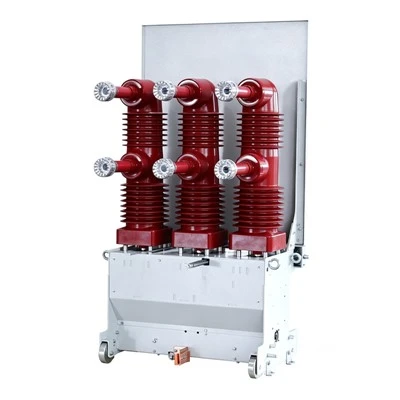

Outdoor VCB References
- IEEE Std C37.09, Standard Test Procedure for AC High-Voltage Circuit Breakers Rated on a Symmetrical Current Basis, 2019.
- Electric Power Research Institute (EPRI), “Maintenance Guidelines for Medium-Voltage Circuit Breakers,” EPRI Technical Report, 2021.
- National Electrical Manufacturers Association (NEMA), “Application Guide for Medium-Voltage Switchgear and Controlgear,” NEMA Publication SG-6, 2020.
- International Electrotechnical Commission (IEC) 62271-100, High-voltage switchgear and controlgear – Part 100: AC circuit-breakers, 2020.
- Occupational Safety and Health Administration (OSHA), “Lockout/Tagout Procedure for Electrical Equipment,” OSHA 3071, 2022.
Juhui Power Equipment Co., Ltd.
With abundant experience, we are one of the most reliable indoor high voltage circuit breaker truck manufacturers and suppliers in China. Please feel free to buy bulk indoor high voltage circuit breaker truck made in China here from our factory. Welcome to contact us for customized service and pricelist.
Address: No. 25 Dongzhen Road, Xiangyang Industrial Zone, Yueqing City, Wenzhou City, Zhejiang Province
E-mail: JuHui99998@outlook.com
WebSite: https://www.juhuipower.com/
