What are the requirements for the levelness of the installation surface of asphalt specimen preparation equipment?
As a supplier of asphalt specimen preparation equipment, I’ve encountered numerous inquiries about the levelness requirements of the installation surface. In this blog, I’ll share in – depth knowledge about this crucial aspect, drawing on my years of experience in the industry. Asphalt Specimen Preparation Equipment

The Importance of Levelness in Asphalt Specimen Preparation Equipment Installation
The levelness of the installation surface of asphalt specimen preparation equipment is not just a minor detail; it has a profound impact on the accuracy and reliability of specimen preparation. When the equipment is not installed on a level surface, it can lead to uneven stress distribution during the specimen preparation process. For example, in a compaction device, if the base is not level, the compaction force may be unevenly applied across the asphalt specimen. This can result in specimens with inconsistent density, air void content, and mechanical properties.
In addition, non – level installation can cause premature wear and tear of the equipment components. Moving parts may experience abnormal friction, leading to increased maintenance costs and reduced equipment lifespan. Moreover, it can also pose safety risks. Unevenly installed equipment may be more prone to tipping over during operation, endangering the operators.
Specific Levelness Requirements
The levelness requirements for asphalt specimen preparation equipment are typically specified in relevant industry standards. For example, in ASTM (American Society for Testing and Materials) standards, which are widely used in the United States and many other countries, the installation surface for most asphalt specimen preparation equipment should have a levelness tolerance of less than ± 1mm per meter. This means that for every meter of the installation surface, the deviation from a perfectly horizontal plane should not exceed 1mm.
In European standards, such as those set by CEN (European Committee for Standardization), similar strict requirements are in place. The levelness tolerance is often defined in relation to the size and type of the equipment. For smaller, bench – top asphalt specimen preparation devices, a more precise levelness of around ± 0.5mm per meter may be required, while for larger, floor – standing equipment, the tolerance may be slightly relaxed to ± 1mm per meter, but still within a very narrow range.
Measuring the Levelness of the Installation Surface
To ensure that the installation surface meets the required levelness, several methods can be employed. One of the most common tools is a spirit level. A high – quality spirit level can provide a quick and relatively accurate measurement of the surface’s horizontal alignment. For more precise measurements, especially for large – scale installations, laser levels are often used. Laser levels project a highly accurate horizontal or vertical line, allowing for detailed assessment of the surface’s flatness.
Before installing the asphalt specimen preparation equipment, it is essential to thoroughly measure the installation surface at multiple points. For a rectangular installation area, measurements should be taken at the four corners and the center of the area. If any deviations are found, the surface may need to be adjusted. This can involve using shims or leveling compounds to correct minor unevenness. In more severe cases, the floor may need to be re – surfaced or repaired.
Impact on Different Types of Asphalt Specimen Preparation Equipment
Different types of asphalt specimen preparation equipment have varying sensitivities to levelness.
Compaction Equipment: Compaction machines, such as the Marshall compactor or the Superpave gyratory compactor, are highly sensitive to levelness. In a Marshall compactor, the hammer must fall vertically to ensure uniform compaction of the asphalt specimen. If the base is not level, the hammer may strike the specimen at an angle, resulting in non – uniform density distribution. Similarly, in a Superpave gyratory compactor, the gyratory motion needs to be precisely controlled, and any deviation from a level surface can affect the specimen’s shape and internal structure.
Mixing Equipment: Asphalt mixing equipment also requires a level installation surface. In a mixer, the blades need to rotate evenly within the mixing chamber. If the mixer is installed on an uneven surface, the blades may come into contact with the chamber walls unevenly, leading to inefficient mixing and potential damage to the equipment.
Molding Equipment: For equipment used to mold asphalt specimens, such as specimen molds and extruders, levelness ensures that the specimens are formed with the correct dimensions and shape. An uneven installation surface can cause the molds to be misaligned, resulting in specimens with irregular shapes or dimensions that do not meet the required standards.
Ensuring Long – Term Levelness
Once the asphalt specimen preparation equipment is installed on a level surface, it is important to take measures to ensure long – term levelness. This includes regular inspections of the installation surface and the equipment itself. Over time, factors such as floor settlement, vibration from nearby machinery, or changes in temperature and humidity can affect the levelness of the surface.
Regular maintenance of the equipment can also help to maintain levelness. For example, tightening loose bolts and ensuring that all moving parts are properly lubricated can prevent excessive vibrations that could potentially lead to a loss of levelness.
Conclusion
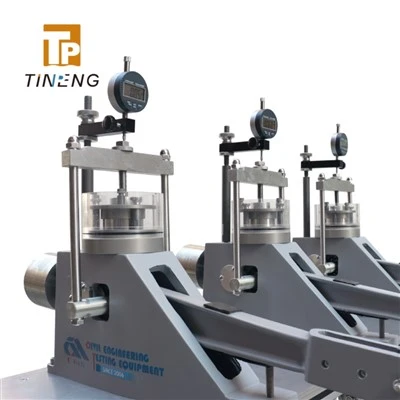
In summary, the levelness of the installation surface of asphalt specimen preparation equipment is a critical factor that affects the quality of specimen preparation, the lifespan of the equipment, and the safety of the operators. Adhering to strict levelness requirements as defined by industry standards is essential. By using appropriate measurement tools, adjusting the surface as needed, and taking steps to ensure long – term levelness, users can maximize the performance of their asphalt specimen preparation equipment.
Sample Grading Apparatus If you are in the market for high – quality asphalt specimen preparation equipment and need more information on installation requirements or any other aspects, I encourage you to reach out to us. Our team of experts is ready to provide you with detailed guidance and support. We can help you select the most suitable equipment for your needs and ensure a smooth installation process. Don’t hesitate to contact us to start discussing your procurement needs.
References
- ASTM International. (Year). Standard specifications for asphalt specimen preparation equipment. ASTM Publications.
- CEN. (Year). European standards for asphalt testing and specimen preparation. CEN Publications.
Zhuozhou Tianpeng Imp. and Exp. Trade Co., Ltd.
Zhuozhou Tianpeng Imp. and Exp. Trade Co., Ltd. is one of the most professional asphalt specimen preparation equipment manufacturers and suppliers in China, featured by quality products and good price. Please rest assured to buy advanced asphalt specimen preparation equipment made in China here from our factory. Customized orders are welcome.
Address: Building C28, Hegu Technology Industrial Park, Development Zone, Zhuozhou, Hebei, China
E-mail: zhangdajing@testmould.com
WebSite: https://www.testmould.net/
