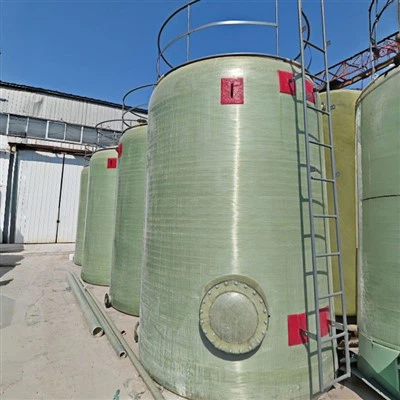
If you’ve ever worked in water treatment facilities, industrial pollution control plants, or waste management operations, chances are you’ve crossed paths with FRP environmental equipment. As a supplier who’s been hands-on with this material for over a decade, I’ve lost count of how many times I’ve had to explain to project managers why FRP (Fiber Reinforced Polymer, sometimes called GRP—Glass Reinforced Plastic, depending on regional terminology) isn’t just a “plastic substitute” for metal. It’s a specialized engineered material, and its mechanical properties are exactly what make it non-negotiable for environmental applications. FRP Environmental Equipment

Let’s start by grounding this in context: environmental equipment operates in some of the harshest conditions you can imagine. We’re talking constant exposure to corrosive chemicals like sulfuric acid, ammonia, and sodium hydroxide; extreme temperature swings from freezing winter nights in northern treatment plants to scorching summer days in desert-based industrial facilities; and heavy, repeated loads from process fluids, media like activated carbon, or even the weight of the equipment itself. Without the right mechanical properties, even a corrosion-resistant material can crack, deform, or fail prematurely, leading to costly downtime, safety hazards, and regulatory non-compliance.
Tensile Strength: Balancing Stiffness and Load Capacity
First up is tensile strength—the measure of a material’s ability to resist pulling forces without breaking. This is one of the most common questions I get when a new potential client reaches out: “Is FRP strong enough to hold 10,000 gallons of industrial wastewater?” The short answer is yes, but it depends on the fiber type and resin matrix we use. For standard environmental equipment like storage tanks and pipework, we typically use E-glass fibers paired with isophthalic polyester resin. This combination gives a tensile strength of around 30,000 to 50,000 psi—comparable to some grades of mild steel, but at 1/4 the weight. That’s a game-changer for large projects, because it cuts down on installation costs, reduces the load on building foundations, and makes transporting heavy equipment far easier than steel.
But here’s the nuance: not all FRP is the same. For high-stress applications like scrubber stacks in coal-fired power plants, we switch to vinyl ester resin and often add carbon fibers or aramid fibers to boost tensile strength to 80,000 psi or more. Last year, we worked on a plant in the Midwest that was upgrading its flue gas desulfurization system. Their original steel stack had corroded so badly in two years that they had to do emergency repairs. When we installed our FRP stack, designed to handle 150 mph wind loads and constant exposure to 98% sulfuric acid mist, their engineers were shocked at how lightweight the unit was—and even more surprised when they ran tensile tests on a sample section six months later; it had lost less than 2% of its tensile strength, despite operating 24/7. That’s the kind of real-world performance that makes our clients come back.
Flexural Modulus: Resisting Deformation Under Load
Next is flexural modulus, which tells you how much a material will bend under a load without permanently deforming. For environmental equipment, this is critical because you don’t want a storage tank sagging over time or a pipe deflecting so much that it cracks at the joints. Flexural modulus is often confused with tensile strength, but they’re different: a material can have high tensile strength but low flexibility, or vice versa. FRP’s flexural modulus is adjustable, which is why it’s so versatile.
For example, when manufacturing FRP grating for walkways in treatment plants, we use a stiffer resin blend to get a flexural modulus of around 1.5 million psi. This means a 2-foot-wide grating can support 1,000-pound loads without bending—something you’d struggle to achieve with steel without adding extra support beams, which adds weight and cost. On the other end, for flexible ductwork used to carry exhaust gases from industrial ovens, we use a more flexible fiber-resin combination that has a lower flexural modulus, so it can handle repeated bending and vibration from fans without cracking.
I once had a client who tried to save money by using generic FRP grating for a walkway near their sludge dewatering area. Within a year, the grating was sagging so badly that their operators were worried about tripping hazards and safety inspections. When we replaced it with our custom-formulated grating, we increased the flexural modulus by 30% by adjusting the fiber content and resin type. That small change eliminated the sag, and they haven’t had to replace a single section in four years. It’s the kind of detail that separates a good FRP supplier from a great one—we don’t just sell standard products; we tailor mechanical properties to the exact application.
Impact Resistance: Handling Shock and Dynamic Loads
Impact resistance is another key mechanical property, especially for environmental equipment that’s often exposed to heavy objects being dropped, high-velocity fluid flows, or seismic activity. FRP’s impact resistance depends largely on the fiber orientation and resin toughness. For our equipment, we use a combination of unidirectional and woven fibers to distribute impact forces across the material, rather than letting them concentrate in one spot.
Take our FRP pipe systems, for example. Many municipalities use our pipes for municipal wastewater collection, which means they’re often buried underground and subject to heavy soil loads and occasional equipment impacts from excavation. We test our pipe sections by dropping a 50-pound weight from 10 feet above the ground—something that would crack a standard PVC pipe or even dent a steel pipe. Our FRP pipes pass that test with flying colors, because the fibers absorb the impact energy rather than letting it cause a fracture. In seismic zones, we also modify the resin to have higher toughness, so the equipment can move slightly during an earthquake without breaking—a critical safety feature that many older metal systems lack.
Corrosion Resistance: The Mechanical Property That Makes It Unique?
Wait, some of you might be thinking, corrosion is a chemical property, not mechanical. But in environmental equipment, corrosion directly impacts mechanical performance—and that’s why it’s tied so closely to FRP’s value. Unlike steel, which rusts and loses tensile strength and impact resistance over time when exposed to chemicals, FRP’s resin matrix acts as a barrier between the fiber and the corrosive environment. That means its mechanical properties stay consistent for decades, rather than deteriorating rapidly.
Let’s put numbers to that: a steel storage tank in a sulfuric acid environment might have a service life of 5 to 10 years, but an FRP tank with a properly formulated resin lining can last 30+ years. We had a client in the oil and gas industry who installed our FRP tanks for produced water storage in 1998. When they did a routine inspection in 2023, they tested the tensile strength of a sample taken from the tank wall and found it was still at 92% of its original value. That’s mechanical performance that just can’t be matched by metal, even with expensive coatings.
Fatigue Resistance: Withstanding Repeated Cycles
Finally, fatigue resistance is crucial for environmental equipment that’s subjected to repeated loading and unloading—like pressure vessels in air pollution control systems, or pipework that carries varying flow rates. Fatigue is when a material develops tiny cracks over time from repeated stress, even if that stress is below its maximum tensile strength. FRP’s fatigue resistance is far better than most metals for these applications.
Our FRP pressure vessels, used in reverse osmosis systems for water treatment, undergo thousands of pressure cycles every year as water is pumped through the membrane elements. We test these vessels by cycling the pressure from 0 to 100 psi over 1 million times, which simulates 20+ years of service. Our vessels have a fatigue limit that’s 60% higher than steel in these types of cyclic loading conditions, because the fibers and resin work together to stop microcracks from spreading. Last year, a water treatment plant in Texas had a steel pressure vessel fail after just two years of cyclic pressure changes, leading to a 3-day shutdown that cost them over $100,000 in lost production. They switched to our FRP vessels, and after 18 months, they haven’t had a single issue.
What This Means for Our Clients
At the end of the day, the mechanical properties of FRP environmental equipment aren’t just technical specs—they’re the difference between a project that stays on budget and on schedule, and one that’s plagued by repairs and downtime. As a supplier, we don’t just send clients a catalog of products and say “pick one.” We work with their engineers, site managers, and operations teams to assess their specific conditions: what chemicals are they handling? What temperature range will the equipment operate in? What loads will it carry? Then we formulate FRP with the exact tensile strength, flexural modulus, impact resistance, and fatigue resistance they need.
If you’re in the market for FRP environmental equipment—whether it’s storage tanks, scrubber stacks, pipework, grating, or pressure vessels—you owe it to your project to work with a supplier who understands these mechanical properties inside and out. We’ve spent years refining our processes, testing every product in real-world conditions, and partnering with clients to solve their unique challenges. There’s no one-size-fits-all when it comes to FRP, but there is a right solution for every environmental application.
If you’d like to talk through your project, ask questions about material formulations, or get a quote for custom FRP equipment, reach out to our team to begin a procurement discussion. We’re here to help you build equipment that lasts, performs, and keeps your operations running smoothly.
References
FRP Tanks Karbhari, V. M., & Chin, J. W. (2000). Fiber-reinforced polymer composites for construction—state-of-the-art review. Journal of Composites for Construction, 4(2), 70-87.
Miller, B. (2018). Environmental applications of fiber-reinforced polymer composites. Composites Science and Technology, 162, 112-125.
National Association of Corrosion Engineers (NACE). (2020). FRP Corrosion Resistance Manual (3rd ed.). NACE International.
Hebei Weihan Environmental Protection Equipment Co., Ltd.
We’re well-known as one of the leading FRP environmental equipment manufacturers and suppliers in China, featured by quality products and good service. Please rest assured to buy customized FRP environmental equipment at competitive price from our factory. Contact us for more details.
Address: No. 666 Chuangye Road, Zaoqiang County, Hengshui City, Hebei Province
E-mail: weihanmachine@gmail.com
WebSite: https://www.whanfrp.com/
