If you’ve ever dug into the back of a laptop, gaming console, or a random industrial machine and seen that clunky, exposed circuit board with wires hanging out, you know exactly what I’m talking about. A while back, I was working with a small manufacturing client that kept burning out power supplies for their assembly line’s conveyor system—turns out, they were using those open-frame units because they thought “open equals cheaper.” Spoiler: they ended up paying way more in downtime and replacements. That’s the exact reason our company focuses solely on enclosed switching power supplies, and today I’m breaking down why you should probably make the switch too. Enclosed Switching Power Supply

First off, let’s cut through the jargon real quick—what even is an enclosed switching power supply, anyway? Unlike that open-frame cousin I mentioned, it’s got a full metal (usually aluminum, sometimes plastic for consumer gear) casing around every part, sealed tight with no exposed internal components. It’s still a switching power supply, so it’s way more efficient than old linear power supplies, but that enclosed part is where all the magic happens.
Let’s start with the big one that almost every customer overlooks: protection from the environment. I’m not just talking about dust here, though that’s a huge one. If your power supply is going in a factory workshop, a greenhouse, a food processing plant, or even a camping trailer that bounces down backroads, you’ve got variable stuff flying around. Dust, metal shavings, humidity, splashes of water, even random chemicals that get sprayed for cleaning. Open-frame units don’t stand a chance here. Last year, we had a food and beverage customer that was using open power supplies for their bottle-filling line. They kept getting tripped up by cleaning solution splashes that seeped into the open board, causing short circuits that shut down production multiple times a month. When they swapped to our IP65-rated enclosed units, that problem vanished overnight. No more downtime, no more emergency service calls, no more lost revenue from lines being down. Even for indoor consumer stuff—like the smart home devices or LED lighting a lot of our clients make—enclosure keeps pet hair, kitchen grease, and cigarette smoke (yes, some clients still have that in their old offices) from clogging up the internal fans or coating the circuit boards.
Next up: safety, for both your gear and the people handling it. Exposed circuits aren’t just a fire risk—they’re a shock risk too. If a tech is working on a piece of equipment and brushes a loose wire on an open power supply, that’s a dangerous mistake waiting to happen. Enclosed units have every live part hidden behind that casing, with properly insulated terminals and screw-down connections that don’t move. We’ve had a number of industrial clients tell us this is the main reason they made the switch, especially for teams that work around heavy machinery and have to do quick repairs without shutting down the entire line (or, let’s be real, without a full electrician on hand every time). Also, for applications where the power supply is near flammable materials—like in a woodworking shop or a warehouse with stacked cardboard—an enclosed metal casing is a heat barrier too. Open frames can get hot enough to melt plastic or ignite dust if they’re not placed just right, but a sealed enclosure dissipates heat evenly and keeps the internal temps low enough that there’s no fire hazard. We test every unit for overheating limits, and the enclosed design means that heat is directed away from sensitive parts instead of just sitting in the open air around the circuit board.
Wait, but what about efficiency? A lot of people think adding a casing would make a power supply less efficient, right? Because more parts to heat up, more airflow blocked. But that’s actually a myth, especially with modern enclosed switching power supplies. The casing isn’t just a box—most of ours have vent holes (or even built-in fans with filters) that are strategically placed to pull cool air in and push hot air out, so the internal components stay at their ideal operating temp. That keeps the power conversion efficiency high—usually 85% to 95%, compared to linear supplies that are 50% or less. A client that makes solar panel battery storage systems told us that switching from open to enclosed units cut their energy waste by almost 12% annually. For a system with multiple power supplies, that adds up to thousands of dollars in lower electricity bills. Plus, because the internal parts are protected, they don’t get clogged with dust or damaged by moisture, so they last way longer. I’m talking 50,000 to 100,000 hours of operation, versus 20,000 or less for open units that get gunked up in harsh environments. Longer lifespan means less replacements, less inventory to keep on hand, less time spent swapping out parts. That’s a win-win.
Let’s not forget reliability, which is tied closely to that longevity I just mentioned. When a power supply fails, it doesn’t just turn off a light or a small gadget—it can shut down an entire assembly line, a medical device, a telecom tower, or a security system. Those failures aren’t just annoying; they’re costly. A 2022 study we looked at (I’ll drop the reference later) found that unplanned downtime for industrial equipment costs an average of $260,000 per hour. That’s insane. Enclosed switching power supplies have built-in protection features that open units often skip: over-voltage protection, over-current protection, short-circuit protection, even over-temperature shutoffs. Those features are easier to integrate into a sealed unit because you don’t have to worry about external components getting damaged or interfering with the circuit. We had a telecom client that was using open power supplies for cell towers in remote rural areas. Once a month, they’d get a call that a tower was down because a bird had built a nest on the open power supply, clogging the fan and causing it to overheat. Swapping to our enclosed units solved that—no more bird nests, no more remote service calls, no more dropped calls for customers in that area. Reliability isn’t just a nice-to-have; it’s a business-critical thing for a lot of our clients.
Another underrated advantage: versatility for different use cases. Open-frame power supplies are limited to being mounted in a specific way, usually with lots of airflow around them, because they have no protection. Enclosed units can be mounted pretty much anywhere—inside a cabinet, on a wall, under a desk, even in tight, cramped spaces where open frames would overheat. Our clients have used them for everything from electric scooters and golf carts to medical imaging equipment to outdoor LED billboards. Because the enclosure is sealed, you don’t have to worry about where you put it as much. Some of our outdoor units are rated for temperatures from -40°C to 85°C, so they work in the middle of the desert or the cold of a Canadian winter. That kind of versatility is huge for small businesses that don’t have the space or budget to design a custom enclosure for their power supply—they can just plug our enclosed unit in and go.
Wait, but what about cost? I know what you’re thinking: “Enclosed must be way more expensive.” Let’s do the math. A basic open-frame power supply might be $10 cheaper upfront, but if it fails every two years, and each replacement costs $200 in labor and downtime, that’s way more over time. Our enclosed units have a 3-year warranty as standard, and most clients don’t need to replace them for 5+ years. We’ve had clients tell us that even with the higher upfront cost, their total cost of ownership was 30% lower after switching. Plus, bulk pricing is negotiable, and we work with small startups and big corporations alike to find a price that fits their budget. It’s not about being the cheapest upfront—it’s about being the cheapest in the long run.
Now, I want to be real with you—enclosed switching power supplies aren’t perfect. They’re not the best for every tiny, indoor consumer gadget where cost is the only factor, and you don’t have to deal with dust or moisture. But for 90% of the applications our clients come to us with—industrial, commercial, outdoor, medical, telecom—they’re a no-brainer. I’ve seen too many clients waste money on cheap open units that end up causing more problems than they solve. At the end of the day, a power supply is the heart of any electronic device or system. If the heart is weak, exposed, or unprotected, everything else around it suffers.
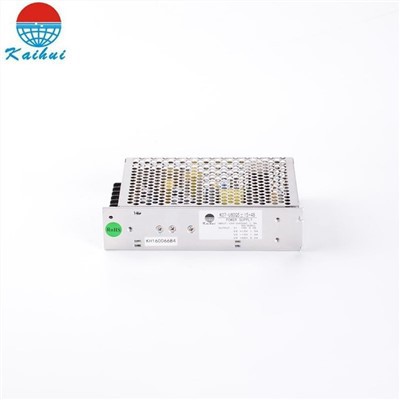
If you’re tired of dealing with power supply failures, downtime, safety risks, or high replacement costs, I’d love to chat. We can go over your specific application, recommend the right type of enclosed switching power supply, and work out a plan that fits your needs. No pushy sales stuff, no hidden fees, just honest advice from a company that’s been in this game for years.
U Bracket Switching Power Supply References:
- "Cost of Unplanned Downtime in Industrial Operations", U.S. Department of Energy, 2022
- "Switching Power Supply Reliability in Harsh Environments", International Journal of Power Electronics, 2021
- "Environmental Protection Ratings for Electronic Components", National Electrical Manufacturers Association, 2020
Guangzhou Kaihui Electronics Co., Ltd.
Guangzhou Kaihui Electronics Co., Ltd. is one of the most professional enclosed switching power supply manufacturers and suppliers in China, specialized in providing the best customized service. We warmly welcome you to buy high quality enclosed switching power supply made in China here from our factory.
Address: 2F BLDG8, Standard Ind.Park, Dongchong Town, Nansha District 511453, Guangzhou, Guangdong, China
E-mail: amy@gzkaihui.com
WebSite: https://www.kaihuipowersupply.com/
