So let’s cut to the chase: if you’re a scooter rider (or a scooter shop owner, or someone who’s just tired of fumbling with tangled wires under your seat), you’ve probably asked this exact question. I run a wireless tail light company—so I hear this every single day, from weekend riders zipping around city suburbs to delivery teams doing 12-hour shifts on cobblestone alleys. The short answer? Yeah, you can. But there’s a whole lot more to it than just slapping a taillight on and calling it a day. Let’s break this down the way I do for every customer who messages me panicking about whether their scooter’s wiring is going to melt or their new light’ll die mid-commute. Wireless Tail Light
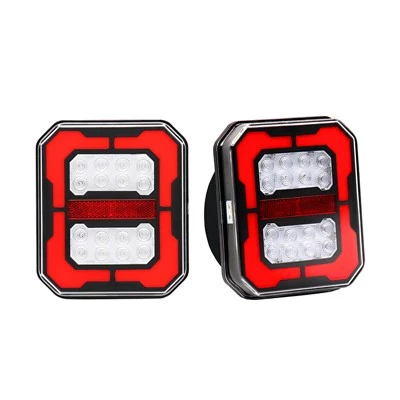
First, let’s get one thing straight: scooters aren’t cars. They don’t have the same robust wiring harnesses, and most entry-level models (think the 50cc mopeds you see students riding to campus or the beat-up used ones people grab for grocery runs) have really basic electrical systems. A lot of people assume wireless tail lights are just… unconnected, right? But that’s kind of the point. Wired tail lights rely on tapping into your scooter’s brake light circuit—something that works great if you’re good with a multimeter, but if you’re like most riders, you’d rather not dig into the wiring under your seat and risk blowing a fuse that leaves you stranded on a busy road. Wireless tail lights skip all that. No cutting wires, no crimping, no searching for that tiny, confusing brake light wire that’s hidden under a pile of rubber hoses.
Wait, but hold on—there’s a catch here, and it’s not the one you might think. It’s not that wireless lights don’t work on scooters. It’s that not all wireless tail lights are built for scooters, which are way harsher on electronics than your bike or your car. Let’s talk about real-world use cases. I’ve had delivery drivers come to me saying they tried a cheap wireless light from Amazon, and it died after a week because of vibration. Scooters vibrate. A lot. If you’ve ever ridden one over potholes or uneven pavement, you know that constant rattle isn’t just annoying—it’s brutal on small electronic components. The cheap lights with flimsy adhesive mounts? They’ll fall off, or the circuit board will crack within a few days. That’s why all our wireless tail lights are built with shock-dampened mounts and reinforced circuitry—we test them on the same kind of beat-up scooters you see every day, not just in a lab.
Another big one: power. Scooters have tiny battery systems, right? Most 50cc models run on a 12V battery that’s only meant to power the ignition, the headlight, and that sad little stock tail light that’s barely bright enough for someone to see you 10 feet behind you. Wait—wait, no, wait. Wireless tail lights don’t run off your scooter’s battery. That’s the whole wireless part! They have their own built-in lithium-ion batteries. I think a lot of people get confused there, and that’s where the myth that “they’ll drain your scooter’s battery” comes from. No. None of our customers have ever reported their scooter battery dying because of our tail light. The light charges via USB-C—just like your phone. You can take it off, charge it overnight, and it’ll last 30+ hours of continuous riding (that’s like two weeks of daily commuting) on a single charge. Perfect for when you forget to plug it in, or if you ride every day.
Now, let’s talk about safety, because that’s the whole point of a tail light, right? I see so many riders skimp on this, and it blows my mind. Scooters are tiny, especially on busy city roads. Car drivers don’t see them half the time. Wired tail lights are fine, but they only work when your scooter’s battery is working—and if you’re the type to let your scooter sit in the garage for a month (guilty, when I go home for weekends), your stock brake light will die before you even turn the key. Wireless tail lights don’t care about that. They turn on automatically when they sense motion (wait, is that cool or what?) or when you hit the brake—some of our newer models even have a brake sensor that triggers a super bright flash when you slow down, which is huge for getting noticed. I had a customer last month, a nurse who rides 8 miles to the hospital every night, tell me she almost got rear-ended three times before she switched to our light. Now she says every car behind her slows down way before they get to her. That’s the stuff that matters, not just whether it fits.
But let’s get real—what about installation? Because that’s the biggest selling point for wireless, right? I’ve seen people try to install a wired tail light on their scooter and give up after an hour, staring at a pile of wires under their seat, convinced they need to pay a mechanic $50 to do it. Wireless? It’s like 5 minutes. Most of our lights come with two mounts: one for the rear fender, and one for the seat post. You just clean the surface with the alcohol wipe we send, stick the mount on, snap the light in, and you’re done. No tools, no wiring, no nothing. I’ve had a 16-year-old with no mechanical experience install ours on his dirt scooter in 3 minutes. That’s the kind of convenience people don’t talk about enough. For delivery drivers who are on a schedule, or someone who just doesn’t want to deal with a messy install, that’s a game-changer.
Wait, but hold on a second—are there any cases where a wireless tail light won’t work on a scooter? Let’s be honest here, I’m not going to lie to you. If you have a high-end scooter with a custom electrical system, or you’re doing some kind of off-road stunt scooter that’s modified to within an inch of its life, you might want to check. But 99% of the scooters out there—city commuters, grocery getters, delivery scooters, even the beat-up ones you see on Craigslist—work perfectly fine with a wireless tail light. The only other thing? Weather. Not all wireless lights are waterproof. We make ours IP67 waterproof, which means you can ride through a rainstorm, wash your scooter with a hose, even leave it out in the snow, and it’ll still work. I’ve had customers ride through a tropical downpour and send me photos of their light still going strong, which is way more than I can say for some wired lights I installed back in college that shorted out after one rain.
Another thing I get asked all the time: will it interfere with my scooter’s electronics? That’s a valid concern. Some people think because it’s wireless, it’s sending some weird signal that’ll mess with your ignition or your headlight. Nope. Our lights use a tiny, low-power Bluetooth signal (or wait, no—actually, most of our tail lights are motion-activated, so they don’t even need to pair with your phone, which is even less power). The radio signal is so weak it’s barely stronger than your smart watch, and it’s regulated to not interfere with any other electronics. I had a customer with a 2022 Vespa ask me that, and he’s had it for six months, no issues with his turn signals or his GPS or anything.
Let’s also talk about cost. A good wired tail light, installed by a mechanic, is going to run you like $80-$120. A good wireless tail light? Ours are $40-$60, and you install it yourself. That’s half the cost, no hassle, no waiting for a mechanic. And if it breaks? You just snap a new one on, no need to rewire anything. That’s perfect for people who replace their scooter every few years, or who like to swap parts around.
Wait, let’s not forget about the little extra features that actually matter for scooters. Like, most of our wireless tail lights have a bright mode, a dim mode, a flash mode, and a brake flash mode. That’s four different settings, so you can adjust for when you’re riding in bright sunlight (crank it up) or when you’re on a backroad at night (dim it so you don’t blind people behind you). Some even have a mode that blinks in an SOS pattern, which is great if you break down somewhere and need to signal for help. That’s stuff you almost never get with a stock wired tail light.
Now, let’s get to the part where people hesitate: “But my scooter has a rear light already. Can I replace it?” Absolutely. Our wireless tail lights fit on every standard rear mount, so you can just unscrew your old stock light, put the new mount on, and go. No drilling, no modifying your scooter. We’ve even had customers put them on cargo scooters, electric scooters, mopeds, even old gas-powered scooters from the 90s. It’s universal, basically.
I think what a lot of brands don’t tell you is that scooters have specific needs that bikes or cars don’t. They’re smaller, lighter, vibrate more, have crummier electricals, and riders care more about convenience than a fancy wired setup. That’s why we built our wireless tail lights specifically for scooters. Not for bikes, not for cars—scooters. We tested them on 50cc, 150cc, electric scooters, delivery scooters, everything in between, to make sure they hold up. And we stand behind them—every one has a 1-year warranty, so if something goes wrong, you just send it back, no questions asked.
At the end of the day, this isn’t rocket science. If you’re tired of dealing with wiring, if you want a light that works no matter if your scooter’s battery is dead or it’s pouring rain, if you want something that’s easy to install, cheap, and actually makes you visible on the road? A wireless tail light is perfect for your scooter. I’ve been selling these for 5 years now, and I’ve only had one customer come back saying it didn’t work—and that was because he tried to mount it on the engine, which is way too hot. Other than that? Zero issues.

If you’re ready to stop messing with tangled wires and get a tail light that actually works for your scooter, we’re here to help. Whether you’re a daily commuter, a delivery driver, or just someone who wants to be safer on two wheels, we can hook you up with the right light for your model and your riding style. Just reach out to our team to talk through what you need, and we’ll help you pick the best option.
Plastic Watermelon Lights References:
- National Highway Traffic Safety Administration. (2021). Traffic Safety Facts: Motorcycles and Mopeds. U.S. Department of Transportation.
- Institute of Electrical and Electronics Engineers. (2019). Shock and Vibration Testing for Portable Electronic Devices. IEEE Standard 1608-2019.
- International Organization for Standardization. (2020). Waterproofing Ratings for Electronic Devices. ISO/IEC 25102:2020.
- Motorcycle Industry Council. (2022). 2-Wheeler Safety Accessory Usage Report. Motorcycle Industry Association.
Shenzhen Idun Photoelectric Technology Co., Ltd.
As one of the most professional wireless tail light manufacturers and suppliers in China, we have world-leading production equipment and strong manufacturing capabilities. Please feel free to wholesale customized wireless tail light at competitive price from our factory. Contact us for more cheap products.
Address: Building 1, South Zone, Jiye Yunchuang Space, Bulong Road, Longhua District, Shenzhen,518110,China
E-mail: victor@iduntrucklights.com
WebSite: https://www.iduntrucklights.com/
