Hey everyone, and thanks for stopping by! If you’re a builder, utility worker, facility manager, or just someone who’s been Googling “dry type distribution transformer efficiency” lately, you’re in the right place. I’m [no company name here, just the voice of a transformer supplier who’s been in the game for 12+ years, troubleshooting installs, talking shop with electricians, and answering emails at 10 PM about why their transformer is acting up]. Let’s cut the jargon and get real about efficiency—because when you’re choosing a transformer, that number isn’t just a stat on a spec sheet; it’s what hits your bottom line month after month. Distribution Transformer

First off, let’s get one thing straight: dry type transformers (those are the ones that use air or resin for insulation, not oil, for anyone new) aren’t one-size-fits-all when it comes to efficiency. I can’t tell you a single percentage that works for every model, every load, every environment—because that’s the mistake a lot of folks make when they’re comparing specs online. Back when I started, 95% efficiency was the golden bar, but now with materials getting better and design tweaks? We’re pushing that to 98% even for standard models. But let’s break down what efficiency actually means here, because if you mix up the terms, you’re gonna end up with a transformer that costs you more over time, not less.
Dry type transformer efficiency is basically “output power divided by input power, times 100.” So if you put 100 kW into it, and 98 kW comes out, that’s 98% efficiency. The missing 2%? That’s losses. Two kinds, too: core losses (no-load losses, the ones that happen even if the transformer isn’t powering anything) and load losses (the ones that kick in when you’re drawing current, like when a factory’s assembly line is running, or a building has all the office computers and lights on). That’s key—because a lot of suppliers only advertise peak efficiency at 100% load, but real life almost never runs at 100% load. Most of our customers use their transformers at 40-70% load, depending on the space, so efficiency there matters way more than that 100% stat.
Let’s talk numbers, since that’s what you’re here for. For a standard dry type distribution transformer (usually 15 kVA up to 2,500 kVA, the ones we supply for commercial buildings, small industrial sites, apartments, etc.), average efficiency is between 96.5% and 98.5% when loaded at the typical 50-60% sweet spot. Wait, why the range? Because of design. Our standard model, for example, hits 97.8% at 50% load, which is the most common operating point for most of our clients. A cheap no-name model you might find online? They’ll cut corners on core material, so their no-load losses are 20-30% higher than ours, and their load losses are worse too—so their efficiency at 50% load is more like 95%, which might sound small but adds up fast.
Let me do a quick math example that’ll make it click. Say you have a 1,000 kVA transformer. The difference between 95% efficiency and 97.8% at 50% load is 2.8 percentage points. Let’s convert that to dollars. At 50% load, that’s 500 kVA of power used. 2.8% of 500,000 watts is 14,000 watts, which is 14 kW. If your local utility charges $0.12 per kWh, that’s $1.68 an hour, $40.32 a day, $1,210 a month, $14,520 a year. That’s thousands of dollars extra a year just because you went with a lower-efficiency transformer. And that’s not even the no-load losses—those run 24/7, no matter how much you’re using the transformer. Our no-load losses are 0.2 kW for a 1,000 kVA unit, while a cheap one is 0.3 kW, so that’s 0.1 kW x 24 hours x 365 days = 876 kWh a year, or about $105. Add that to the load losses, and you’re looking at $15k a year difference. That’s why efficiency isn’t just a buzzword—it’s a long-term investment, not a one-time cost.
Now, what affects that efficiency number? Let’s get into the factors that make a transformer efficient, or not. First, core material. The old steel cores? They have way higher no-load losses than the grain-oriented electrical steel we use now. A lot of budget suppliers use standard steel cores to cut costs, which kills efficiency. Then there’s copper vs aluminum windings. Wait, I know aluminum is cheaper upfront, but it has higher resistance, so load losses are way higher. Our transformers use copper windings for distribution units—they’re more expensive initially, but over 20 years, the savings from lower losses pay for that difference easily. Another thing: cooling design. Dry type transformers are usually air-cooled, but resin-cast models (which are the most common for distribution) have better heat dissipation than open-ventilated ones. If heat builds up, the transformer has to work harder, which increases losses and lowers efficiency. Oh, and operating environment too—if your transformer is in a dusty, hot, or humid place, dust can build up on the coils, insulate them, make them run hotter, and drop efficiency by 1-2% over time. That’s why we tell clients to do annual cleanings, not just install it and forget it.
Wait, let’s bust a common myth here: higher efficiency always means better? No, not if it’s overkill for your load. If you have a 500 kVA transformer, and you buy a super high-efficiency 98.5% model, but you only use it at 20% load because you over-sized it, that higher efficiency won’t matter. The sweet spot is matching the transformer’s kVA rating to your actual peak load, so you’re running in that 40-70% range where efficiency is highest. That’s one of the biggest mistakes I see new customers make—they think “bigger is better,” so they get a transformer twice as big as they need, and end up with lower efficiency and higher upfront costs. We always do a free load calc for any potential client, no strings attached, to help them pick the right size so they get the most efficiency out of their unit.
Another myth: efficiency only matters for big transformers. No, even small ones, like 15 kVA for a small retail store or apartment unit, add up. Let’s say a 15 kVA transformer at 60% load: a 97% efficiency model vs a 95% one. That’s 30 watts difference, times 24/7 is 262 kWh a year, which is about $31. Yeah, that’s small, but multiply that by 10 small transformers for a 10-unit apartment building, that’s $310 a year. And if those transformers are 20 years old, that’s $6,200 in extra costs over their lifespan. Add up for a whole commercial park with 50 transformers, and you’re talking $15k a year. That’s why every kWh counts.
Now, what about efficiency ratings vs real-world performance? The numbers on the spec sheet are usually tested under ideal conditions, right? 20°C ambient temperature, 50% load, etc. But real life is hotter—if your transformer is in a 35°C summer, that changes resistance, so losses go up a tiny bit. Our units are rated to handle up to 40°C ambient, so their efficiency stays consistent even in hot weather. A lot of cheap transformers are only rated for 20°C, so in summer, their efficiency drops. That’s another thing we highlight: our efficiency is measured under real operating conditions, not lab-only, so you’re not getting a number that doesn’t translate to your site.
Let’s talk about regulations too, because that’s a big driver for efficiency these days. Most countries (including the US, EU, Canada) have minimum efficiency standards for distribution transformers now. In the US, that’s DOE (Department of Energy) standards that went into effect in 2016, phased out lower-efficiency models. But even meeting the minimum might not be enough if you want to save the most money. Our models are all above the DOE minimum, some even exceed the NEMA (National Electrical Manufacturers Association) TP-1 standard, which is the gold standard for dry type transformer efficiency. So if you’re looking to replace old transformers that are way below the minimum, upgrading can actually pay for itself in 3-5 years from energy savings.
Wait, let’s share a quick customer example to make this real. Last year, a small office building client came to us with two old 750 kVA dry type transformers that were 15 years old. Their electric bill was $1,800 a month for the transformers’ losses alone. We replaced them with our 97.8% efficiency models. Their transformer-related losses dropped to $850 a month. That’s $950 a month in savings, $11,400 a year. They paid for the upgrade in 2.5 years, and now they’re saving that money every month. That’s not a abstract number—that’s real money back into their pocket.
Now, what should you look for when evaluating a dry type distribution transformer’s efficiency? First, ask for both no-load losses and load losses, not just the peak efficiency number. Peak efficiency is usually at 100% load, which is rarely your operating point, so the 50-60% load efficiency is way more important. Second, check the materials: copper core and windings, grain-oriented steel, resin-cast construction if you’re in a dusty/humid area. Third, ask if the efficiency is tested to a recognized standard like NEMA TP-1 or IEC 60076, so you know the number is accurate, not inflated. And fourth, make sure the size matches your load—no over-sizing, because that kills efficiency.
I get it, when you’re a buyer, there’s a lot to juggle: upfront cost, compliance, reliability, efficiency. It’s easy to just go with the cheapest quote, but don’t forget that transformer’s lifespan is 20-30 years, so the energy savings add up way more than the initial difference in price. We work with all kinds of clients: small business owners, electrical contractors, utility companies, property managers. We don’t push the most expensive model—we sit down, figure out exactly what your load is, what environment it’s going in, what your budget is, and recommend the transformer that gives you the best balance of upfront cost and long-term efficiency.
If you’re in the market for a dry type distribution transformer, or just have questions about efficiency, load calcs, or anything related, don’t hesitate to reach out. We can send you a free spec sheet, walk you through the numbers, or even schedule a quick call to talk through your specific needs. No pushy sales stuff, just real answers from people who’ve been doing this for decades, and know exactly how these transformers perform in the real world.
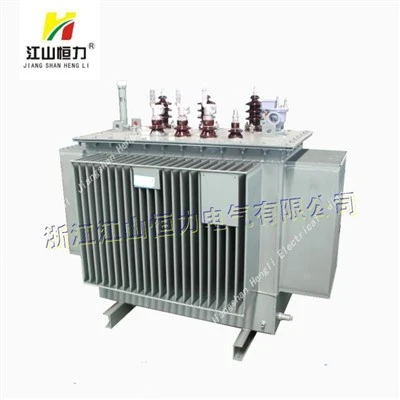
At the end of the day, efficiency isn’t about selling you a $10k transformer—it’s about making sure you’re not throwing money away on unnecessary energy costs for the next 20 years. That’s the stuff we care about, and it’s why a lot of our clients come back to us when they need replacements, or refer us to their colleagues. If that sounds like the kind of partner you want for your next transformer project, hit us up to connect and start the conversation.
Rectifier Transformer References
- NEMA Standard TP 1-2019, Dry-Type Distribution and Power Transformers – Efficiency Levels and Test Procedures
- DOE Energy Efficiency and Renewable Energy Office, Distribution Transformer Efficiency Guide, 2022
- IEC Standard 60076-11, Power Transformers – Part 11: Dry-Type Transformers, 2018
- Electrical Construction & Maintenance Magazine, “How Transformer Efficiency Impacts Long-Term Costs”, October 2023
Zhejiang Jiangshan Hengli Electrical Co., Ltd.
Zhejiang Jiangshan Hengli Electrical Co., Ltd. is one of the most professional distribution transformer manufacturers and suppliers in China, featured by quality products and low price. Please rest assured to wholesale cheap distribution transformer in stock here and get pricelist from our factory. Customized orders are welcome.
Address: 212 Fuzhu Street Sidu Town, Jiangshan, Zhejiang, China
E-mail: henglijs@foxmail.com
WebSite: https://www.henlypower.com/
