If you’ve ever stood in the kitchen, staring at your sleek, smooth glass-top stove and a set of well-loved frying pans, you’ve probably wondered: Can you actually use that frying pan on a glass-top stove? As someone who’s spent 12 years building a brand as a frying pan supplier, I’ve fielded this question hundreds of times—from new homeowners eyeing their first modern cooktop to seasoned chefs upgrading their kitchen. The short answer is yes, but it’s not a one-size-fits-all yes. It depends entirely on two things: what kind of frying pan you own, and how you use it. Skip the messy mistakes that send glass-top stoves into repair, and let’s break this down like I would for a home cook who cares about both their cooktop and their cookware. Frying Pan

First, let’s talk about why glass-top stoves are different from the old coil stoves we grew up with. A glass-top stove (usually ceramic-glass, sometimes called vitroceramic) relies on radiant heat from hidden coils or induction power to warm the smooth surface. That means heat transfers differently than coil stoves: the surface is fragile, scratches easily, and extreme, uneven heat can cause thermal shock (sudden temperature changes that crack the glass). Coil stoves have a forgiving metal surface that can handle heavy, rough-bottomed pans, but glass-top stoves demand a lot more care. So when we, as frying pan suppliers, design cookware for glass-top stoves, that’s the foundation we build on.
Let’s start with the core rule: not all frying pans are created equal for glass-top stoves. The biggest mistake people make here is grabbing their old cast iron skillet, which is heavy, rough-bottomed, and often warped from years on coil stoves. Drag that across a glass-top stove, and you’re almost guaranteed to scratch the surface. Even worse, the weight of a warped cast iron pan can create uneven pressure that concentrates heat too much in one spot, leading to a cracked stove top. I’ve seen this happen too many times—customers come back to us frustrated because their first glass-top pan didn’t work, only to learn they were reaching for old, worn-out cookware.
So what kind of frying pans work best for glass-top stoves? Let’s go through the common materials, and why some are better than others. First, stainless steel: high-quality, tri-ply stainless steel pans are our top seller for glass-top stoves, and for good reason. The three layers (usually aluminum core sandwiched between two layers of stainless steel) create a perfectly flat, uniform bottom. No warping, so the pan sits evenly on the glass surface, distributing heat consistently. That means no hot spots that can crack the stove, and even cooking for your food. But not all stainless steel is the same—cheap, thin stainless steel pans often warp after just a few uses, so skip those. At our company, we only sell tri-ply stainless steel pans that go through a rigorous flattening process, so you never have to worry about a warped bottom scratching or damaging your cooktop.
Next, non-stick frying pans. These are super popular for home cooks, and the good news is many modern non-stick pans work great on glass-top stoves—if you pick the right ones. The key here is a smooth, reinforced bottom. Cheap non-stick pans often have thin, thin aluminum bases that warp easily, so they rock back and forth on the glass surface, causing uneven heat and scratches. We make our non-stick frying pans with a heavy-gauge aluminum core bonded to a stainless steel base, creating a flat, stable bottom that glides gently across the glass without scraping. Another tip: avoid using metal utensils on non-stick pans, obviously, but that’s a rule for any non-stick, not just for glass-top stoves.
Then there’s cast iron. Yes, you can use cast iron on a glass-top stove— but only if you take the right steps. The caveat here is that cast iron is heavy, and needs to be perfectly smooth and flat. If your cast iron has a rough, pitted bottom from years of use, it will scratch the glass. So if you want to use cast iron, spend 10 minutes running a metal sander or flat stone over the bottom until it’s completely smooth, then season it thoroughly to add another layer of protection. Also, never drag a cast iron pan across the glass—lift it when moving it, even if it feels heavy. I always tell customers: if you’re not willing to put in the work to prep your cast iron, it’s better to stick to lighter, pre-flattened pans from a reputable supplier like us.
Now, what about the big no-nos for using a frying pan on a glass-top stove? I’ve heard every bad tip out there, so let’s set the record straight. First: never use a frying pan with a rough, warped bottom. We’ve all seen those cheap pans that rock side to side when you set them on a flat counter—those are the ones that will scratch your glass. Second: never slide a pan across the stove. Even a smooth tri-ply stainless steel pan can pick up tiny bits of debris (like food particles or crumbs from your counter) that act like sandpaper when you drag it. Always lift and set down your pan gently. Third: don’t use a pan that’s smaller than the burner. Wait, what? Glass-top stoves rely on the area of the pan touching the burner to transfer heat efficiently. If your pan is 8 inches and the burner is 12 inches, the heat is concentrated on the edges of the burner, which can overheat the glass around the pan, leading to cracks. Stick to pans that match or are slightly smaller than the burner size. We include a pan size guide with every order, so you can pick the right size for your stovetop.
Another common question: can you use induction-compatible frying pans on a regular glass-top stove? Here’s the thing: induction stoves are a type of glass-top stove, but the pan requirement is a bit different. For induction, pans need to be ferrous (have iron in them) to work with the magnetic field, but that same ferrous material is safe for regular radiant glass-top stoves. So if you have an induction pan, it will work on a standard glass-top stove, as long as it’s flat and smooth. That’s a bonus, since induction pans often have high-quality bottoms designed for even heat.
Wait, what about the heat setting? That’s a big one I don’t see many people talking about. Glass-top stoves heat up fast, and they retain heat well. If you crank the burner to high for a frying pan, you’re not just wasting energy—you’re creating extreme heat that can thermal shock the glass. For most cooking, medium or medium-low heat is enough. Our frying pans are designed to heat quickly and evenly, so you don’t need high heat to get a good sear on a steak or fry an egg. Cranking the heat also makes your food more likely to burn, so it’s a win-win: lower heat = better cooking, and less risk of damaging your stove.
I also want to address a myth that’s been going around for years: some people say you should put a towel or a mat between the pan and the glass-top stove. That’s not true, and it’s actually dangerous. The mat can trap heat, leading to overheating under the pan, and it can also be a fire hazard. Never use anything between your pan and the stove—let the pan make direct, gentle contact with the glass surface.
Now, as a frying pan supplier, I’ve seen first-hand what works and what doesn’t. The biggest pain point for customers is ending up with a pan that scratches or cracks their new glass-top stove, or a pan that doesn’t cook evenly. That’s why we build all our frying pans with a focus on glass-top compatibility: precision-flattened bottoms, balanced weight that’s easy to lift, and materials that distribute heat uniformly. We even test every pan we sell on actual glass-top stoves to make sure it doesn’t scratch or warp.
Let’s wrap this up with a quick checklist to make sure you’re doing it right. 1. Check your pan’s bottom: is it smooth and flat (no rocking when set on a counter)? If not, it’s not ideal for glass-top stoves. 2. Lift, don’t slide: moving your pan across the stove is the #1 cause of scratches. 3. Match pan size to burner: don’t use a tiny pan on a large burner. 4. Use medium heat: glass tops don’t need high heat to cook well. 5. Avoid cheap, thin pans: they warp easily, leading to damage and uneven cooking.
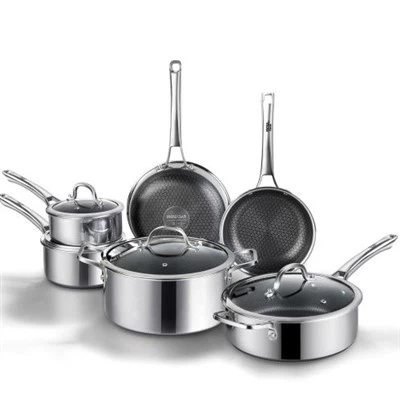
If you’re in the market for frying pans that work perfectly on glass-top stoves, we have a range of options from tri-ply stainless steel to non-stick, all engineered for safety and performance. Whether you’re a home cook outfitting your new kitchen or a small restaurant replacing worn cookware, we can help you find the right set for your needs. For more information or to discuss bulk orders, feel free to reach out.
Stockpot References
- International Association of Certified Home Inspectors. (2022). "Glass-Cooktop Safety and Care Guidelines." Home Inspector Resource Library.
- Cookware Manufacturers Association. (2021). "Cookware Compatibility Guide for Modern Stovetops." Industry Best Practices Report.
- Vitroceramic Surface Association. (2020). "Heat Transfer and Thermal Shock Risks for Glass-Top Stoves." Technical Bulletin 007.
- National Kitchen and Bath Association. (2023). "Cookware Selection for Kitchen Remodeling Projects." Kitchen Design Standards.
Zhejiang Nanyue Kitchenware Co., Ltd.
We’re well-known as one of the leading frying pan manufacturers and suppliers in China, also support customized service. Please feel free to buy high quality frying pan made in China here and get pricelist from our factory. For price consultation, contact us.
Address: Located inside Zhejiang Jialiyuan Industry and Trade Co., Ltd. (Nanyue Kitchenware) in Jiangbin Industrial Zone, Tongqin Town, Wuyi County, Zhejiang Province.
E-mail: nanyuekitchenware@zj-jlypans.com
WebSite: https://www.nanyuecook.com/
