If you’ve ever stood in a workshop watching industrial machinery hum to life, you’ve probably noticed those thick, wrapped V belts crisscrossing between pulleys—unassuming, yet critical to keeping every component moving. As a wrapped V belt supplier, I get dozens of calls every month from maintenance teams, plant managers, and even fellow suppliers asking the same question: “What’s the normal operating tension range for a wrapped V belt?” It’s a simple question, but the answer isn’t just a number on a spec sheet. It’s the difference between a belt that runs reliably for years and one that slips, cracks, or snaps halfway through a production run. Let me break this down like I do for my customers, no jargon, no corporate fluff—just real-world knowledge I’ve picked up from 12 years selling, installing, and troubleshooting these belts. Wrapped V Belt
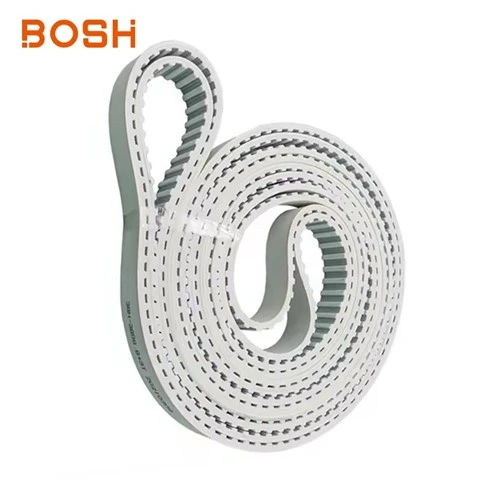
First, let’s get one thing straight: there’s no one-size-fits-all number. The “normal operating tension range” isn’t etched in stone because it depends on three big factors: the belt’s cross-section, the center distance between the two pulleys it’s connecting, and the speed of the drive. For example, a small, light-duty wrapped V belt like an A-section is way different from a heavy-duty E-section belt pulling a conveyor system for a mining operation. I’ve seen maintenance teams guess at tension and either crank a belt so tight it burns out the bearing in a motor in six months, or so loose it slips on a compressor and costs them an hour of downtime to fix. That’s why getting this right matters more than you think.
Let’s start with the cross-section, because that’s the baseline. Wrapped V belts are standardized by the Rubber Manufacturers Association (RMA) here in North America, and the International Organization for Standardization (ISO) overseas, so every A-section, B-section, etc. has a defined minimum and maximum tension to operate normally. From my experience, the “normal” tension range for a typical A-section wrapped V belt is between 80 and 120 pounds of force. A B-section runs a bit higher, usually 150 to 220 pounds, while the C-section I sell for heavy equipment sits between 250 and 350 pounds. Wait, but hold on—this is the initial tension, right? Because when a belt starts running, it stretches a little (that’s called “elongation”) and the tension drops. So the “operating” tension isn’t the same as the tension you set when you install it. That’s a common mistake.
Let me explain with an example. Last year, a customer in a food processing plant called me panicking because their production line kept stopping every two weeks. They’d just had a new set of B-section belts installed, and the tech who did it set them to 220 pounds right out of the box. Within three days, they stretched, tension dropped to 110 pounds, and the belts slipped on the pulleys, overheated, and started to crack. The tech had set the initial tension too high, thinking that would keep them tight. I advised him to set the initial tension at 160 pounds, right in the middle of the B-section’s normal range, and after the belts settled in (about 24 hours of run time), the operating tension stabilized at 135 pounds—perfect. That line has run without a hitch for over a year now. So initial tension is the number you adjust when installing, but operating tension is what the belt actually holds when it’s under load. That’s the real “normal range” we care about for long-term performance.
Now, center distance is a huge variable. Center distance is how far apart the two pulleys are—say, a motor pulley and a pump pulley. If the pulleys are close together (a short center distance), the belt stretches less when you set it, so the operating tension will be higher than if the pulleys are far apart. For long center distances, the belt has more “sag,” so the operating tension is lower. Let’s use that same B-section belt. If the center distance is 3 feet, the normal operating tension might be around 130 pounds, same as that food plant. But if the center distance stretches to 8 feet, the same B-section belt will have a normal operating tension of around 110 pounds, because the longer belt stretches more under load, so it doesn’t hold as much tension. I always tell customers to check the installation manual that comes with their belts, or reach out, because we can help them adjust for their specific setup.
Speed is another factor. Belts running at higher speeds (over 3,000 feet per minute) have different tension needs than slower ones. When a belt spins fast, centrifugal force pulls it away from the pulley, which reduces the friction that keeps it from slipping. So for high-speed drives, you need a slightly higher operating tension to compensate for that pull. Last month, a customer with a fan in a warehouse that runs at 4,500 FPM was having trouble with their A-section belts slipping. They’d set the tension at 90 pounds, the middle of the A-section’s range, but at that speed, centrifugal force was making the effective tension too low. I suggested bumping the operating tension up to 105 pounds, which fixed the slip issue without over-tightening the belts. That’s a small adjustment, but it made a big difference for them.
Now, what happens if you’re outside the normal operating range? Too low, and you get slippage. Slippage generates heat, which wears out the belt’s rubber core and the wrapped fabric (that canvas layer that makes wrapped V belts more durable than raw-edged ones). Over time, the belt will glaz over, crack, and break. Too high, and you put excess stress on the pulley shafts, bearings, and the motor itself. I’ve seen a motor bearing burn out because a belt was set so tight it pulled the shaft out of alignment—costing the customer $10,000 in downtime and parts, all because they guessed at the tension.
So how do you actually measure operating tension? You can’t just yank on it with a wrench, no matter what some old-timers say. The right tool is a belt tension gauge. I sell these to all my regular customers, and I always walk them through how to use it. The process is: once the belt has run for at least 24 hours to settle in, push down on the middle of the span between the two pulleys with the gauge. The amount of deflection (how much the belt moves) should correspond to the normal tension range for your belt’s cross-section and center distance. For example, an A-section belt with a 3-foot center distance should deflect about 3/8 of an inch under 100 pounds of pressure—right in that 80-120 normal range. If you don’t have a gauge, the old “finger test” works as a rough guide, but it’s not precise enough for critical machinery. I always tell people not to rely on that for production equipment, because the cost of downtime is way higher than the $50 for a decent tension gauge.
Wait, and one more thing: for multi-belt drives, like when you have two or three wrapped V belts running on the same set of pulleys, the normal operating tension per belt is even more important. If one belt is loose or tight, it throws off all the others. I had a customer with a conveyor system that used three C-section belts. He’d been replacing one belt at a time, but wasn’t matching the tension. When I came out, I found two belts were at 280 pounds (right in normal range) and one was at 180 pounds, too low. That loose belt was slipping, putting extra load on the other two, and all three were wearing out twice as fast as they should. We replaced all three belts at the same time, set each to 300 pounds initial tension, and after they settled, each was at 270 pounds—right in the C-section’s normal range. The conveyor has run smoothly ever since, and his belt replacement costs dropped by 40%.
Let me wrap this up with a few key takeaways that I share with every new customer. First, never rely on a generic number for “normal operating tension”—always adjust for your belt cross-section, center distance, and drive speed. Second, initial tension is different from operating tension; let the belts settle for 24 hours after installation before checking operating tension. Third, use a belt tension gauge, not guesswork, to stay in the normal range. Fourth, if you’re working on multi-belt drives, make sure every belt is within that range to avoid premature wear.
As a wrapped V belt supplier, my job isn’t just to sell you a belt—it’s to make sure it works for your specific application. I’ve been in this game long enough to know that even the best belt in the world will fail if it’s not tensioned properly. If you’re dealing with belts that keep slipping, wearing out too fast, or causing downtime, don’t guess at the tension. Reach out to talk through your setup—we can help you find the right normal operating range for your wrapped V belts and get your machinery running reliably. Whether you’re dealing with a small motor in a garage or a heavy industrial conveyor, we have the expertise and the right belts to fit your needs. Let’s connect to get your tension set right and keep your operations moving.
Oil Seal References
- Rubber Manufacturers Association. (2020). V Belt Drive Engineering Guidelines. RMA Publication No. IP-20.
- International Organization for Standardization. (2018). Plain Wrapped V Belts and V Belt Drives for Power Transmission – System, Dimensions and Application. ISO 4182:2018.
- American Society of Mechanical Engineers. (2019). Maintenance of Power Transmission Belts. ASME B106.1M-2019.
- Gates Corporation. (2021). Wrapped V Belt Application and Tensioning Best Practices. Technical Bulletin TB-123.
Xingtai Boshuo Auto Technology Co., Ltd.
Xingtai Boshuo Auto Technology Co., Ltd. is one of the most professional wrapped v belt manufacturers and suppliers in China, featured by quality products and low price. Please rest assured to wholesale bulk customized wrapped v belt made in China here from our factory. Welcome to contact us for pricelist and free sample.
Address: No. 58 Quannan East Street, Xiangdu District, Xingtai City, Hebei Province
E-mail: sherry1@bs-belt.com
WebSite: https://www.bsbelts.com/
