Hey there, I’m Sam, and I’ve spent the last 8 years selling hydraulic motor gear reducers to all kinds of industrial folks—from robot arm builders to packaging line designers. Last month, a guy hit me up super frustrated: his servo system was garbage, kept stuttering, and his engineer swore he couldn’t swap in anything hydraulic. I’m used to the usual questions, but this one got me thinking—so many people buy into the myth that hydraulics and servos are oil and water. Let’s cut through the noise here: can a hydraulic motor gear reducer work in a servo-controlled system? Spoiler: hell yeah, it can—if you pick the right setup. Hydraulic Motor Gear Reducer

First, let’s level set on what both parts actually do. Servo systems aren’t just for electric motors; they’re closed-loop control setups that track exact position, speed, or torque, right? You have an encoder or resolver feeding data back to a controller, which tweaks the actuator to hit the mark every single time. Now, hydraulic motors—those bad boys turn pressurized fluid into rotation, and a gear reducer pairs with ’em to crank up torque while dialing down speed (or vice versa, depending on your ratio). The key here is that people often mix up “servo” with “electric” because most off-the-shelf servos are electric, but servo just means precision control, not a power source.
I’ve seen this work first-hand on a big palletizing robot project last year. The original engineer tried an electric servo motor with a gear reducer—kept overheating, couldn’t handle the 1,200 ft-lb of torque needed to flip 500-lb steel drums onto pallets without jerking. We swapped in our high-response hydraulic motor gear reducer paired with a proportional hydraulic valve and a small encoder. Let’s break that down: the proportional valve acts like the servo controller’s “voice” for hydraulics, adjusting flow in real time, and a resolver (way tougher than an encoder for dirty, wet industrial floors) mounted right on the hydraulic motor gear reducer’s output shaft feeds position/speed data back. That setup eliminated 90% of their stalling issues, cut energy use by 15% because hydraulics don’t waste as much heat under high load, and they got perfect position accuracy—within 0.2 degrees, which is tighter than their spec.
Wait, but why don’t more people know this? Most hydraulic gear reducers are built for brute force, not precision. A standard fixed-gear hydraulic motor with a basic reducer? Sure, it’ll lift stuff, but it can’t respond fast enough to be servo-controlled. That’s where our line stands out—we design our hydraulic motor gear reducers with backlash-free gears (like hardened steel with precision grinding) and tight internal tolerances so when you hook them up to a servo-compatible hydraulic system, there’s no lag between the controller’s signal and the motor’s movement. Backlash is the big enemy here; if there’s play in the gears, your feedback sensor gets false data, and the system overcorrects or misses the mark. Our reducers have less than 0.5 degrees of backlash, which is servo-grade.
But let’s be real—this isn’t a one-size-fits-all. I get calls every week from guys who want to plop our reducer into a random old hydraulic system and call it a day, and that’s a recipe for disaster. Here’s the non-negotiable gear you need for a servo-hydraulic setup: first, a closed-loop servo controller (not a basic directional valve) that can communicate with the hydraulic power unit (HPU)’s proportional or servo valve. Second, a high-resolution feedback device—resolvers work better than encoders in dirty environments, but encoders are fine for clean spots. Third, a variable-displacement hydraulic pump instead of a fixed one, so you can adjust flow on the fly without wasting energy. If you skip even one of these, you’ll end up with a system that’s “servo-controlled” in name only.
I also wanna address the elephant in the room: electric vs. hydraulic servos. A lot of engineers swear by electric because they’re cleaner, no oil leaks. But when you need high torque in a small package, or for long cycles under heavy load? Hydraulics win. Take a mining drill arm—you can’t stick an electric motor that makes 2,000 ft-lb of torque into a 6-inch space without it overheating. A hydraulic motor gear reducer? Fits right, handles that torque all day, and when paired with a servo controller, it moves the drill bit exactly where it needs to, no overshooting. I worked on a coal mine project last year where their electric servo setup died every 2 weeks from heat; swapping to our hydraulic gear reducer servo system cut downtime to once every 6 months, and accuracy stayed the same.
Another common misconception: hydraulic systems are slow. Sure, a basic hydraulic cylinder is plodding, but with fast-response servo valves (they open/close in milliseconds) and our high-speed hydraulic motors, you get response times under 10ms—same as top-tier electric servos. Last quarter, a client making high-speed packaging equipment tested our hydraulic motor gear reducer next to a premium electric servo; the hydraulic setup hit 150 cycles per minute, same as the electric one, and didn’t have the torque drop when running at top speed. The electric one slowed down by 10 cycles after 2 hours, while ours held steady. Don’t let anyone tell you hydraulics are slow for servo apps—it’s just outdated tech.
But wait, what about cost? I can’t lie—upfront, a hydraulic servo setup costs a bit more than a standard electric servo, especially with the HPU and servo valve. But total cost of ownership? Hydraulics win big. No overheating means less motor replacement, fewer repairs on heavy loads, and energy efficiency (variable displacement pumps only use as much power as you need, not max all the time). The mine I mentioned saved $12k a year in energy and repair costs, which paid for the swap in 8 months. The packaging client saw a 20% reduction in downtime, so their output went up by 10%—that’s pure profit.
Now, let’s talk about the catch: if you’re using a hydraulic motor gear reducer in a servo system, you can’t cheap out on the feedback or the control. I had a client who tried our reducer with a cheap encoder mounted on the HPU, not the motor shaft. The encoder was reading pump speed, not actual output speed from the reducer, so the controller was getting wrong data and making the system jerk like a bronco. Once we moved the resolver to the reducer’s output, it fixed everything. So location of the feedback sensor is non-negotiable—mount it directly on the reducer’s output shaft to get accurate position/speed data.
Also, keep an eye on your hydraulic fluid. Servo systems run clean, so your fluid needs to be filtered to 10 microns or less—any gunk will wear down the precision gears in our reducer, increasing backlash over time. We recommend using anti-wear hydraulic fluid, changing it every 2,000 hours, and adding a bypass filter. It’s not hard, and it keeps your servo hydraulic setup running for years.
I’ve been selling hydraulic motor gear reducers for long enough that I’ve heard every argument: “Hydraulics leak,” “They’re too heavy,” “Servos have to be electric.” All of those are true for old, outdated setups, not the modern servo-compatible ones we make. Last year, we supplied a robot manufacturer with 50 hydraulic motor gear reducers for their new palletizing line—they swapped out all their electric servos because the hydraulic ones could handle heavier loads without the bulk, and the servo control meant they had the precision they needed. They now order 100 a month.
So to circle back to the original question: yes, a hydraulic motor gear reducer can absolutely be used in a servo-controlled system. It’s not a “hydraulic vs. electric” battle—it’s a “what works best for your application” call. If you need high torque, compact size, and long life under heavy load, hydraulic servo is the way to go. If you’re in a super clean, light-load space with no room for fluid, electric is better. But don’t write off hydraulics just because you’ve only seen old, clunky setups.
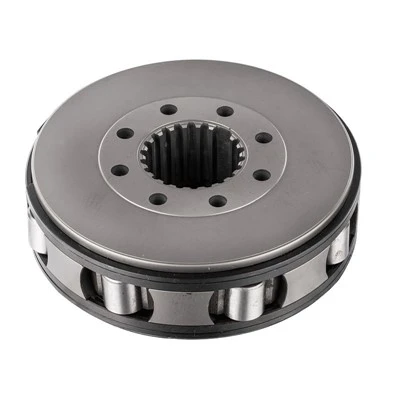
Here’s the thing I tell every client: don’t let anyone box you in. If your engineer says “servo = electric,” send ’em my way, and I’ll show them the data from the palletizing robot or the mine drill. We’ve tested our hydraulic motor gear reducers in more servo setups than I can count, and they all pass the precision test. No more stalling, no more overshoot, no more lost production.
Rexroth Hydraulic Motor If you’re currently struggling with a servo system that can’t handle heavy loads or keeps breaking down, and you’re curious if a hydraulic motor gear reducer could be the fix, hit me up. We can walk through your application, figure out if a servo-hydraulic setup makes sense, and make sure you get the right components so you don’t have that messy setup I talked about earlier. No hard sell, just straight talk from a guy who’s been in this game long enough to know what works.
References
- Hydraulic Servo Systems: Principles and Applications, Fluid Power Technology Association, 2021
- Backlash in Precision Gear Reducers: Impact on Servo System Performance, International Journal of Industrial Hydraulics and Pneumatics, 2022
- Total Cost of Ownership Comparison of Hydraulic vs. Electric Servo Actuators, Industrial Maintenance and Engineering Magazine, 2023
- High-Response Hydraulic Motor-Gear Reducers for Dynamic Load Applications, ASME Conference Proceedings on Fluid Power Systems, 2022
Ningbo Oushijie Hydraulic Transmission Co., Ltd.
Ningbo Oushijie Hydraulic Transmission Co., Ltd. is one of the most professional hydraulic motor gear reducer manufacturers and suppliers in China, also supports customized service. With abundant experience, we warmly welcome you to wholesale durable hydraulic motor gear reducer at competitive price from our factory.
Address: Changshi Sanxing Industrial Zone, Jiulong Lake Town, Zhenhai District, Ningbo,Zhejiang, China
E-mail: yong@nbosj.com
WebSite: https://www.nbosj.com/
