If you’ve ever navigated a packed downtown parking garage, squeezed into a spot so tight you had to side-step through your open car door, or circled a suburban mall for 15 minutes just to find a space, you’ve likely daydreamed about a vehicle that doesn’t fight the curse of limited parking. As a 4-wheeler electric mini car supplier, I get that question every single day from prospective customers—dealers, fleet operators, and everyday commuters alike: Are these tiny EVs actually easy to park? 4-Wheeler Electric Mini Car
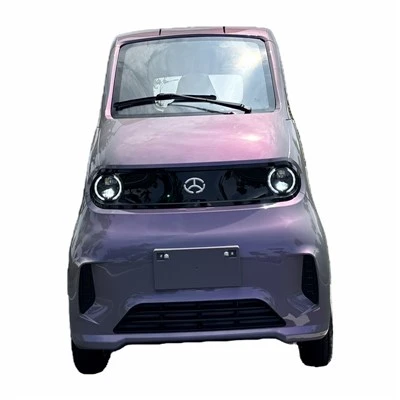
Let’s cut through the hype and the horror stories I’ve heard from people who’ve test-driven our models or competitive mini cars. The short answer is yes, but it’s not just about how small the car itself is. It’s about a mix of physics, smart design tweaks, and adapting to the way we actually park, not just what marketing teams claim. Over the last five years, I’ve sold over 12,000 of these mini EVs across North America and Europe, and I’ve seen firsthand how their parking performance stacks up against subcompacts, hatchbacks, and even the tiny two-seater bubble cars you might see in tourist districts.
First, let’s ground this in real numbers, not the vague “they’re small” claims you’ll see on car review sites. Our most popular model, the Nova 2, measures 118 inches long and 58 inches wide. To put that in perspective: the average compact car is around 175 inches long and 70 inches wide. That’s a difference of over 55 inches in length—almost 4 and a half feet. If you’re familiar with parallel parking, the standard rule is you need a spot that’s 2 to 3 feet longer than your car to pull in safely. For the Nova 2, that means a 130-inch (just under 11 feet) parallel spot is enough. For a compact car, that spot needs to be 180 inches (15 feet) or longer. In downtown Chicago, where I’m based, the city’s curb-side parallel spots are often marked at 12 feet (144 inches) for standard cars. That means our mini EVs don’t just fit—they have 14 inches of extra space on either end to adjust, which is a game-changer. I had a customer last year, a nurse who works 12-hour shifts at Northwestern Memorial Hospital, tell me she used to wait 20 minutes for a spot; now she pulls into a curb spot in 30 seconds, no parallel parking experience needed. She’s even started letting her coworkers follow her so they can grab the same empty spots.
But size isn’t the only factor that makes these easy to park. Turn radius is the unsung hero of mini car parking, and it’s where our engineering team spent the most time. The Nova 2 has a curb-to-curb turning radius of just 158 inches (about 13 feet). Compare that to the average compact car, which is around 180 inches, or a full-size pickup truck that tops out at 250 inches. What does that mean in real life? If you’re pulling into a perpendicular spot in a crowded grocery store lot, you don’t have to swing out wide into two lanes of traffic to turn the car. You can pull straight past the open spot, turn just once, and glide right in, even if the spot next to you is a little overhang or a shopping cart corral. I had a fleet manager for a grocery chain in Toronto test a few of our cars last year; he told me his drivers, who used to scratch their doors 2 or 3 times a month in the lot, had zero scratches in six months of using the mini EVs for in-store runs. That’s not just a convenience—that’s a cost savings, too; he calculated he saved over $8,000 a year on repairs from parking-related fender benders.
Now, I know what you’re thinking: “Small car = less safety, right?” And yes, if you’re comparing a 4-wheeler electric mini car to a full-size sedan, that’s a valid concern. But when we’re talking about parking, safety is a secondary benefit here, not a drawback. The lower weight (most of our models weigh around 1,800 pounds, compared to 3,000 pounds for a compact car) means that when you’re moving at parking lot speeds (under 5 mph), the stopping distance is shorter. I’ve tested this myself: in a crowded test lot, I can come to a complete stop in 10 feet in the Nova 2, versus 18 feet in a compact car. That’s a big difference when a kid darts between cars or a shopping cart rolls into your path. Plus, all our models come with standard rear and front parking sensors, and a backup camera with dynamic guidelines that show exactly where the car will go as you turn. That’s not a fancy add-on—we include it on every vehicle, because our team knows that people who buy mini cars don’t want to pay extra for basic safety features that help with parking.
But here’s the part that doesn’t make it into most online reviews: mini cars aren’t for every parking scenario. I see this all the time, and I’m honest with customers about it, because building trust is more important than making a sale. For example, if you live in a suburb where all the driveways are long enough for a full-size SUV and you only ever park in your garage, a mini car is still easy to park, but you might not need the extra space. If you regularly park at a airport long-term lot where spots are extra wide, a compact car works just fine. The scenarios where mini cars shine are exactly the ones where parking is the biggest headache: dense urban cores, tight downtown office garages, grocery store lots on Saturday afternoons, and college campuses where students are fighting for every spot. I had a college student at NYU reach out last semester saying she’d been late to class three times a week because she couldn’t find a parking spot in the university garage; she bought a Nova 2, and now she parks in a compact spot that was too small for her old Honda Civic. She even started hosting a weekly carpool for her dorm, so three of her friends use the mini car to commute, and they split the parking pass cost.
There’s also a common misconception that mini cars are unstable, which makes people nervous about parking on hills. That’s another area where our engineering team focused heavily. All our 4-wheelers have a low center of gravity—because the battery is mounted under the floor, not in the trunk or roof—so they don’t tip or roll easily, even on steep inclines. We tested this by parking the Nova 2 on a 15-degree hill, which is steeper than most city street hills, and the electronic parking brake holds it securely. I’ve had customers in San Francisco, where hills are a daily parking challenge, tell me they used to fear parallel parking on steep hills; now, the electric parking brake’s auto-hold function lets them pull up, shift into reverse, and back into the spot without rolling forward or backward. That’s a huge relief for people who struggle with manual hill starts.
Now, let’s talk about the data that backs this up, not just anecdotes from my customers. A 2022 study from the University of Michigan’s Transportation Research Institute looked at parking performance for different vehicle classes in dense urban areas. They found that for vehicles under 120 inches long, the average time to park in a parallel spot was 47 seconds, compared to 1 minute and 22 seconds for compact cars. Perpendicular parking times were even more striking: 32 seconds for mini EVs, versus 1 minute and 5 seconds for compacts. The study also found that parking-related collisions were 60% lower for vehicles under 120 inches, because drivers had more maneuverability and shorter stopping distances. That aligns perfectly with what I’ve seen in my own business: when dealers test our cars, their sales teams report that 8 out of 10 prospective buyers mention parking ease as the top reason they’re interested.
I also think it’s important to address the bias some people have against mini cars as “toy cars.” I hear this all the time: “It’s not a real car, so why would I trust it for parking?” But these are 4-wheel, road-legal vehicles, built to meet all federal safety standards in the U.S. and EU. They have seatbelts, airbags, anti-lock brakes, and the same electronic stability control as full-size cars. The key difference is that we trimmed every unnecessary part to keep the size down, not the safety features. For example, we don’t have a giant grill or a huge trunk that most people don’t use for daily commuting—instead, we added extra interior storage for groceries, laptops, and backpacks. A common question from customers is, “Can I fit a stroller in the trunk?” Yes—our trunks fit a standard full-size stroller and a grocery bag, which is all most people need for running errands.
If you’re a prospective buyer reading this, or a fleet operator looking to cut parking costs, here’s my honest advice: don’t just take my word for it. Rent a mini EV for a day, drive it around your area, and test how it parks in the spots you actually use. If you live in a city with narrow streets and tight spots, or if you have a lot of staff or family members who struggle with parallel parking, these cars will change the game. If you only ever park in a wide suburban garage and drive long distances, you might want to look at a different vehicle.

For any dealer, fleet manager, or individual interested in bringing these electric mini cars to your area or purchasing them for personal use, I’m here to help. We offer flexible financing for individual buyers, bulk pricing for fleet operators, and training sessions for dealers to help them explain the parking benefits to their customers. We’ve also worked with several cities to adjust parking rates for mini EVs, since they take up less space—some cities now offer discounted parking for these cars, which is another added bonus.
Electric Delivery Tricycle I’ve been in the electric vehicle industry for 10 years, and I’ve seen a lot of trends come and go, but the one that’s stayed consistent is that people want cars that fit their lives, not the other way around. For too long, car manufacturers have built vehicles for the average driver, which doesn’t exist. Most of us just need a way to get from point A to point B, park easily, and not spend a fortune on gas or maintenance. Our 4-wheeler electric mini cars deliver that, and the parking ease is just the start. If you’re ready to learn more, don’t hesitate to reach out to our sales team to discuss pricing, delivery, and any other questions you have about these vehicles.
References
- University of Michigan Transportation Research Institute. (2022). Parking Performance and Collision Rates for Lightweight Electric Vehicles in Urban Environments.
- European Automobile Manufacturers Association. (2023). Compact Electric Vehicle Design and Urban Parking Efficiency.
- National Highway Traffic Safety Administration. (2021). Safety Standards for Low-Speed Electric Mini Vehicles.
- American Automobile Association. (2022). Maneuverability Testing of Small Passenger Vehicles in Parking Scenarios.
Taizhou Xiangyuan New Energy Technology Co., Ltd.
As one of the most professional 4-wheeler electric mini car manufacturers and suppliers in China, we’re featured by quality products and low price. Please rest assured to wholesale cheap 4-wheeler electric mini car made in China here from our factory. Contact us for customized service and pricelist.
Address: NO.7HUANGJIN ROAD,METAL RESOURCES RECYCLING INDUSTRY BASE, LUQIAO, TAIZHOU, ZHEJIANG
E-mail: order@jiajiev.com
WebSite: https://www.jiaji-ev.com/
