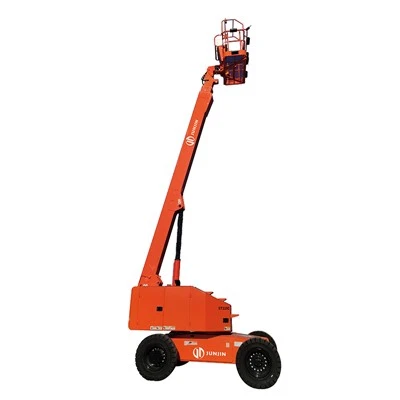
Hey there, let’s cut to the chase – if you’re an amusement park operations lead, maintenance manager, or even someone who’s ever stared up at a roller coaster track or Ferris wheel and thought “how the heck do they fix that?” – this one’s for you. A while back, I got a random call from a regional Six Flags rep, not about our usual construction-focused truck mounted aerial work platforms (TWAAPs), but about whether one of our units could work for their ride maintenance. At first, I was like, “Wait, amusement parks? That’s usually boom lift or scaffolding territory, right?” Turns out? I was dead wrong. And now I’m here to tell you: yes, a properly spec’d truck mounted aerial work platform (that’s TWAAP if we’re keeping it casual) can totally work for amusement park ride maintenance – and it might even be the better pick over the old-school options. Truck Mounted Aerial Work Platform

Let’s start with what makes TWAAPs different from the scissor lifts or trailer boom lifts most people think of for job sites. Ours, for example, are mounted on a heavy-duty utility truck chassis – think 12-ton to 18-ton GVW, not the tiny pickup-mounted cherry pickers you see trimming street lights. The key here is that they’re self-contained: no need to bring a separate generator, no air hoses dragging across the pavement, and they can move under their own power once you’re done working, no trailer hitch to hook up. That flexibility is huge when you’re bouncing between 20+ rides on a 100-acre park with narrow pathways, grassy patches, and power lines strung everywhere.
First up, let’s talk height and reach – this is non-negotiable for amusement park stuff. Ferris wheel gondolas hang 60 to 80 feet in the air; roller coaster support beams can go even higher, especially on wooden coasters where the top track beams are 90+ feet up; even things like themed water ride lift hills, where those chain dogs and guide wheels need regular grease, can hit 70 feet. Our top-spec TWAAP has a working height of 112 feet and a horizontal outreach of 58 feet. Let’s do the math: that means you can reach a Ferris wheel gondola on the opposite side of the wheel without even moving the truck – no repositioning, no wasting 10 minutes backing a trailer into a tight spot, no dodging a group of elementary school field trippers walking by. That’s a big win for maintenance teams that are working overnight or off-peak to avoid crowds, so every minute counts.
But wait, you might be thinking: “TWAAPs are big, can they even fit through theme park gates?” Fair question. Our standard models have an overall height of 12.8 feet and a width of 8.5 feet – most park vehicle gates are 14 feet tall minimum, so that’s no problem. We also have a compact “city spec” version that’s 7.8 feet wide and only 11.5 feet tall, perfect for small regional parks or parks with older, narrower access gates. I’ve actually had a customer in Florida use that compact model to access the backstage Ferris wheel that’s tucked between a water ride and a food court – trailer booms would’ve gotten stuck on a low-hanging concession awning, but the TWAAP fit like a glove.
Next up, payload capacity. Amusement park maintenance isn’t just sending a guy up with a wrench – you’ve got parts: a new Ferris wheel bearing, a length of steel for a support brace, a bucket of grease for 20 chain wheels, maybe even a portable LED work light and a power drill. Our TWAAPs have a platform capacity of 550 pounds to 1,200 pounds, depending on the model. That’s way more than most trailer booms, which usually top out at 500 pounds. I had that Six Flags rep tell me their old boom lift could only hold one tech and a small tool kit; with the TWAAP, they can send two guys up, plus all the heavy parts they need, so a job that used to take two trips down and up takes one. No more running back and forth across the midway at 2 a.m. with a crate of bearings – trust me, that’s a job no one wants.
Now, let’s get into the stuff that actually matters for ride safety, because amusement parks can’t afford to skip a single maintenance step. First, stability. TWAAPs have outriggers that extend all the way out, so they don’t tip even if you’re reaching far to the side. Parks work on all kinds of terrain – smooth paved pathways, grassy areas, even packed gravel for the older parts of the park. Our outriggers have adjustable feet that can adapt to uneven ground, and we offer optional rubber pads for grass so you don’t tear up the lawn (another win for park grounds crews). The Six Flags rep I talked to said they once had a trailer boom tip on soft gravel and started leaning – the TWAAP’s outriggers stopped that from happening, no scares, no wasted time waiting for sandbags to level it out.
Also, reliability. Amusement parks can’t have their rides breaking down on a Saturday – that’s peak revenue time. If your only lift is a trailer boom, and it breaks down, you’re stuck waiting for a technician to tow it to a shop, which could take hours. Our TWAAPs are built with industrial-grade parts, same as our construction-focused models, but we also offer 24/7 roadside support for all our rental and purchase customers. That means if a hydraulic line leaks at 1 a.m. before a holiday weekend, a tech is there in 2 hours, not 12. The Florida park I mentioned earlier had a trailer boom die during a private event, so they rented our TWAAP on short notice and fixed their Ferris wheel overnight – no cancelled rides, no upset guests, no lost cash.
Wait, but let’s address the elephant in the room: are TWAAPs OSHA-compliant for amusement park use? Short answer: yes, if you spec it right. Our models meet all OSHA aerial lift standards, and we work with parks to make sure they have the right training for their maintenance teams. A lot of parks think they need a specialized amusement park lift, but really, it’s just making sure the techs are certified to operate the TWAAP and that the unit is inspected regularly, same as any other lift. We even offer custom inspection checklists specifically for park rides, so they don’t have to mix construction job site checklists with ride maintenance rules.
Let’s talk about some real-world examples, because I don’t want to just talk numbers – I want to talk actual people using this stuff. Last year, a regional park in Ohio with a wooden roller coaster called The Beast (yeah, the famous one) hit me up. Their old boom lift was too short to reach the top of the wooden support trusses, so they’d been using scaffolding for the annual track inspection. Scaffolding takes 8 hours to build and 4 hours to tear down, and it blocks the path to their food stand for the whole week of maintenance. They rented our 100-foot working height TWAAP, and they finished the inspection in 2 days – no scaffolding, no blocked paths, saved them over $15k in rental and labor costs. That’s huge for a park that’s not part of a big chain, where every dollar counts.
Another one: a water park in Texas, where they have a 100-foot tall water slide that needs annual sealant application. The trailer boom they’d been using couldn’t reach the top curve of the slide, so they had to use rope access techs – which is expensive and takes forever. Our TWAAP reached all the way around the curve, the sealant team finished the job in half the time, and they didn’t have to pay for the rope access fees. The park’s maintenance manager told me they’re now buying their own TWAAP instead of renting, because it pays for itself in one season.
Now, let’s get into the small stuff that makes a big difference for park operations. First, noise. Our TWAAPs have a quiet mode – when you’re up in the platform, you can run the hydraulics at low RPM, so you don’t scare the horses at the nearby petting zoo or wake up guests staying in the on-site hotel. A lot of construction lifts are loud, but the quiet mode is a game-changer for parks that have areas open to guests even during off-peak maintenance.
Also, storage. Unlike trailer booms that need a hitch and a tow vehicle, TWAAPs can park in a standard parking spot or a small maintenance garage. The Ohio park we talked about ended up keeping their TWAAP in their maintenance barn, right next to their tool boxes and parts cabinets – no need for a separate tow rig, no need to leave it parked on a lot. That’s another big win for smaller parks with limited storage.
Wait, but I’m not here to say TWAAPs are perfect for every amusement park job. Let’s be real: if you’re working on a tiny kiddie ride that’s only 15 feet tall, a ladder or a small scissor lift is cheaper and easier. If you need to work on a confined area inside a dark ride, maybe a compact boom lift is better. But for all the big-ticket rides – roller coasters, Ferris wheels, water slides, even those big themed statues in the entrance plaza – TWAAPs are a no-brainer. They’re more flexible, faster, safer, and cheaper in the long run than the alternatives.
Let me also address a common misconception: a lot of people think TWAAPs are only for big construction jobs. Yeah, we sell a lot of units to construction companies, but we’ve tailored models specifically for amusement parks, tree trimming services, and even movie studios that need to work on big sets. We offer flexible financing options too, so small regional parks don’t have to drop a ton of cash upfront. We also do custom modifications – like adding a platform railing that’s easy to remove for parts, or LED work lights that are bright enough to work at night without blinding guests walking by.
I know a lot of park maintenance teams are set in their ways – they’ve been using scaffolding or trailer booms for 20 years, so why change? Here’s the thing: when was the last time a new piece of equipment saved you 50 hours of labor on a single job, or let you do maintenance during off-peak hours so you don’t have to cancel rides on a Saturday? I’ve seen parks go from spending $30k a year on rental lifts and overtime to buying a TWAAP that costs $80k, and they pay it off in 18 months. That’s not a hype job – that’s actual numbers from our customers.
If you’re a maintenance manager or operations lead at an amusement park, I get it – you’re busy, you don’t have time to test a new piece of equipment, and you can’t afford to make a mistake that leads to a ride being shut down. That’s why we offer trial rentals – you can take a TWAAP for a week, test it on your Ferris wheel, your roller coaster, your water slide, and see for yourself if it works. No obligation, no hidden fees, just a chance to stop dealing with the hassle of scaffolding and trailer booms.
At the end of the day, amusement park rides have to be safe, reliable, and fun. The people working on those rides deserve tools that make their job easier, faster, and safer. TWAAPs aren’t just for construction sites – they’re for the parks that bring joy to thousands of families every year, and that’s why we build them to work for both.
Used Boom Lift If you’re tired of dealing with trailer booms that get stuck, scaffolding that takes all day to build, or maintenance jobs that run over schedule and eat into your profits, let’s talk. We can spec a TWAAP that fits your park’s needs, whether you’re a small regional park with 5 rides or a big chain with 20 parks across the country. No pressure, no sales gimmicks – just straight talk about how to make your maintenance team’s life easier and keep your rides running smoothly, year after year.
References
- Occupational Safety and Health Administration (OSHA). Standards for Aerial Lifts, 29 CFR Part 1926 Subpart L.
- National Association of Amusement Ride Safety Officials (NAARSO). Maintenance Guidelines for Fixed Site Amusement Rides, 2022 Edition.
- Truck Mounted Aerial Work Platform Industry Association (TWAAPIA). 2023 Compact Lift Application Report for Recreational Facilities.
Yantai Quanrui International Trading Co., Ltd.
As one of the most reliable truck mounted aerial work platform manufacturers and suppliers in China, we’re featured by high quality customized products. Please rest assured to buy discount truck mounted aerial work platform made in China here from our factory. Contact us for pricelist and quotation.
Address: No. 278, Sanya Road, Gaotuan Town, Fushan District, Yantai City, Shandong Province, China
E-mail: Info@quanjin1588.com
WebSite: https://www.qr1588.com/
