Hey everyone, Titanium Bar

If you’ve been scrolling around for titanium bars lately, you’ve probably seen a ton of conflicting info online. Half the time, people are saying titanium’s impossible to weld without ruining it— the other half’s bragging about perfect welds on aerospace-grade stuff. As someone who’s been supplying titanium bars for over 8 years, I’ve heard every single one of these takes, and today I’m breaking it down straight: yes, a titanium bar can be welded, and no, it’s not the nightmare some blogs make it out to be— as long as you do it right.
First off, let’s get one thing out of the way: titanium isn’t like steel or aluminum. Those metals are forgiving, even if you’re a novice welder with a beat-up MIG gun. Titanium? It’s a picky son of a gun, but that’s not because it’s un-weldable— it’s because it reacts super easily with stuff that’s basically harmless to other metals. Like, if you heat titanium above 800°F (that’s pretty low for welding), it starts grabbing oxygen, nitrogen, and hydrogen right out of the air, the filler rod, even the dirt on your workbench. That reaction makes it brittle, full of tiny cracks, and basically useless for anything that needs to hold weight. I’ve had a new welder show up to our warehouse last year, try tacking a titanium bar with his regular MIG setup, and end up with a chunk that shattered when he tapped it with a hammer 10 minutes later. That’s not titanium being impossible to weld— that’s him skipping the basics.
Let’s talk about the common methods people actually use, because not all welding processes work the same for titanium bars. The big three are TIG, MIG, and plasma, and yeah, only TIG and MIG are really worth your time for solid titanium bars (we’re not talking about thin foil here, though— we do supply everything from 1/4” to 6” diameter bars, so I’m focused on what works for our product line). TIG welding is the gold standard, no cap. It uses a non-consumable tungsten electrode, a shielding gas (almost always argon), and you get way more control over the heat. The key here is not just shielding the weld puddle, but the entire heat-affected zone (HAZ)— that part of the bar that gets hot enough to react, even if it’s not melting. For titanium, you can’t just point a argon nozzle at the puddle and call it a day. You need a trailing shield, too— a little gas cup that follows the weld bead right after it’s made, keeping the area above 800°F covered in argon until it cools down completely. I’ve had a customer using our 2” Grade 5 titanium bars for marine hardware tell me he uses that exact setup, and his welds have passed salt spray tests no problem for two years.
MIG works too, but it’s trickier. Spool guns and push-pull systems are non-negotiable here, because regular MIG guns can’t feed titanium wire evenly without tangling, and the wire itself is way more prone to reacting if it’s not kept pure. A lot of people try regular MIG and get garbage results, but when they switch to a push-pull MIG with 100% argon (no CO2, that’s a huge mistake), their welds hold up. Plasma is great for precision stuff, like thin titanium plates, but it’s overkill for most solid bars, and way more expensive for small shops, so we don’t see it used much for our standard bar orders.
Now, let’s get to the biggest mistake most people make: prep and cleanup. If you skip this, even the best welder in the world will mess up. Titanium bars come from our mill with a clean surface, but by the time they get to the welding table, you’ve got oil, grease, dirt, even finger oil from handling— all of that is bad news. Before you even strike an arc, you need to grind off the mill scale, wipe the entire weld zone down with acetone, and even sand it with a stainless steel brush (not a regular steel one, that leaves tiny iron particles that will contaminate the weld). I once had a client order 50 3’ Grade 2 titanium bars for a farm equipment project, and he spent 10 minutes at our warehouse before pick-up scrubbing every inch of the weld area with acetone. He later told me those welds have held up through two harvest seasons, with no cracks or brittleness.
Wait, what about different grades of titanium bars? That’s a question I get all the time, because not all titanium is the same for welding. Grade 1 and Grade 2 are the purest titanium, most forgiving, easiest to weld— perfect for beginners or small projects. Grade 5 is the workhorse for aerospace, marine, and automotive, but it’s a bit more high-strength, so you have to adjust your heat settings (a little lower than pure titanium) to avoid warping. Grade 7 has a tiny bit of palladium, which makes it super corrosion-resistant and even more weldable, but it’s way more expensive, so most people stick to Grade 2 or 5 for general use. And for the love of all things titanium, don’t try to weld Grade 12 or any exotic alloy without talking to your supplier first— those have weird chemical mixes that need specific parameters.
Let’s address that “impossible to weld” myth head-on. The people who say that either tried to weld titanium with steel equipment (bad idea), skipped shielding, or used the wrong grade. I’ve been in this industry long enough to see titanium bars welded for everything from bicycle frames to offshore oil rig components, and none of those projects failed because the welding was “too hard.” They failed because someone cut corners on shielding, or used dirty filler rod, or tried to weld a 6” bar with a 110V TIG machine. That’s not titanium’s fault— that’s human error.
Now, if you’re new to welding titanium bars, here’s my quick cheat sheet to avoid a disaster. First, invest in pure argon shielding gas— no blends, no exceptions. Second, get a trailing shield for TIG, or a push-pull MIG gun if you’re going that route. Third, prep the metal like your paycheck depends on it— because bad prep can ruin a $100 titanium bar in 2 seconds. Fourth, practice on scrap titanium bars before touching your actual project metal. Our warehouse has a pile of 1’ scrap Grade 2 and 5 bars that we give out for free to local welders to practice, and it’s saved so many people from messing up a big order.
At the end of the day, titanium bars are weldable— they just require a bit more care and specific gear than other metals. The key is respecting their quirks, not fearing them. If you’re working on a project that needs the strength and light weight titanium provides, don’t let the “impossible to weld” hype scare you off.
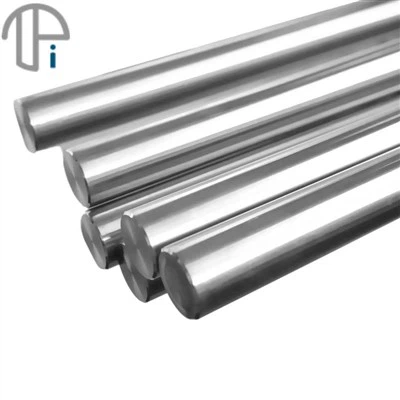
If you’ve got a project you’re working on, or you need titanium bars (any grade, any size) for welding or any other use, hit me up to chat. I can walk you through the best grade for your setup, the prep steps that will make your welds hold, and even point you to local welders who specialize in titanium. No confusing sales jargon, no hidden fees— just real info from someone who’s been in the field for years.
Titanium Bolt References:
- Titanium Welding Guide. American Welding Society, 2021.
- ASM Handbook: Welding, Brazing, and Soldering, Volume 6. ASM International, 2015.
- Marine Grade Titanium Applications. International Titanium Association, 2022.
Baoji Top Titanium Industry Co., Ltd.
As one of the most professional titanium bar manufacturers and suppliers in China, we’re featured by quality products and good price. Please rest assured to buy bulk titanium bar in stock here and get quotation from our factory. Customized orders are welcome.
Address: No. 2, South Section Of Phoenix 2nd Road,High-Tech Zone, Baoji,Shaanxi, China (Mainland)
E-mail: sales@bjtopti.com
WebSite: https://www.china-topti.com/
