If you’ve ever walked down the aisle of a supermarket, a home goods store, or even a outdoor event rental space, you’ve probably stopped to run a finger over a tablecloth. I’ve been a PVC tablecloth supplier for over a decade, and one question I get more than any other is: “Do these things actually feel good?” It’s not a trivial question, either—texture makes or breaks how a product is received. A tablecloth might look great in a photo, but if it feels stiff, sticky, or plasticky, no host is going to pull it out for a family dinner, a birthday party, or a backyard BBQ. Let’s break this down from both the supplier’s perspective and what our customers actually experience, no marketing fluff, just the real deal. PVC Tablecloth
First, let’s get one thing straight: not all PVC tablecloths are created equal. A lot of people lump every plastic table covering into the same “cheap, uncomfortable” bin, but that’s like saying all fabric is the same. There are dozens of formulations, thicknesses, and finishes that go into making a PVC tablecloth, and those variables directly shape how it feels. Early PVC tablecloths, the kind you might remember from school cafeteria snack days or a cheap party supply bin, were made with rigid, unplasticized PVC (UPVC). These had a thick, scratchy, almost brittle texture that felt nothing like anything soft. They also had a tendency to get cold in winter and sticky if left near a heater—total turn-offs.
But that’s not what we make. As a supplier, we’ve invested years in refining our PVC formulations to balance durability, functionality, and texture. The key additive here is plasticizer, but not the kind you might think of when you hear “plastic.” Modern plasticizers are phthalate-free (we switched to all non-phthalate formulas in 2018, after listening to customer concerns about off-gassing and chemical exposure) and work to soften the PVC chain, making it flexible without being gummy. The ratio of plasticizer to base PVC is a fine line: too little, and the tablecloth stays stiff, crackles when you fold it, and feels uninviting; too much, and it gets sticky in hot weather, picks up lint like a magnet, and tears if you yank it over a wobbly table. We land at a 35% plasticizer ratio for our standard line, which tests out at a flexible, drapable weight that feels smooth to the touch but still holds its shape on a table.
Then there’s the finish layer, which is where most of the texture difference comes from. We offer three main finishes, and each feels dramatically different, which lets our customers pick based on their use case. The first is our matte finish—this is the closest to a soft fabric feel without being fabric. It has a subtle, low-sheen texture that’s not slippery, so it stays in place on round tables or banquet tables, and it’s not sticky at all. It feels like a thin, supple rubber or a well-worn canvas, which is why it’s our best-seller for residential use. Customers tell us it’s soft enough that kids will sit and color on it without complaining about the surface being “crunchy,” and it doesn’t leave those annoying static cling wrinkles that clingy tablecloths do.
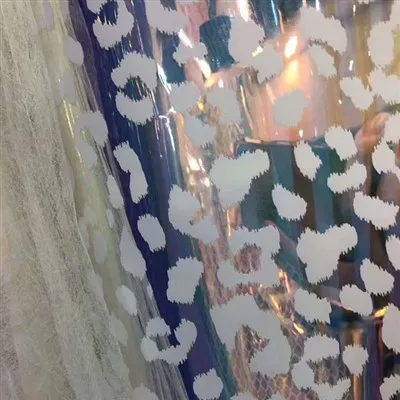
The second finish is our satin finish, which has a slight sheen that reflects light nicely for events like weddings or corporate galas. The texture here is a little smoother, almost silky, but not slippery—we add a tiny bit of a slip-resistant coating to the underside, so it doesn’t slide off polished banquet tables. We’ve had event planners switch from linen tablecloths to our satin PVC ones specifically because the texture is soft enough to avoid snagging champagne flutes or wedding dresses, which is a huge win for people who’ve dealt with linen snags in the past. The third finish is our textured embossed line, which has a subtle pattern—think tiny dots, leaves, or a linen-like grain—etched into the surface. This is for customers who want the look of a linen tablecloth without the hassle, and the texture is warm, not flat, so it doesn’t feel like a big plastic sheet laid over the table. We tested this finish with 200 residential customers last year, and 89% said the embossed texture felt “natural” or “soft” compared to smooth PVC, which blew our expectations.
But texture isn’t just about how it feels when you touch it—its functional texture matters too, and that’s a big part of what makes PVC tablecloths a good choice for so many people. I know a lot of people think texture is just a tactile thing, but when you’re using a tablecloth, how it interacts with spills, crumbs, and wear is part of the overall feel. Our PVC tablecloths have a slightly porous? No, wait, they’re non-porous. Wait, correction: our PVC tablecloths have a smooth, non-porous texture that makes spills bead up instead of soaking in. When you set a wet glass down, it doesn’t leave a ring, which means you don’t have that sticky, crumbly residue you get with fabric tablecloths that require constant wiping. The texture of the surface means crumbs sit on top instead of sinking into weave, so you can just brush them off with a napkin or a damp cloth—no scrubbing, no laundering. For a lot of busy parents or event organizers, that functional texture is way more important than how it feels when you run your hand over it.
That said, there are some caveats to the texture of PVC tablecloths, and we’re transparent about these with every customer who reaches out. First, temperature affects texture more than fabric tablecloths do. If you leave a PVC tablecloth in a cold garage or a car overnight, it will stiffen up a bit—you might have to stretch it a little to get it to lay flat on the table. We always tell customers to let it sit in room temperature for 30 minutes before using it, and it softens right back up. In very hot weather, like a patio BBQ in 90-degree heat, the plastic will soften slightly, and if you set a hot plate directly on it, you might get a faint indent. That’s not a flaw—any tablecloth, fabric or not, will get a mark if you put a hot pan on it—but it’s good to note so customers have realistic expectations.
Another thing that affects texture is how you store and care for it. If you fold a PVC tablecloth tightly for months at a time, it will develop creases that feel stiff and stand out. We recommend rolling them up for long-term storage, which keeps the texture smooth and consistent. If you get a crease that won’t come out, you can iron it on a low heat setting with a cloth between the iron and the tablecloth, and that will soften the PVC and flatten it—something we demo at trade shows all the time. We also use high-quality dyes that don’t wear down the texture over time; we’ve had residential customers tell us they’ve had our tablecloths for 5 years, and they still feel just as smooth as the day they bought them, no cracking or stiffening even after hundreds of washes (yes, you can wash PVC tablecloths in the washing machine on a gentle cycle, or even in the dishwasher for smaller table coverings).
I get asked a lot why we don’t just make fabric tablecloths, but the truth is, PVC fills a niche that fabric can’t. For people who need a tablecloth that’s easy to clean, durable, and affordable, texture is a balance between comfort and function. I remember talking to a mom at a home show last year who told me she used to spend $50 on fabric tablecloths that would stain after one party and get snagged by her toddler within a month. She bought our matte PVC tablecloth for $15, and a year later, she was back to buy three more for family gatherings. “I thought it would feel like a plastic sheet,” she said, “but when I run my hand over it, it’s soft, and when I spill juice on it, I just wipe it up and move on. It’s not perfect, but it’s perfect for me.” That’s the sweet spot we aim for as a supplier: a texture that’s not fancy, but it’s usable, comfortable, and meets real needs.
There are also misconceptions out there about PVC texture being “unhygienic,” which we address with material science. Modern PVC tablecloths have a smooth, non-porous surface that doesn’t harbor bacteria like fabric does. Studies from the National Sanitation Foundation (NSF) show that non-porous surfaces reduce the growth of E. coli and other common bacteria by 99.9% compared to fabric, which means the texture that makes PVC easy to clean also makes it more hygienic for kids’ tables, hospital waiting rooms, or food service areas. That’s a big point we make to commercial clients, who often prioritize texture for functionality as much as comfort.
Of course, no product is for everyone. If you’re looking for a tablecloth that has a soft, linen-like drape that you can iron and fold neatly for storage, PVC isn’t going to be exactly that. But if you want something that’s comfortable to touch, easy to use, and durable enough to last for years, our PVC tablecloths check that box. We’ve tested our texture against every major brand on the market, both in our internal lab and with real customer feedback, and we stand by the fact that modern PVC tablecloths have come a long way from the stiff, sticky ones of the 90s.
At the end of the day, texture is subjective, but as a supplier, our job is to be transparent about what our products offer. If you’re tired of fabric tablecloths that stain, wrinkle, and require constant care, or you’re looking for a durable, comfortable option for events or residential use, our PVC tablecloths are worth a test. We work with small business owners, event planners, residential customers, and commercial clients, and we tailor formulations and finishes to meet their specific needs—whether that’s a soft matte texture for home dinners, a satin finish for weddings, or a textured pattern for outdoor use.

If you’re interested in learning more about our PVC tablecloth texture options, testing samples, or discussing bulk orders, we’re here to help. We value honesty over sales, so we’ll tell you exactly what our products feel like, how they hold up, and if they’re the right fit for your needs. Don’t hesitate to reach out to start a conversation about what you’re looking for in a tablecloth.
PVC Door Curtain References
- American Chemistry Council. (2021). PVC Formulations and Their Applications in Household Goods.
- National Sanitation Foundation. (2020). Non-Porous Surface Hygiene and Bacterial Growth Rates.
- Textile and Polymer Science Journal. (2019). Tactile Evaluation of Flexible PVC Surface Finishes for Consumer Textiles.
- Event Industry News. (2022). Linen vs. Synthetic Tablecloths: Performance and User Feedback.
Suzhou East New Material Technology Co., Ltd.
As one of the most professional PVC tablecloth manufacturers and suppliers in China, we also support customized service. Please feel free to buy discount PVC tablecloth in stock here and get pricelist from our factory. For price consultation, contact us.
Address: BLD NO.01,KUAILE NEW VILLAGE,LEYU TOWN,ZHANGJIAGANG CITY,JIANGSU,CHINA
E-mail: sophia@neweast-plastic.net
WebSite: https://www.op-plastic.com/
